Google I/O 2026: The 5 Updates Every Marketer Needs To Know

Chapters7
Introduces the five major updates from Google IO 2026 that will impact marketing strategy.
Google IO 2026 is reshaping search: AI-powered, interactive, and increasingly agent-driven, with big implications for SEO, local businesses, and content strategy.
Summary
Exposure Ninja’s Charlie breaks down Google IO 2026’s five marketer-focused updates and what they mean for the near future of search. Elizabeth Reed from Google frames AI search as a "new era" as marketers shift from keyword-centric tactics to longer, contextual queries and pillar content. AI mode is evolving into a fully conversational, context-preserving experience, with AI overviews guiding users through multi-step questions. Information agents will monitor real-time content to surface fresh results, while agentic coding promises interactive dashboards and mini apps built into search results. Personal intelligence and agentic calling push local and service-based businesses toward richer profiles, live pricing, and even Google-powered phone bookings. Charlie emphasizes that these shifts demand deeper content, structured data, and a broadened content strategy beyond traditional top-10 rankings, including PR, reviews, and third-party credibility. Some updates are rolling out soon (summer 2026), while others will take more time, so marketers should prepare now for a fundamentally different search landscape across Google, AI mode, and competing AI destinations.
Key Takeaways
- Long-tail, context-rich queries will dominate. Move beyond single keywords to pillar content with structured data, FAQs, and evidence to answer extended questions.
- Information agents will monitor real-time content (blogs, news, social posts) and surface freshness, elevating the importance of up-to-date content and reviews.
- AI mode becomes the default-style experience gradually, enabling back-and-forth conversations that preserve context for purchase decisions inside AI answers.
- Gemini 3.5 Plus anti-gravity tech will enable interactive search experiences like dashboards and mini apps, shifting the goal from clicks to richer user interactions.
- Agentic coding in search could deliver personalized, interactive trackers (e.g., wedding planning dashboards or fitness trackers) embedded in search results.
- Personal intelligence and agentic calling will impact local/service businesses by enabling Google to personalize AI answers via Gmail/calendar access and to place automated calls for bookings or inquiries.
- Local business profiles become data feeds for AI: up-to-date hours, services, pricing, and booking links will influence search outcomes and agent behavior.
Who Is This For?
Essential for digital marketing managers, SEO strategists, and local business owners who need to adapt to a more AI-driven, interactive search ecosystem and prepare for a summer 2026 rollout across Google’s AI features.
Notable Quotes
"Elizabeth Reed, who runs search over at Google, literally called this a new era for AI search."
—Cites Google’s framing of the shift as a pivotal moment for AI-enabled search.
"AI mode has over a billion monthly active users in a year, which is huge."
—Shows rapid real-world adoption of AI-assisted search modes.
"AI overviews even huger. 2.5 billion monthly active users."
—Emphasizes scale of AI features beyond AI mode.
"We’re going way beyond just a single keyword and way more into a brief."
—Highlights shift to longer, richer search prompts and context.
"Information agents... they’re going to be running in the background."
—Describes how background agents will fetch fresh content for users.
Questions This Video Answers
- How will Google AI mode change SEO strategy in 2026 and beyond?
- What are information agents in Google Search and why do they matter for content freshness?
- What is agentic coding in Google Search and how could it affect marketers?
- How should local businesses prepare for Google's personal intelligence and agentic calling?
- What content strategy changes are needed to thrive with interactive search experiences?
Google IO 2026AI searchAI modeInformation agentsAgentic codingPersonal intelligenceAgentic callingLocal SEOStructure dataSchema.org
Full Transcript
Hello and welcome to Charlie Explains AI search. On this week's podcast, we're going to be talking about Google IO 2026, which just happened. and what this big set of updates actually means for businesses. Now, Elizabeth Reed, who runs search over at Google, literally called this a new era for AI search. And I have to say, finally, some of these updates are so meaty, and I'm so glad that Google is finally making some massive moves. So, in this podcast, I'm going to talk through the five updates that have come out of Google IO 2026 that marketers need to know.
Now, before I get into it, I want to flash back to 2025. And at IO 2025, Google was still telling us then that AI mode was a new experiment. So, this was about a year ago. Now they're telling us AI mode has over a billion monthly active users in a year, which is huge. AI overviews even huger. 2.5 billion monthly active users. And apparently queries inside AI mode are doubling every quarter as well. So this is searches at Google reaching an all-time high. People are actually interacting with AI overviews and AI mode. Not everyone loves them, but here's some data, right?
Here's the data showing us people are actually starting to use them, no matter how we personally feel about it. So, the five updates, and these are going to be the ones with the biggest marketing implications. There's even more and I'll share the links in the footnotes so that you can see the full Google IO 2026 if you want to get into it. But these are the five that marketers definitely need to know. The first one, I've already spoken about this on LinkedIn, which is the new AI search box. So the search box on Google is changing.
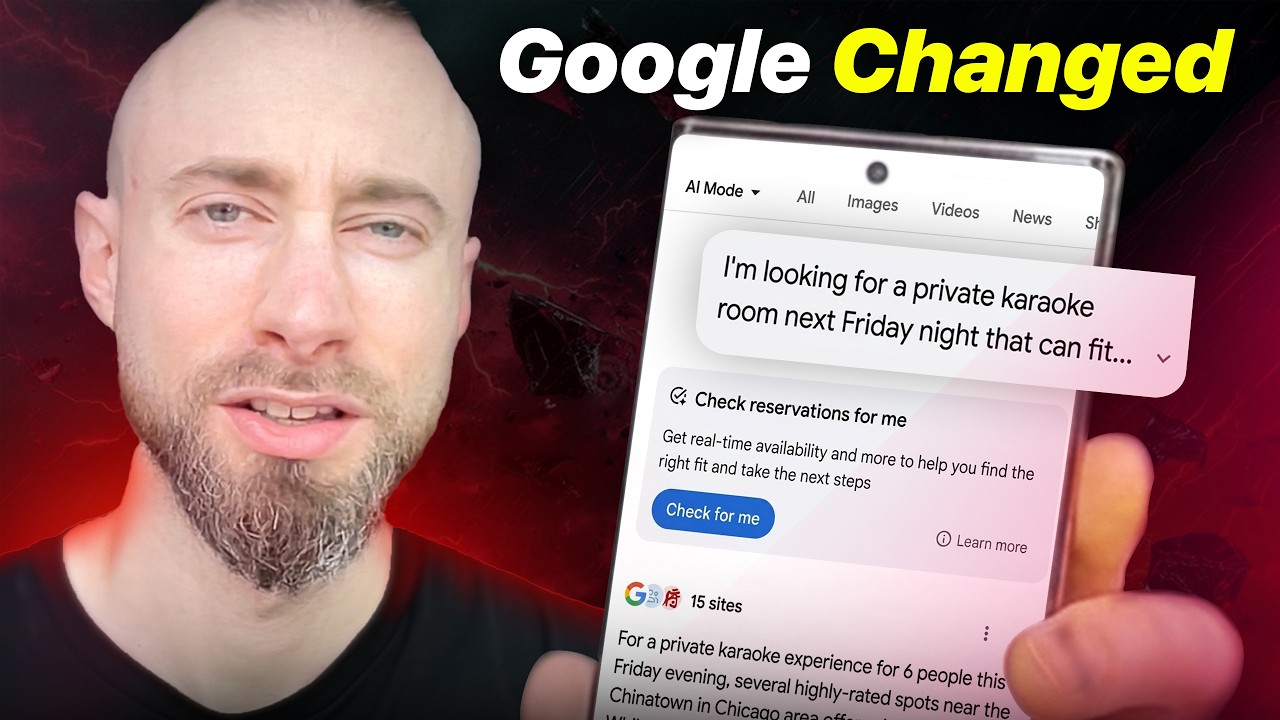
You might see this already. It might still be rolling out for you. So, we've got used to over the past decade, the past 27 years, we've pretty much been programmed just to write two or three, maybe four keywords into the Google search box. Now, Google has expanded its capability. So, you can actually write into it the kind of emotional monologue that you might have written into chat GBT straight into the search box as well. You can write longer searches and the box expands. You can also suggest images, add files and things to ask questions just like you would do in chatbt or Gemini.
And beyond just autocomplete, it's giving you even more suggestions when you're typing in of what you might want to ask. So, for example, if I'm saying I'm planning a trip to Lisbon in October, I might even give like a Google doc with dates and budgets. Or I might say, here's a hotel that I really liked as well. and link it in and ask it to build me an itinerary. So, it's going way beyond just a single keyword and way more into a brief. So, what is what does this mean for SEO? Because this is confusing for some people, right?
We have got so used to optimizing for keywords, maybe two, three, four keywords that we're going after as priorities for each page. And now we're seeing a huge shift of Google actually moving way more towards this AI chatbot style that we know from chatbt Gemini perplexity claude co-pilot. So we're now in the in the phase the transition where actually just thinking about our headline keyword term plus intent the model we've been running for ages is is changing. It's becoming way more nuanced. Now, our website pages need to be thinking about longer, longer questions, not just really short ones.
They need to be thinking about context. And we're going to have to have more content depth. We're going to have to have pages and pillar content with structured data, with our FAQs, with comparisons, with evidence, whatever it is that's relevant to our business to help really, really give answers to these queries. as people now learn that they can write longer queries into Google. Kind of exciting, kind of overwhelming, and a little bit scary, but we're here for it. Okay, the second update that marketers need to know about. This is search agents and information agents. Google has just launched information agents in search.
And you're like, Charlie, what is what is that? These are personal AI agents and they're going to be working in the background according to Google 247. So let's say for example a user says let me know when my favorite running shoe brand drops a new collab or find me a two bed flat in Brighton for under400. Good luck by the way if that's you. Or you know tell me whenever this celebrity that I follow announces their new sneaker drop. Then these information agents, they're going to be running in the background. So they're scanning blogs, looking at news sites, social posts, reading info in real time.
And it means the customer isn't doing the searching, right? Their agent is. We don't have to remember that thing that we want to search, then look it up, maybe look it up again, look it up again if there's still no update. Um, so now we're we're waiting for the agent and that agent will be able to bring us that information. Now, these haven't launched yet. These ones are apparently set to launch this summer, 2026. And that's going to be for Google AI Pro and Ultra subscribers first. So, if you are one of those, you're going to have a head start with using it.
And I think this is probably going to be one of the interesting the most interesting things because for me, this is like a big first step of a Gentic really coming into the Google search. And it's going to mean the freshness of your content, the PR that you're doing, the breadth of your content, the reviews are going to matter so much more because those agents, just like when chatbt and other AI chatbots are searching, are going to be scouring across the internet. So those are two down, three to go. Update number three, AI mode goes fully conversational.
Now, this one, maybe this is what we expected, the the direction of travel that we expected. So, AI overviews for a while here in the UK have been prompting you to go into AI mode. You've probably seen it if you're in the US as well. If you're in Europe, maybe not yet. Now, you can ask follow-up questions in that AI overview as well. And what Google is doing is they're moving you through into AI mode. Of course, we know that Google wants to get users more and more used to using AI mode. They've signaled that AI mode is going to become the default eventually or a version of it will become the default way that we search.
And there was some panic in the SEO community that this Google IO 2026 might drop that AI mode is becoming the default. Well, Google hasn't taken that massive leap into the abyss yet, but they have taken this smaller step forward to getting users more used to AI mode. And now when you go into AI mode, you can pretty much have a back and forth conversation as you would do with chat GBT. And it's keeping your context and understanding more and more what you're trying to have a conversation about, what your real intent is, what you want to find in your search.
And this is live right now. So this is going to be desktop and mobile version. it should already be switching over if you have AI overviews and AI mode where you are based. Um, so I think this is this is pretty interesting. This is kind of what we expected. Now, similar to chatbt and Gemini, that whole user search journey can happen inside one conversation. And that means that if you are a business that gets cited really early in the conversation, you're going to have a massive head start by the time you're deeper down that conversation on the fourth, fifth question because we already know that over half of people are actually making their purchase decisions inside AI answers.
They're having an AI conversation and they're already making the decision about where to buy from because they're getting all that information in one go rather than loads and loads of searches. Okay, the fourth thing that marketers need to know. And this one, this is a bit of a sidebar. It's a Gentic coding coming to search. So, Google's just announced in IO 2026 that search is going to be using Gemini 3.5 Plus their anti-gravity platform. What does that mean? That means that when you search, you're now going to be able to build custom user interfaces as you go.
So, things like getting interactive visuals or dashboards, even mini apps, building like trackers for things. So, if you're wedding planning, for an example, instead of getting 10 blue links back, you might actually get a custom wedding planning dashboard with all the information that you're coming in that you can then come back to. Wow, sounds like something I'd be building in a spreadsheet that apparently Google is now going to be able to build for us. Um, if you were wanting to build a fitness tracker, for example, to keep track of your body fat index and your workouts, then apparently Search is going to be able to generate you an interactive tracker that might pull things like uh real-time data, reviews, local weather, information about all of the different places you might be going to work out, how your actual workouts look, somewhere you can put all of your uh body fat type data.
So this is this is huge. This is really big I think and it means that the goal is kind of moving away from just earning clicks in this sense. If you're a brand and you're thinking about being part of now the experience of search and that's going to mean that really we need to be thinking about what our websites are doing and all of the information being extremely clear so that actually when someone might be having a more interactive experience like this if there is part of a conversation where a brand is relevant to be referenced where are the ones coming up.
This is not yet live. This one Google have said is coming in summer 2026. And I think the jury's really out on how this is going to look and how businesses are going to benefit or not from this type of thing. For me, this sounds much less around how businesses might interact or show up. I think that's still going to be more in the conversational search side that we were just talking about in the previous updates. But until we actually see it play out, I think it's going to be difficult for us to know. This sounds much more like it's making the experience for the user more interesting if we think about the way that we use uh Google Docs or Google spreadsheets.
For example, I'm going to an Indian wedding of my friends in Jaipur this October. I'm super excited. And she's just sent me a wardrobe planner which has six outfit changes required for guests, not just for the bride and groom. It's an Indian wedding. they know how to do it properly and big, but that's across three days. And so, I've just built myself a spreadsheet of what the dress code is for all of the events across the 3-day wedding, then the items that I have already in my wardrobe and what I need to shop and buy for something like this.
Maybe this is exactly what this update for agentic coding in search is going to bring us. a much easier version of doing that. Right, the last and final update that marketers need to know from this, this is personal intelligence and agentic calling. This one matters really if you are a local business or a service-based business. So, we know that Google has rolled out personal intelligence now in AI mode, which is nearly 200 countries, 98 languages. So most of the world have probably got AI mode and no subscription is is required. This means that now you if this is you, you can let Google see your Gmail, your photos, your calendar to personalize AI answers in AI mode.
That's the personal intelligence part of this. Now we also have agentic calling. Google is expanding agentic booking and agentic calling. This literally means that if you're trying to do something like book a restaurant or get a plumber, Google can literally pick up the phone, call the business, check the availability, the prices, the timings for things. And that's going to be things like home repairs, plumbers, beauty, pet care, restaurant bookings, whatever it is. All sorts of different things that you might book, which is great because I don't love calling people. But I think this is going to be a really big shift for people who work in the service and local business industry to actually have Google calling them over the phone rather than the person even though it's a nightmare to get hold of a plumber.
So good luck Google for trying to get one. So what does this mean for marketers if you are in a local or service-based business that this might impact? This is going to be meaning that your Google business profile needs to be so well done. This is going to be used as a data feed for that AI agent. It's not just a a kind of static mapped listing. So you need to have your hours, your services, your pricing, booking links as well if that is relevant to you, super up to date. And it also means that I would say our phone systems are potentially becoming an SEO factor.
If you are actually responding over the phone to Google, it's going to know, right? And it's going to want things like real-time pricing and availability data so that it can solve the searchers problem, their intent, whatever it is they need much much quicker. So this is kind of like marketing and operations all happening here. So these are the five big updates and in my opinion they are pretty huge and if you kind of zoom out across these I think that the big pattern that us marketers are looking at is Google is becoming more of a powerhouse.
It is moving beyond this 10 blue links, this traditional search that we know and it's becoming an interactive search interface. They are not just having two keywords, three keywords written in a search box now. They're building custom answers. They're building interactive experiences. They're actually putting agents into the search experience to do things for us. Everything here is designed to make it so much easier for the searcher. So marketers, don't panic. Businesses, don't panic. What are we doing about this? You need to be thinking now about the future of search, the future of SEO, how these things are changing.
Some of these are rolled out now, but some of these aren't coming until summer 2026, which that's only two months away, 3 months away. Now we need to be thinking not just about optimizing for 10 blue links. If you are still thinking that way, your marketing team needs to move beyond that kind of thinking. Now we need to be thinking how we show up consistently across different types of answers. Not just in Google and Gemini and AI mode and AI overviews, but also ChatGBT, Plexity, Claude, Copilot, wherever your searchers are searching. Even though Google's probably going to be the biggest of those if we're honest, for the majority of businesses, you need to have a really well updated website with schema.
You need to be thinking about your citations in visibility in AI answers, not just your rank in the top 10 blue links. If you're a local business, get on that Google business profile now so that when this rolls out, you are ready for it. And everyone needs to be thinking about their third party reviews, their PR, their content that they're publishing, their thought leadership, all of that. This is not just a, you know, we're going to optimize for a couple of keywords now. This is optimizing for much bigger, more complex search journeys. So, that's the end of the five updates that you need to know.
If you have questions, please drop them to me on LinkedIn. And if you found this episode useful, please make sure you share the episode with your marketing team or at least one person in your company, in your marketing team who needs to hear these updates. My mission is that all marketers will get this right and know exactly what to do over the next six months. And we will all be marketing geniuses by Q4 of 2026 because we are going to own this. If you need a hand, Exposure Ninja does deep dives into how AI is changing search for your specific business.
We do this through our AI search audits where we map your visibility across Chat GBT, Gemini Perplexity, Google's AI mode, and AI overviews. We show you citation gaps and give you a 90-day plan to fix the most important areas first. If that's going to be helpful to you, please drop us a message or go to exposioninja.comreview to request a marketing review where we can help you out. I hope you all have a fantastic rest of your day and give me all your questions on LinkedIn.
More from Exposure Ninja





Get daily recaps from
Exposure Ninja
AI-powered summaries delivered to your inbox. Save hours every week while staying fully informed.