Holy sh*t I think Anthropic is profitable now

Chapters8
Explores how many AI startups burn cash while chasing profitability and IPOs, questioning how feasible profitable growth will be.
Anthropic is reportedly profitable now, driven by Opus model pricing, cloud hosting deals, and enterprise demand across AWS, Google Cloud, and Azure.
Summary
Theo from t3.gg analyzes how Anthropic supposedly hit profitability, arguing that a mix of aggressive pricing, cloud-hosted access, and high-value enterprise contracts enabled a faster revenue ramp than costs could grow. He points to Opus 45 (and its tokenization shifts) as a turning point, explains why Anthropic benefits from AWS hosting and cloud-code incentives, and contrasts their strategy with OpenAI’s higher compute burn. Theo argues that PMF (product-market fit) has arrived for enterprise coding assistants, spurring big-ticket spend despite rising per-token costs. He also notes the is-sue of compute shortages and how partnerships with SpaceX/XAI and cloud giants influence margins. The takeaway: Anthropic’s profit is real-enough now because customers pay premium prices for powerful, well-integrated tooling, especially in coding agents like Claude Code and Opus/Code variants. He warns that OpenAI will likely chase a similar trajectory once they scale, and he ends with optimism for competitors to negotiate pricing down to broaden healthy competition.
Key Takeaways
- Anthropic reportedly expects revenue to reach about 10.9 billion in the second quarter and to deliver operating profit for the first time.
- Opus 45 (and its tokenization changes) significantly boosted enterprise spend by increasing price per milloit while delivering stronger performance.
- Anthropic hosts models on AWS (and also on Google Cloud and Azure), enabling a broad enterprise footprint and revenue-sharing deals that do not require upfront compute commitments.
- Cloud-code products (Claude Code) and the pricing shift to enterprise plans are major drivers of revenue growth and higher token usage.
- Compute supply constraints (NVIDIA GPU availability) cap cost growth and influence strategic partnerships and pricing.
- PMF (product-market fit) appears to be realized for coding agents, with enterprises willing to pay premium for higher-quality AI tooling.
Who Is This For?
This is essential viewing for AI leaders and engineers evaluating the profitability and go-to-market strategies of AI labs like Anthropic and OpenAI, especially those tracking enterprise pricing, cloud-hosting dynamics, and compute constraints.
Notable Quotes
"Anthropic costs have grown immensely as they keep doing all of these crazy compute allocations and hiring so many of the best people in the world."
—Theo highlights the cost pressure Anthropic faces as they scale compute and personnel.
"Opus 45 was so good that it turned me into an anthropic fanboy for a bit."
—Theo credits Opus 45 as a catalyst for Anthropic’s perceived PMF and profitability.
"They get huge revenue shares even though they're not providing the compute. It's a great deal for Anthropic."
—Explains the cloud-hosting revenue model and margins from hosting partnerships.
"If you double the number of customers, you double their usage and then you triple their costs, you just 12xed your revenue."
—Describes how growth in users and model cost per token compounding drives revenue.
"The profitability is real. Which leads us to an important question. Is this product market fit?"
—Posits that PMF may be the underlying driver of the profit surge.
Questions This Video Answers
- How is Anthropic achieving profitability with Opus 45 and Claude Code?
- What impact does AWS hosting have on Anthropic's revenue and margins?
- Why are token costs rising with Opus models and how does this affect enterprise pricing?
- Is OpenAI following Anthropic's profitability trajectory with cloud hosting and PMF?
- What role do compute shortages play in the profitability of AI labs like Anthropic?
AnthropicOpus 45Claude CodeAWS hostingCloud AI pricingPMF (Product-Market Fit)OpenAI comparisonEntrepeneurial AI salesCompute shortagesTranium/GPUs
Full Transcript
The AI bubble is a little bit chaotic. There's all of these companies that are building things that people spend billions of dollars on, but then they spend billions more doing it and hosting it and they just don't make any money. How is this ever going to work out? Especially when they're all racing to go do their IPO and actually sell stock. You need to make money in order to do those types of things. And none of these companies are even close to profitable. Most of them are losing billions of dollars every quarter. Just like Anthropic, who is uh wait, Anthropic says it's about to have its first profitable quarter.
Anthropic told investors that they will more than double revenue to around 10.9 billion in their second quarter and deliver an operating profit for the first time. Oh, that's different. I didn't think we would get here so fast if I'm being real with you guys. I've talked about this many times before, comparing the rates of growth of revenue against the rates of growth of expenses for these companies, and I thought the gap would get worse before it started to get better, much less to hear. There's a lot to dive into from how Anthropic got to this point, what they are spending their money on versus how they're making so much money.
Where does OpenAI fit in here? Are they profitable? Are they losing money? How much is Anthropic spend going to go straight to SpaceX and XAI with their whole Colossus data centers? Is this product market fit? There's a lot to talk about here and I can't wait to do it. But unlike Anthropic, I can't just burn cash for my team. So, we're going to do a quick break for today's sponsor. You know how most devs just kind of hate using GUIs when they could be using the terminal instead? Turns out a lot of normal people are like this, too.
If they can avoid apps in just text, they prefer it. But how do you actually integrate that in your apps? Wouldn't it be great if there was a simple npm package that let you send SMS, RCS, and WhatsApp messages? That would be pretty great, wouldn't it? Oh, it's on my screen, isn't it? As soon as I heard about these guys, I started playing with it and fell in love immediately. It's hilarious how much easier it is to use what they built than anything I've used before. They have SDKs for pretty much everything. We're a TypeScript house, so I'm going to show you with this.
You install their package, you create a client, you pass the phone number you want to send the thing to, and then the template you want to use as you send it if you have templates already configured in their servers. Couldn't be easier. They even have a oneline test mode so you can test these functionalities without actually sending the messages. You'll just see them in their dashboard. It's so helpful. I don't know how to properly emphasize how hilariously simple this is. We're talking five lines of code for something that used to take so much more effort.
You might be questioning how do you choose to send SMS versus RCS versus WhatsApp. You don't have to. They figure out what the best solution is for that user. Your customer puts in a phone number and the rest is done. Their preferences are met. You're looking for a simple, safe, scalable, and reliable solution to communicating with your users via phone number? Look no further than soy. God, the history of their raises is absurd. Just 14 months ago, they raised at a 61 billion valuation. So, the whole company worth 60 bill. Since then, the most recent round that they're raising right now appears to be at a $900 billion valuation.
15x in 14 months. That is absurd. This might be the fastest growth in the history of enterprise ever. The difference between 60 billion and $900 billion is roughly $900 billion. It's kind of crazy. This new round they're raising is in the 30 to 50 bill range against that 900 bill val, which is insane when you consider they're about to raise almost as much money as they were worth a year ago. And it's going to be less than 10% of their company being diluted through that. Truly absurd. But there's a reason why. This is the revenue over time in a log scaled chart.
In 2024, they were doing 87 million a year rev. By end of year, they had gone up to a bill. By end of last year, they were up to nine. And since end of 2025 to now, they have tripled the 30 bill and rev. This is insane. But when you compare this to how much money they have to spend even on just compute, it gets a lot less crazy. They just signed a deal with SpaceX where they're doing 1.25 25 bill per month in compute with just one of their sources. Truly absurd. So their spend is insane.
But when they're doing 11 billion per quarter of revenue, those costs feel a lot smaller. This TechCrunch article is junk. If you think their growth is because pros have expressed a preference for their chatbot or because law firms are starting to look into anthropic stuff, you have no idea what's happening here. So what exactly resulted in anthropic profiting? There's layers to this one. The first piece I really want to emphasize, it's three letters, AWS. I am regularly surprised how many people don't understand the value of these three letters here because unlike OpenAI, anthropic models are hostable on AWS.
In fact, they're the only reasonable model option you have on AWS. Obviously, if I have the choice between an anthropic model and an OpenAI model, I tend to lean OpenAI. But if my options are a bunch of crappy openweight models, some even worse Amazon Nova models, or Opus 47, you bet your ass I'm picking Opus. AWS is powering more than 90% of Fortune 100 companies and between 60 to 80% of Fortune 500. While Azure is technically 95%, most of that is because of Microsoft 365, not actually because of Azure compute. I do happen to know that Azure's revenue is comparable to AWS because they mark a ton of stuff up and they have crazy licensing deals and [ __ ] combined with 365.
They do numbers like Azure makes money, but the size of the markets here is meaningfully different. AWS is about 30% of the market and supposedly Azure has 20%. There are very few reliable numbers for all of this, but I will say with 100% confidence that the companies that care about using the best stuff, they're all on AWS. When it comes to everything from government contracts to security platforms to building compute in the way that big businesses want to, AWS is still very much a market leader. And when you think about Fortune 500 companies that want to adopt AI and developers who want to use it at those companies, do you honestly think those guys are using Azure and Microsoft 365 or do you think they're using AWS?
Let's be realistic here. I am biased here because my enterprise experience was in an AWS company that very much use AWS stuff. But I don't really know many engineers that are choosing to build on Azure and very many companies that are on there for any reason other than being on legacy [ __ ] The companies that like legacy [ __ ] tend to be on Azure more so than AWS. So when we talk about the spend for AI, there's a huge benefit to Anthropic that AWS has their models. It is also worth noting that Anthropic's models are also on GCP and Google has a huge investment in Anthropic as well as recently on Azure.
Even though Azure doesn't host them yet, Azure just reroutes to the official Anthropic hosting. All three clouds offer anthropic models. OpenAI models are only on the worst option, Azure. And it also sucks to run open AAI models on as I have been the loudest advocate of for a while now. So real companies building with AI in their real clouds kind of only had one option and it was anthropic. So it makes a lot of sense that regardless of what cloud you're on, anthropic models were a really compelling option. So we have the cloud advantage. Anthropic models are available all of the places these companies are.
And Anthropic also has crazy deals with these clouds where they get huge revenue shares even though they're not providing the compute. It's a great deal for Anthropic. They put zero dollars on the line. They give them zero compute. They don't allocate anything. They just send the weights to Google and AWS under crazy agreements of like they can't use them for other things and then let them host it. But they take a 50% fee or so of every single token sent. is a huge profit farm for Anthropic and it allows them to reserve their compute for the things they want to do like research.
But that's where the next section comes in. The researchers at Anthropic want their GPUs. They really want their GPUs and historically they've been able to use them because most people would use anthropic models through other providers like AWS and Google. But then something important happened. Claude Code. Cloud code in particular when they added subscriptions became a huge farm for inference for customers that were becoming big fans of Anthropic. Anthropic needs those customers because they will bring their love of cloud code to their workplace and then get them to spend a shitload of money to give a bunch of revenue to Anthropic.
But the Cloud Code users weren't routing through AWS for their own personal use. They were routing through Anthropics APIs using Anthropics GPUs, which means they were competing with the researchers. The researchers did not like that. They did have pretty big deals with AWS for tranium chips as well as GCP for their TPUs, but the researchers didn't want that. This video is the funniest example of how researchers feel about TPUs and in particular Tranium from AWS in comparison to the GPUs they want with Nvidia. This video is absolutely hilarious. Huge credit to Tite Fem for making it.
It's It's so good. [ __ ] you, San Francisco. If you're dumb enough to NEED TWO GIGAWATTS OF COMPUTE THIS WEEKEND, YOU'RE A BIG ENOUGH SCHMUCK TO COME TO BIG CHEST TRANIUM HELL, BAD CHIPS, CLUSTERS THAT BREAK DOWN, OVERHEATING. If you think you're going to find a bargain ON ML COMPUTE, YOU CAN KISS MY ASS. It's our belief that you're such a stupid [ __ ] you'll fall for this [ __ ] Guaranteed. If you find better in performance anywhere else, shove it up your ugly ass. YOU HEARD US RIGHT. SHOVE IT UP YOUR ugly ass. Bring your workload. Bring your models.
Bring your claw. We'll [ __ ] her. That's right. We'll [ __ ] your claude. Because with Big Jeff's Trainium Ultra Servers, you're [ __ ] 64 ways from Sunday. Take a hike to Big Jeff's Trainium Hell, HOME OF CHALLENGE TRAINING. THAT'S RIGHT, CHALLENGE TRAINING. How does it work? If you can train a trillion parameter model and not run to Nvidia, you get another round of funding. Don't wait. Don't delay. Don't [ __ ] with us or we'll rip your nuts off. Only at Big Jeff's Cranium Hell. The only cloud provider that tells YOU TO [ __ ] OFF. Hurry up, [ __ ] This event ends the minute we write you a check and you better not spend it anywhere else or you're a dead [ __ ] Go to hell.
Big Jet Cranium Hell. Seattle's filthiest and exclusive home of the meanest sons of [ __ ] in the state of Washington. Guaranteed. Hopefully you now better understand why people don't want those GPUs as researchers. So, the researchers don't want the tranium GPUs. Crazy. It's such a a novel insight that I have there. There's no way I know this for sure. You get the idea. Researchers [ __ ] hate Tranium. They [ __ ] hate Google TPUs. They just want their Nvidia GPUs. They just want their CUDA. That's what they're here for. So, what does Enthropic do about that? Well, they've done a couple things to solve this problem.
They did the much more aggressive limitations, which we've all seen and talked about. If you watch any of my videos, you've heard about that by now. Not going to harp on it. But the limiting of users and integrations was absolutely a play to restrict the usage of cloud code such that they had more GPUs available and more TPUs as well for whatever else they wanted to do. But the more important piece here, and I really want to emphasize this point, the massive price inflation. But Theo, between Opus 41 and Opus 45, they cut the price in a third.
It used to be $75 per mill out, and now it's only $25 per mill out. Yeah, nobody used Opus before, though. They pulled a fast one on us. Previously, they had three tiers. They had haiku, Sonnet, and Opus. The way that these tiers could be described really simply was that Haiku was for easy bulk stuff. Sonnet was for most real world stuff, especially coding, and Opus was an expensive research project that some people loved, but it was too expensive to be realistically usable. This was the tiering before, and they priced it accordingly. Cheap, reasonable, but still pretty pricey, absurdly ungodly [ __ ] expensive.
But things have changed a bit because there is a fourth model here now, Mythos. And do you know what they did to us? That they just shifted the descriptions to the right. If we compare Opus 4 to Opus 45, yeah, sure, price went down, but that's not what happened. Opus45 didn't replace Opus 41. Opus 45 replaced Sonnet. So, it's actually a price increase. They went from $15 per mill out to $25 per mill out for the model that the majority of us use the majority of the time. So, what's Haiku for now? It's for wasting money on wrong answers.
I don't really know why else you would use it. There are many better, cheaper options that can work better in real world tasks. I I don't think Haiku is useful. Try out the mini models. Try some of the open weight models. A lot of them are good for the things I used to use Haiku for. They're also faster and way [ __ ] cheaper. Haiku is a deadline now. They they successfully tricked us all to bumping up a tier for everything. And this fancy tier at the end now is indeed an expensive research project that some people love.
There's one additional line here, but you can't use it. Believe me, if Anthropic had the compute necessary to actually put Mythos out, probably would have by now. As much as I respect them for holding the line on the security thing, the line's been crossed by enough stuff now. It's it's time to release the [ __ ] model anthropic. Let's be real. But all of this is just part of the cost inflation. They got us to spend more per token by convincing us all to bump up to nicer models that cost more. But that's just part of the thing that they did here because the other issue is one of token outputs.
We need to talk a bit about tokenization. Hopefully by now you've heard me talk about tokens and what they are. They're the chunks of text that we hand to the models that they then make their own chunks of text to put out. They're usually three to five characters. They're small sets of text that are how models generate responses. The number of tokens is what we are build on when we hit the APIs. The tokenizer for enthropic didn't change for a while from I believe sonnet 4 up till opus 46, but they changed it with 47.
When it takes a piece of text and breaks it down, it breaks it down into more tokens. 30 to 50% more, which is an immediate 30% increase in your price, but it uses less tokens. Maybe if it gets the answer right quickly enough, but this is probably the scariest thing. Wrong answers cost more than right ones. If you tell the model, hey, go solve this problem. Even if it's a hard problem, if it solves it correctly, it knows it's correct. It verifies it's correct, and then it's done. If it can't solve the problem or it gets bad feedback, it will run in a loop forever.
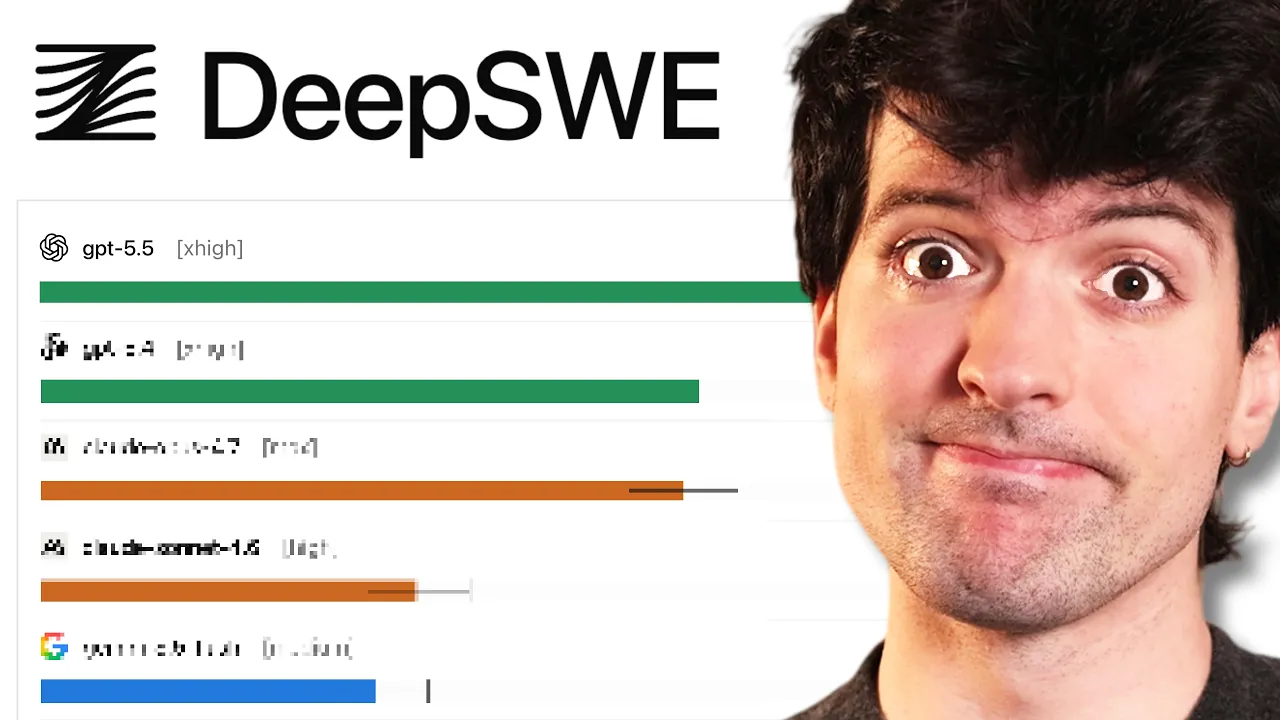
Correct answers can be as cheap as a few thousand tokens. Incorrect answers can be as expensive as a few million. And we're talking about 25 bucks per million tokens. We're talking bills as high as hundreds of dollars for an answer that isn't correct. And when we look at benchmarks like Deepsw SWE, the severity of this problem is obvious. GBT 5.4 scored slightly better than Opus 47. Yes, I said 5.4, not 5.5, which scored way better. But if we compare 54 to Opus 47, remember Opus 47 is more expensive, 25 bucks per mill out versus 15 per mill out.
So Opus more expensive by 80% or so, scored worse and generated 100,000 tokens. By four, scored better and only did 67,000 tokens. By five, scored way better and only did 47,000 tokens. So again, with these realworld coding tasks, Opus models use twice as many tokens as equivalent OpenAI ones. Opus 4.6 did use way fewer tokens. Like from 46 to 47, they more than doubled the token usage, but it also scored like other [ __ ] in this bench. But this change in particular means that if you take the work you're already doing and switch from Opus 46 to 47, despite the fact that they are the same cost, you just doubled your spend.
simply because you're using twice as many tokens. And you can see that in the score versus cost charts here where Opus46 cost $4.70 per run and Opus 47 cost $16 per run. 55 was only $5.80 and 54 was only $3.30 for better intelligence than any of the anthropic ones for these types of code tasks. That is almost certainly a big portion of their revenue growth. the fact that the cost to use their state-of-the-art tripled in the last few months after 10xing over the last year. Even if the number of customers did not go up week over week like it is right now, their revenue would still be going up as more people move to the better model, they end up spending way more.
And also, let's be realistic. As people start to realize how powerful these models are, they start using them for more things. I know that my number of tokens per month consistently goes up. Even when things get more efficient, I just end up writing more code and generating more stuff. So, their customers are generating more tokens. They are using these models for more things and per task they're spending three times more. If you double the number of customers, you double their usage and then you triple their costs, you just 12xed your revenue. But the craziest thing is that my conspiracy is that they weren't actually trying to increase revenue with a lot of these changes.
I think they were trying to save their GPUs. I think they increased the cost in hopes of people using the models less or using them for more efficient things to free up compute for their intended use cases for research. But they have learned the hard lesson quickly. When people like your models, they will keep using them more and they will pay basically whatever to do it. Especially when they're not the one footing the bill in the end. If you're an engineer at a company and you suddenly got to jump from using shitty C-pilot integrations to actually embracing Claude code and Opus, that is a 10x improvement.
While I do prefer codec to cla code, I would say it's like 10% better. Claude Code to everything before it is like 10x better. So, if you're a company that was using Copilot or [ __ ] I don't know, Amazon's awful Nova models for things, you probably didn't think AI was that great. Then finally someone tries out opus during the holiday break on their cloud code locally. They realize it's insane. They come to work and say can we please please use this? The company says okay fine sure. Now suddenly people are experiencing good AI for the first time ever without even having to leave the cloud of choice.
They all start spending way more on it. The costs go up not just because people are using it more but because the new model uses more tokens. Then you end up with that curve up and to the right. more customers spending more money doing more things with more models and of course more tokens. It makes all the sense in the world that their revenue has gone up so fast because even without the customer growth number goes up to the right. But we're only talking about half of the formula for profitability. We're just talking about the income.
We got one other part to talk about here. Costs. In order to become profitable, your revenue has to grow faster than your costs grow. Anthropic costs have grown immensely as they keep doing all of these crazy compute allocations and hiring so many of the best people in the world. But their costs have a ceiling for how fast they can grow because they're limited on one particular issue, comput availability. It does not matter how much money anthropic wants to spend on compute if the compute doesn't exist. If all of Nvidia's manufacturing is bought out until 2028, it doesn't really matter how much money is willing to spend.
They won't get those GPUs until 2029, unless they rent them from their competitors, which is what they've been doing, which can massively increase their spend, but not as much as committing to spend for future generations, which is what OpenAI and other companies have been doing. OpenAI incurred way more costs this year because they have all of these contracts they formed before to get as much compute as humanly possible. Anthropic was more conservative with their compute bets, which means that their spend did not ramp up quite as fast. But it also means they don't have enough compute to do the things they want to do right now.
And that's why they're doing crazy things like partnering with XAI after banning them from using cloud models just months before. So while I do think Anthropic's profitability is somewhat accidental due to not spending enough on compute and raising prices a bunch to reserve the compute they had, the profitability is real. Which leads us to an important question. Is this product market fit? For those who aren't in the startup world, the concept of product market fit is the idea that your product has such high demand and has penetrated the market in such a way that it will continue to grow.
You just have to kind of ride the wave at that point. This is the goal of all businesses. You want to have growth and demand that's so high that you are almost destined for success as long as you can keep putting out fires fast enough. It's a concept that came from Mark Andre and it's the alignment between the market and the product. Doesn't matter how good your product is if the market doesn't want it. Doesn't matter how good the market is if your product [ __ ] So the question is have they hit PMF now? Is are the major labs at a point now where the product and the market are properly aligned?
Simon Willis seems to think so. We're not going to read this whole thing with the links in the description if you're interested in it yourself. Anthropic is strongly rumored to have their first profitable quarter. There are lots of stories circulating about companies surprised by how big their LLM bills have gotten and how often they're being used by their staff. I think this is because OpenAI and Enthropic have both found PMF. The first big piece is the pricing specifically that enterprise customers are now paying API prices. When you and I use things like Claude Code or Codeex, we are paying the $100 or $200 tiers, but we're not getting $100 to $200 of API usage.
So, with my personal usage of codecs, which I am paying the 200 bucks a month for right now, as a less heavy user than people on my team, I am still doing $553 of inference on that $200 plan. Other members of my team have gotten as high as like three plus,000 for the 200 bucks. And as long as we're on those personal tiers, we can get what feels to be pretty close to unlimited usage. And that's the experience that Simon's had, too. For his $100 tier on Anthropic, he got $1,200 of tokens. And for his $100 tier on OpenAI, he got $1,000 of tokens.
Simon had incorrectly assumed that companies making extensive use of agents were getting similar discounts. Turns out, I could not have been more wrong. He hasn't been able to track down the exact date, but at some point in the last 6 months, Anthropic switched their enterprise plan, which used to be seats including enough usage for a typical workday to now being $20 per seat per month, plus API pricing for usage. Many customers are just finding out about this as they renew their contracts and their spend is going up massively. Openi did the same thing for their enterprise plans for CHBT business and enterprise in particular.
A little harder to decode because they're quoting prices in credits, but as far as Simon can tell, these credit costs are an exact match for the API token cost listed. Yep. And they have been brutal about giving discounts. I've experienced this myself. Even committed spend as much as like 40k a month. You're lucky to get more than 5% off. And when you consider that the rumors for the profit margins for the hosting and metal costs relative to the API price are as much as 90% margins as in like you spend 10 bucks for tokens, they profit $9 for those tokens.
That means they could make better deals, but they're just not doing it. Simon also calls out that 55 is 2x the API cost of 54. It's also way more efficient, so that's not as simple a change as it looks, but Opus 47 is around 1.4x 4x the price of Opus 46 just from the tokenizer. But again, when it's doing so many more tokens, it ends up being closer to 3x costs in the real world. But the craziest thing isn't the cost increases, it's that companies are still paying them. They're not losing customers because the prices went up.
In fact, companies are spending more and doing more with them. So why are they suddenly being so aggressive with pricing? It's because they're planning to IPO, sure, but it's also, according to Simon, because they probably found PMF finally. These coding agents are just so powerful that once you start using them, you're willing to pay absurd amounts of money to keep using them. Like, if you took away codecs from me and said I had to pay $2,000 to keep using it, I'd probably go back to Claude Code until they did the same thing, which they probably would have done first.
I get it. I understand. If I had to pay the $2,000 to use these things the way I'm using, I would have to make some hard decisions. This is a huge contrast to the popularity of chatbt before where despite having 900 million people using chatbt every week, only 50 million, which is 5% were actually paying money for it. And if OpenAI wants to spend a trillion dollars in infra, they'd have to have a billion customers for 4 years to make that much money. It just wouldn't work. But if companies are spending over $200 per month per user, you'll get there way, way faster.
You can see this focus from OpenAI and Anthropic just by looking at their job listings. OpenAI has 703 open jobs. Roughly 30% are for enterprise sales. Anthropic has 390 and roughly 27% are for enterprise stuff. It's pleasingly ironic that these AI labs have picked a business model with such a heavy demand on human labor. Enterprise sales contracts don't close themselves without a whole lot of humans in the mix. It is always hilarious to me how much enterprise sales differs from like any other thing. Like I know people whose job is to like bring people to baseball games to try and get them to sign a crazy contract.
It's a weird field, but even these labs have to play by those rules if they want to have these types of sales. This is also a big part of why OpenAI is breaking up with Microsoft because they really want their [ __ ] available in all the different clouds so they can do more enterprise selling. I like that Simon calls out these stories that are massively overblown. A lot of people have been asking me to cover the Microsoft cancellations of cloud code licenses. I didn't cover this because it's not true. Sure, they're not going to let employees use cloud code directly.
That's because they are now routing through the GitHub co-pilot CLI, still using the same quad models, still paying Anthropic the same money as part of the new deal that they just shifting of where they are using the model, not a change in Microsoft's willingness to spend on anthropic models. It's just a dishonest thing to report on. And while the Uber case is more interesting where Uber blasted through their entire year AI spend budget in the first three months of the year, that's because they went from using models that were kind of useful for autocomplete sometimes to models that are able to do full end to end [ __ ] that are also more expensive at the end of last year and they didn't update their budgeting based on the existence of Opus 45 and other similarly competent models.
I think this all comes down to the single biggest thing that resulted in the profitability of Anthropic. Opus 4.5. I cannot properly enough emphasize how much this changed everything, not just for Anthropic, but AI as a whole. As the OpenAI fanboy I'm often accused of being, they had nothing close at the time. Opus 45 was so good that it turned me into an anthropic fanboy for a bit. This model was a huge shift in how big of tasks we could trust the AI to go do. And it made me move away from using AI to edit a file for me to using AI to solve real complex problems.
And a lot of this growth is the sentiment win that anthropic earned with Opus45 being so good. And OpenAI has to catch up. These companies take 3 months to two years to understand what's going on. and enterprise is slow, but Obus45 ushered in a new era of AI capabilities and expectations. It took 3 months or so to kick in for enterprises, but they're starting to spend based on this model's success. And I would imagine that OpenAI is not far behind just knowing how long these things take. So, in the end, Anthropic did earn their profit, even if a lot of that is cuz they didn't have enough spend allocated to compute.
They are charging more. They do have more customers. Their customers are using their models for more things and they're using them on all of the different clouds. It is obvious to me why they're making so much money. It's because they made something incredible. They continued iterating well enough and then sold it hard enough to make a shitload of money. This was always going to happen, but I thought the turning point would be more next year at earliest. The fact that it happened now shows just how crazy these things are going and how much demand there is for inference right now.
I think that's all I have to say on this topic. Congrats to Anthropic for the profit and congrats to all my friends who are there who are suddenly much more wealthy. Y'all earned it. As much as I love talking [ __ ] Anthropic put themselves where they are now. They earned this spot. But I am rooting for competitors to negotiate down prices because Anthropic is only able to charge this much because they don't really have competition until OpenAI models are in AWS. Kind of just ran around in circles like an Anthropic model does on a hard task.
So, I'm going to end quickly like a Gemini model without much warning. Peace nerds.
More from Theo - t3․gg







Get daily recaps from
Theo - t3․gg
AI-powered summaries delivered to your inbox. Save hours every week while staying fully informed.