The Google Update That's Changing SEO (and No One Noticed)

Chapters8
Google's AI overviews are expanding to commercial product queries, creating new demand within the search results.
Ahrefs reveals Google AI overviews are creating a new demand channel, nudging buyers toward products directly in SERPs, and outlines tactical ways to win mentions across lists, YouTube, Reddit, and more.
Summary
Ahrefs’ analysis centers on a surprising shift in Google’s search results: AI overviews are now surfacing product recommendations and driving demand without traditional content creation. The video points to a November 3 spike in searches for certain products, correlated with Google’s AI overview updates and new linking behavior that nudges users toward shopping results. Timely changes began in October, when AI overviews appeared for commercial product queries, and intensified as Google started linking to more search results within those overviews. The core idea is that AI overviews reduce friction along the buyer’s journey by offering a handful of strong options, shortening the research loop, and lending perceived trust since the recommendations originate from Google. This creates a funnel where more clicks can translate into conversions even if it doesn’t guarantee direct sales yet. Ahrefs stresses that the opportunity lies in being mentioned within the lists that AI overviews pull from, rather than chasing a single site. The tactic is to target listicles and high-probability pages where your competitors already shine, using Brand Radar to identify opportunities and the “Phantoqueries” pattern that AI assistants tend to fan out into. The video also advises diversifying mentions across YouTube, Reddit, and Quora, and provides concrete steps to reach out to creators, participate in communities, and monitor pages that rank for predictable queries. In short, this is a new, data-backed channel for visibility—one that requires a proactive, multi-format outreach approach grounded in concrete listicles and fan-out query patterns.
Key Takeaways
- AI overviews now surface product recommendations for commercial queries, turning Google into a direct demand generator rather than a passive answer source.
- November 3 marks a pivot where Google began applying links in AI overviews specifically to product names within commercial queries, influencing user behavior.
- To earn a spot in AI overviews, focus on being mentioned in listicles that Google cites, because over 45% of citations change when AI overviews update and updates occur roughly every 2 days.
- Brand Radar helps you identify high-probability pages (best/top/comparison/versus/review) where your competitors are mentioned but your brand is not, enabling targeted outreach.
- Diversify mention channels beyond blogs—YouTube, Reddit, and Quora are heavily cited domains in AI overviews and Google’s AI mode.
- Engage with creators for reviews and contribute to relevant communities; use data from Brand Radar to pinpoint exact videos or threads that rank for AI-overview queries.
- While direct sales impact isn’t proven yet, the model is bullish: reducing information overload, ending the research loop, and increasing trust can boost conversions through Google's enhanced search experience.
Who Is This For?
Essential viewing for SEO strategists, product marketers, and content teams who want to exploit Google’s AI overviews as a proactive traffic and demand channel, not just a ranking exercise.
Notable Quotes
"They're quietly creating a brand new way for SEOs, brands, and marketers to go beyond traffic and to create real product demand right within Google SERP."
—Describes the fundamental shift Google is enabling with AI overviews.
"AI overviews remove almost all of these obstacles in one move. They reduce the choices by just giving you a handful of products."
—Explains how AI overviews streamline the buyer journey.
"This is a brand new demand channel being created right in front of us."
—Summarizes the new opportunity landscape for brands.
"If your content is mentioned across many of the pages that surface for these fanout queries, your chances of getting cited in an AI overview go way up."
—Highlights the importance of breadth of mentions for AI-overview inclusion.
"The more your brand or product is mentioned on pages that rank for these predictable Phanto queries, the higher your odds of getting recommended in the best of style AI overview queries."
—Describes the targeting logic for maximizing AI-overview exposure.
Questions This Video Answers
- How do Google AI overviews influence product visibility in search results?
- What are Phantoqueries and how can brands optimize for them in AI-assisted search?
- Which tactics work best to get mentioned in AI overviews—listicles, YouTube reviews, or Reddit threads?
- How can I use Brand Radar to identify opportunities for AI-overview mentions?
- Is there any evidence that AI overviews increase sales, or is the impact limited to traffic?
Google AI OverviewsAI-assisted searchBrand RadarPhantoqueriesYouTube marketingReddit marketingQuora marketingSEO strategySERP features
Full Transcript
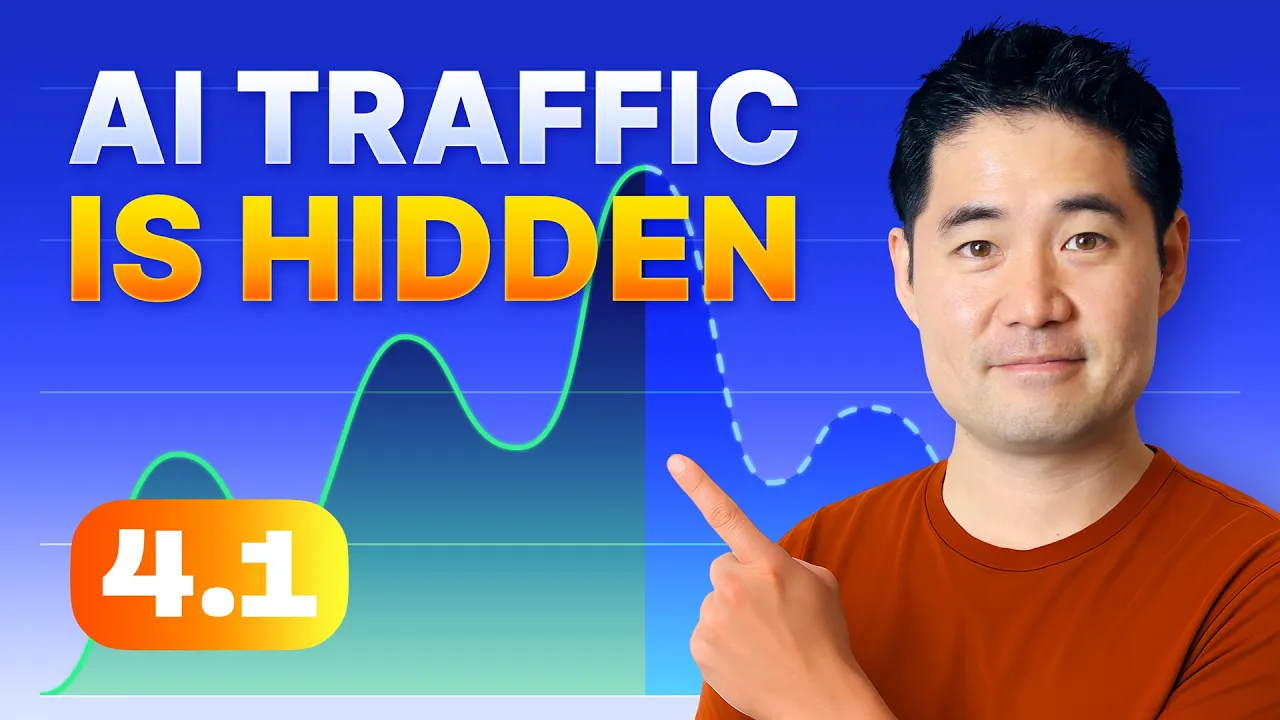
Take a look at this chart. These products were barely searched for over the past 90 days. And then on November 3rd, instant and consistent demand. And it's not just this one product. That exact same spike and chill pattern appears on products that share a common trade. Google's [snorts] AI overview is recommending it. They're quietly creating a brand new way for SEOs, brands, and marketers to go beyond traffic and to create real product demand right within Google SER. and no one's talking about it until today. Because in this video, I'm going to show you what this opportunity is, how it works, and how you can use it to get more traffic to your products without even creating content.
But first, you need to understand exactly what happened on November 3rd, the day searches for these products suddenly exploded in Google. Up until earlier this year, Google's AI overviews mostly appeared forformational [music] queries. Queries like, "Why is my lawn patchy?" or how to train for a 10K and what is intermittent fasting. But if you look at the historical search results for a commercial query like best golfs on any random date, you probably won't see an AI overview there. That is until around the beginning of October. Suddenly, Google started showing AI overviews for these best product name queries, and it was happening across the board.
But the mentions alone didn't cause the spike in search demand. It was these little thingies. In March, Google started testing links in AI overviews to more search results. But it wasn't until November 3rd when they began applying those links specifically to product names in commercial queries. Now, here's the important part. When you Google any product name, the search results will almost always surface shopping ads, e-commerce sites, and the brand's product page. So, now Google isn't just answering queries and AI overviews. They're creating product demand by taking content and pushing people further down the buying funnel by putting options to buy without ever leaving the search results.
Think of the buying journey like this. There's a person on one end and the product on the other. This person needs to go through a journey to find the product, but there are obstacles along the way that'll slow them down or stop them entirely. One of the obstacles is information overload. You search one thing and suddenly you're staring at 20 tabs, 15 listicles, 10 YouTube videos. It's too much. Some people just quit right here. Then there's the second obstacle, the research loop. This is where people start comparing features, clicking back and forth, overthinking everything until they hit analysis paralysis.
A lot of buyers drop off here. And then there's the third and probably biggest obstacle, trust. Most people don't trust random websites, influencers with affiliate links, or brands reviewing their own products. There's bias everywhere, and it's hard to know who to believe. Now, here's the thing. AI overviews remove almost all of these obstacles in one move. They reduce the choices by just giving you a handful of products. They end the research loop by summarizing everything for you, and they instill trust in the searcher because the recommendation feels like it's coming straight from Google, not someone else who might have a different motive to recommend a product.
So when you take away friction like this, more people can make it through the journey, which I think will lead to more conversions. And in my opinion, that's a big friaking deal because as an SEO or digital marketer, you now have the chance to materially impact your business and clients businesses by shaping this new search experience. And I've got a handful of tactics that'll help you get your products mentioned in these AI overviews. The first and most important tactic is to target listicles. If you look at the sited pages inside a best product AI overview, you'll see they're almost always listicles.
Open a few of them up and you'll often see the exact same products that appear in the AI overview sitting right there in those lists. Now, technically, you could reach out to every writer behind those cited pages and ask them to review your product and add it [music] to their list. But our recent study revealed that over 45% of citations change when AI overviews are updated. And get this, AI overviews refresh on average every 2 days. So if you only target the handful of sites Google happens to be citing today, you're basically playing SEO whack-a-ole.
[music] Instead, you need to get mentioned on as many relevant lists as possible. And it's super easy to find these lists in HF's Brand Radar. Just run a blank search, then go to the cited pages report where you'll set a filter for where the query contains your target keyword. [music] And now we have a ton of listicles that are mentioned in AI overviews where products like yours are being referenced. Just visit those pages and reach out to the author or site owner to try and get your product included in their list. Now, even if you get listed in some of these posts, it doesn't guarantee a mention in the AI overviews.
And that's because Google doesn't just pull from these lists. AI assistants build their responses using a technique called query fan out. When you enter a prompt like, "Plan me a 5-day trip to Japan in November," the AI doesn't just answer the question directly. It silently fans that single question out into dozens of smaller longtail subqueries. Things like best areas to stay in Tokyo, Kyoto fall foliage attractions, JR pass cost 2025, and more. It then pulls information from the pages that rank for each of these subqueries and stitches the important parts together into one complete answer.
So if your content is mentioned across many of the pages that surface for these fanout queries, your chances of getting cited or included in an AI overview go way up. Now, we can't know the exact list of Phantoqueries an AI assistant will use because A responses are personalized and B assistants dynamically generate new subqueries depending on context, location, previous interactions, and available data. But AI assistants, they tend to fan out queries into the same predictable patterns like best X for Y or best X in current year, top recommendations for topic, X versus Y, is X worth it, alternatives to X, and more.
In fact, you'll see some of these in Google's autosuggest, people also ask, and related searches. So, the more your brand or product is mentioned on pages that rank for these predictable patterns, the higher your odds of getting recommended in the best of style AI overview queries. Now, the most efficient way to find opportunities that'll move the needle is to find these types of pages where your competitors are mentioned, where you're not. Just enter your brand in some of your competitors brands and brand radar. Hover over your brand name and choose others only. Then open the site of pages report to see all pages that mention your competitors but not yours.
But you don't want to reach out to all of these pages because many of them won't even influence the AI overviews and just be a massive time suck. Focus on the pages that rank for these high probability and predictable Phano queries. To isolate them, just add a filter where the query contains words like best, top, comparison, compare, versus, review, alternative, and worth. then hit the any option and apply the filter. And now you're left with a solid list of pages worth trying to get mentioned on. Now, blog posts aren't the only place you should look for mentions because AI assistants pull from various sources and formats, especially Google.
According to our data, YouTube, Reddit, and Quora are three of the most cited domains in AI overviews. And the same holds true for Google AI mode. And as of today, Reddit is actually the most cited domain in Chad GBT. So, here's how you can put this in action if you want your products mentioned in best of style queries. First, contact YouTubers and offer to send them free products for an honest review. The more videos your product appears in, the better. And second, find an active subreddit in your niche and genuinely participate. Just spend like 30 minutes a day answering questions and helping people.
And as you build trust in the community, your product mentions will land naturally. Now, if you want a more datadriven way to do this, go to the cited domains report in HS brand radar with the same filters we set last time. Click the number beside YouTube or Reddit and you'll see the exact videos or threads that rank in the AI overviews for these queries. These may be the creators and communities worth investing [music] in. This is a brand new demand channel being created right in front of us. And to be clear, there's no data yet that proves any of this directly drives more sales, just searches.
But when you think about search intent, buying behavior, and how people move through a funnel, it's hard not to be bullish about where this is going. Comment if you agree or disagree, and then go and watch our video on the top geo ranking factors, which will help you rank in AI search.
More from Ahrefs





Get daily recaps from
Ahrefs
AI-powered summaries delivered to your inbox. Save hours every week while staying fully informed.