Steam just made a lot of people mad..

Chapters7
Valve will display actual game performance data and remove publisher driven hardware recommendations to create a transparent ecosystem for players.
Valve’s Steam could pivot the entire PC market toward transparency, with real-world performance badges and FPS estimates making every purchase feel safer for players.
Summary
Asmongold TV presents a hard-hitting take on Valve’s latest moves with Steam pushing for unprecedented transparency. He argues that removing recommended hardware from publishers and publishers’ control will reveal true performance data for each game, reducing hype and deception. The shift would let players see real-world FPS and hardware compatibility, potentially cutting refunds and boosting trust. For developers, this means clearer feedback from real-world runs and a stronger incentive to optimize. Valve’s history with refunds—14 days and two hours played—gets central to a broader strategy: hold publishers accountable and reduce scam-like practices. The discussion weaves through Steam Deck verifications, Steam Machine plans, and the idea that a customer-first approach can be simultaneously profitable. Asmongold ties these changes to larger industry trends, suggesting a future where trust becomes a core value and standards push out misleading marketing. He also contemplates how competing platforms might react and what this could mean for game quality, pricing, and the overall health of PC gaming. The video ultimately positions Valve as a potential standard-bearer, turning user data into a tool for better buying decisions and fair competition.
Key Takeaways
- Steam may remove recommended hardware from developers, replacing it with transparent, real-world performance data for each game.
- Steam could introduce FPS estimates derived from real user metrics, making store pages reflect actual gameplay on similar hardware.
- The new transparency is framed as pro-consumer and could reduce refunds by preventing buyer regret from underperforming titles.
- Valve’s approach could normalize quality standards across the industry, pressuring publishers to ship games that meet promised performance.
- Steam Deck verification and Steam Machine plans are part of a broader strategy to certify game compatibility and build platform trust.
- Developers, especially indie studios, stand to benefit from clearer performance signals and less wasted QA on diversified hardware.
- This move could set a new competitive baseline—other platforms may be forced to improve or risk losing players to Steam’s data-driven approach.
Who Is This For?
Essential viewing for PC gamers craving transparency, indie developers seeking honest performance signals, and anyone curious about how Valve could reshape standards in the gaming industry.
Notable Quotes
"Steam is about to make a whole lot of people mad. And I'm going to tell you right now, it definitely is not the players."
—Opening claim that the change will primarily upset publishers and developers, not players.
"They are going to show us exactly what games are actually running on, what performance really looks like for these games based on our experience."
—Describes the core transparency feature Valve is supposedly pursuing.
"If Valve can provide the consumer with more information ahead of time that will prevent a negative experience on their platform... this is financially beneficial for Valve."
—Links user-facing benefits to Valve’s business incentives.
"This is a massive shift incentives. We actually have a platform that's out here collecting user data and using it for something that is actually useful or benefits the customer."
—Highlights the data-driven approach as a watershed moment for consumer trust.
Questions This Video Answers
- How will Steam's new performance data affect my purchasing decisions on PC games?
- Could Steam Deck verification become the new standard for game quality across all platforms?
- Will publishers push back against Steam's transparency, and how might others respond?
- What are the potential risks of sharing real-world FPS data for games on Steam?
- How does Steam’s refund system influence developer behavior and game quality?
SteamValveSteam DeckSteam MachinePC gaming transparencyFPS estimatesgame performancerefund policySteam refundsgame optimization
Full Transcript
Steam is uh it's actually crazy how they've just continued to grow and get more popular. Steam is about to make a whole lot of people mad. And I'm going to tell you right now, it definitely is not the players. In an effort to make Steam a more transparent ecosystem, they are going to be taking recommended hardware out of the hands of developers and publishers. And instead, well, they're going to show us exactly what games are actually running on, what performance really looks like for these games based on our experience. No more lying, no more hiding, no more gaslighting.
Everyone will be exposed. This is going to be such a massive change. This is going to be such a huge help to players. It is going to instantly impact what games players buy, when players buy these games, and it is going to piss off a lot of these publishers that have been selling us unfinished garbage for years. So, like most of them, but this entire thing is just another step. It's just another action that Valve has taken to be able to make their platform that much more transparent. Yes. Which got me thinking, what are they up to?
Because with what they're doing now and other things that have happened in the background, years of these guys working on their own hardware and their own games and their own platform, well, I think these guys are building towards something much bigger, something that it's a very simple thing. Video games that don't that don't deliver the performance that is indicated. and uh that is promised probably have a higher refund ratio. So if Valve can provide the consumer with more information ahead of time that will prevent a negative experience on their platform and also prevent a refund that could cost them money.
This is something that's financially beneficial for Valve. So this is the instance where a remember what I said before about instead of lowering the price increase the value. This is the intelligence and the genius of, you know, a person who's trying to make a product and a service better for their customers while at the same time improving it for themselves. So that's the real reason why they're doing this. Like it's because obviously if you buy a game and then the game gets you 30 FPS, you're going to refund the game. So why the [ __ ] would they want people buying games and then refunding them and thinking that Steam is a scam?
because that's what's going to happen. Duh. Of course, this is the intersection where, you know, again, great businesses are able to find this intersection where the company benefits and the customer benefits. And this is, I think, a perfect intersection of that. It's a great idea that I do not think a lot of people are ready. It's a win-win. Yes, exactly. Standardized level of quality in the games industry. Setting expectations permanently. No more questions need to be asked. You're wrong. It doesn't matter for Valve for refunds since they keep the cut even with the refund. So saying it costs Valve is wrong.
It's just proconsumer. You're thinking about this from a monetary perspective. You're not thinking about it from the perspective of a person having a bad experience on their platform and then attributing that bad experience to Steam and then not wanting to use Steam. The reality is that whenever a platform is not well regulated and people have bad experiences on it, they're going to be more likely to not use that platform. It's their reputation. So you have to think about this in a bigger picture. You can't look at everything as a balance sheet. Like the brand value of something is massive and extremely important.
So today we're going to be talking about that. We're going to talk about Steam's latest changes, how they're going to impact the games industry at a rate that Also, sorry, I hate pausing this many times, but I apologize. Also, there are people that are employed at Steam that process refunds. If Steam had to theoretically process 10 times as many refunds, Steam would have to pay more money to do that. So, that means that the amount of money that they have to spend is actually uh variable with the amount of refunds they do. So, your argument is wrong, but it's also not the point.
I don't think we've ever even seen before. How Valve is trying to standardize quality in the games industry and how all of this has already happened. But before that, a word from today's sponsor, boot.dev, which I've been back on their website, and one of the things that I noticed when I've been checking it out is that it feels a lot more like practicing than actually studying. Like, you're actually learning something on the job. You're not just sitting there watching these lessons just stack up passively. No, you're constantly doing something. You're coding. You're fixing code. You're always interacting with the platform.
Feel like you're actually making some kind of progress. I'm sure I'm sure you know better than the difference between them and anybody else. They structure this all like an RPG XP level gimmick, but it's there to give you momentum. Always feel like you're making progress instead of just consuming content. Have you guys seen criticism for Steam not doing better job at uh limiting games that are bad products? when you get stuck, but you eventually will. You have the AI tutor that's not there just to hand you the answer and move on. It's nudging you in the right direction so that you can actually figure things out on your own and don't forget it 5 minutes later.
They also have added the training grounds which is basically a area for you to be able to grind challenges until something clicks. Now, all of these lessons are free to read and watch. You can demo all their interactive features, too. Paid just unlocks the full hands-on experience, the coding, AI help, and progress tracking. And the reason why I think this kind of stuff matters is because these are backend skills that can actually translate into real job level skills. The kind of things that can land you a role while you're making six figures a year and oftent times you're working remote.
So if you're interested in checking this out, maybe you want to make your own game. Go to boot.dev and use code legendary drops for 25% off your first entire year on an annual plan. The link QR and code are all on screen and it's in the description and the pin comment. Thank you to boot.dev for sponsoring today's video. What a nice guy. Valve is arguably the most powerful company in PC gaming. Hell, in all of gaming. And instead of using that position to be able to push some of the worst habits in the industry, they have become more successful than their competition by largely doing the opposite.
Steam is a monopoly by choice. Players choose it. Developers choose it. Not because they're forced to, not because they don't have. It is not a monopoly. It is not a monopoly. It's not even remotely close to a monopoly. If I were to guess, I would look at I if I were to predict what monopoly of game service delivery does Steam have, what percentage of the market share do they have? At most 20 to 25%. That that's it. And I would say if you include mobile, cut that in half. Have any other options? but because it is the best platform.
It has the biggest audience, the most useful tools with the kind of conveniences and consumer protections that we just don't see exist anywhere else. And that's why I think that Steam means a lot more to people than just being a storefront. For a lot of players, it represents one of the last major platforms in gaming that still feels like it's being built by people who still actually love games, not just as well. I think the reason why people like Steam so much is because Steam makes decisions that are those decisions are customer first. They don't make financial decisions for their business and then try to insult the intelligence of the user and try to say that oh actually this is better for you that you have to watch an ads or quarterly revenue but as a hobby that's worth protecting the games the people who make them and the people who play them.
And lately, it feels like Valve doesn't just want to be the better example anymore. They want to set a standard. Yeah. When we look at what Valve has done over the past couple of years, I think that there is a really clear pattern here. They just keep finding places in the industry where they are benefiting from confusion or vagueness or flatout dishonesty. And that Steam is turning that into a rule. They're making a warning. They're putting in a disclosure, something that is there to protect their customers. Steam seems to always move in a much larger effort to keep Steam healthier, clearer, and a hell of a lot harder to exploit.
Steam is basically the one that set the modern standard for refunds in PC gaming. You have 14 days and two hours played. I can't tell you guys how many times this has saved me. Maybe the game just didn't launch. Think about what would happen if they didn't have that. Think about how much different the entire industry would be. The recommended specs were a fantasy and the game just runs like [ __ ] Or maybe there was just no demo, so I just tried it and realized, yeah, you know what? This just isn't for me. Refunds are always fast, sometimes immediate in most cases.
And even if you go past that 2our mark, there's been plenty of times that if you give them a legitimate reason, Steam will just at least hear you out. And that's, by the way, that's somebody being paid to do that. So, an individual had to read that. That to console platforms or any other platform outside of maybe GOG, where refunds rarely even happen, and when they do, it feels like you're trying to plead your case to a brick wall. It's not even comparable. And that same mentality shows up all over Steam. Valbans crypto and NFTTS, they require disclosures.
regenerative AI, especially you're wrong. By definition, Steam's a monopoly as it has roughly 75% of market share is usually 50% considered by a monopoly in the US. Um, no I'm not. Uh, so what by what definition does Steam have a 75% market share? Did you guys do you guys look that up on on on Grock on Google? How are you defining monopoly? of PC gaming. Okay, let's look it up. Um, how many people who are how much uh let me think of a good way to answer to ask this question. Uh let me think how many let me think how many players PC only how many what percentage what percentage of PC players are forced to use Steam uh in order to access video games.
See what it says. Mhm. 78% download is strongly incentivizes using Steam. Um, give me Okay, so let's look at this. Uh, give me the uh ex the other 20 to 30 or sorry 30 to 40 the other 30% of platforms. You're going to see the problem right here. Epic Games Store, EAP, GOG. This is all of them. There's no way. How do they get this number? I don't believe this. I don't. Yeah, I don't believe this. We need vin diagrams now. Yeah, I don't. And uh doesn't it include platforms like Blizzard? I thought it did.
It says Battlelet. Yeah, it did. It says publisher specific launchers. Yeah. How do you get the How do you get the data for that? Why do you not believe it? The reason why I don't believe it is because the data isn't made public. So, how do you have the data for this? Let me see if I can find it. Ask for the source. Yeah. Where is the source for the amount of users that you get for other platforms? Epic Games Store user stats primary uh source Epic Game Store seems other platforms broader analysis. Okay, so they're from surveys.
There you go. third party surveys. Damn. Why do you only believe AI if it says you're right? Because I know what's going on. Obviously, why you look it up then? Because people are trying to tell me I was wrong. And I knew I wasn't wrong. I just want to let y'all know that I wasn't wrong. So, like basically you guys are quoting you're quoting statistics to me that are based off of third-party random [ __ ] websites that there's no data for this. That's the reason why I didn't believe it. It's because I knew that there was no public data being made public about Sorry, I repeated myself.
There's no public data that gives you a frame of reference that you can judge this off of in the first place. So, anybody that's using a percentage would have to be making a projection. And all of the projections are coming from third-party surveys that use inaccurate third-party tools. That's the reason why. And I knew this. That's why I looked it up, cuz I knew I'd be right. I wouldn't have looked it up if I thought I'd be wrong. It took me a couple of searches to find out I was right. But, you know, the end result is the same thing every time.
Go critical. Yeah. Exactly. It's common sense. Where's your data? You're assuming blackbox. Of course. Do you try to isolate how many game unique games Steam has? Probably a lot. It's third party surveys, not hard data. And that's also, by the way, that's also counting uh inside of PC. PC is not the only platform where you can pursue games. That's like saying that like I mean does does Nintendo have a monopoly on on Sony on like Nintendo games like uh Switch 2 games content is being generated during live gameplay. They have an outright ban on in-game advertising which I'm going to keep it straight with you guys.
that might actually be the only real barrier that's in place to keep publishers from jamming ads directly into our games because like we still do get ads in games a little bit but they're like partnerships with developers where like there's ad placement inside of the game which is very different than a video game that is serving ads through you directly. Come on, we know that they want to. I was watching the Diablo IV campfire chat for their latest expansion, and in the middle of it, Blizzard kept advertising a Diablo I themed Jackson guitar, Diablo IV branded candy, Diablo I branded Fanta, and whatever else these guys could fit in.
That's outside of the game. This is the version that these guys can get away with right now. They can't do that on their own platform. They because they most likely cannot magically get away with it on Steam. So, well, they just don't do it because it's just too damn obvious. Steam's rule is keeping these guys in line right now. And in 2024, Valve went after another thing that players have been burned by for years now. Promised content, DLC, expansion, season passes, all the stuff that publishers absolutely love to sell to us before it actually exists.
Well, Steam now requires those developers to describe that content, provide a release window, and stick to it. And if they can't deliver, well, then they have to communicate with Valve or issue refunds. And if they don't, well then Steam's going to step in and they're going to handle it themselves. This set a massive precedent. Publishers got way too comfortable taking our money up front, dangling future content in front of players and then well the other problem was things like cuz you remember like when that happened that came as a result of like games like the day before like remember whenever that game came out and it was terrible.
Well, I think that after that, people started asking for like more user protections for video games that are basically scams. And like Ashive Creation is another example of that. Whether it's a scam or not is irrelevant. Fundamentally, the user bought something and they're not getting it. Quietly dropping support for that game once it underperformed or the road map just became a little bit too inconvenient for everything else that they were doing. Steam basically said, "No, if you're going to sell a promise on this platform, that is a promise that has to mean something. That is a promise you have to keep." But apparently, that's not the only promise that Steam wants publishers to keep.
One of the biggest issues that players face today, if not the biggest issue that we face today, is performance. It doesn't matter what publisher, what game, what price, or what hardware you're using. You're eventually going to be running into this. And at this point, I think players are just kind of trained to expect the lie. a publisher is going to tell us that this game is optimized for a 3060 and above and then we're going to immediately find out that it can barely even hold together on a 4080. And this is not just a PC problem.
I realize I have some console viewers that are out there. These guys consoles have big problems too, but generally things are more or like consoles are better overall I would say for optimization because it's a one-sizefits-all. And I think that's the reason why some developers choose not to develop on like for example Xbox because Xbox is a much smaller console. tell you, "Oh, this game's going to run at 60." And it definitely doesn't. Performance issues have just become so common across the entire industry that even with high-profile releases, players are just bracing themselves for the excuses before the games even when Starfield launched with massive performance complaints.
Todd Howard told players that they need to upgrade their PC. When Borderlands 4 launched with some of the worst performance issues that we had seen in years, Randy Pitchford told players that they were trying to use hardware that was just too old for the game. He said that PC players must face the reality of the relationship between their hardware and the software that they run. Like half these guys didn't build their own machines. And he compared it to driving a monster truck with a leaf blower's motor. Basically, it's not the game, it's us. Something. I mean, sometimes that's true, but in a lot of cases it's not.
And why is it that your game looks worse than Kingdom Come Deliverance 2, but Kingdom Come Deliverance 2 works and yours doesn't? H that just completely denies all reality to our frustration. And as much as we are sick of it, well, it seems like Valve might be preparing to end that argument entirely. Back on April 4th of 2026, Techbot reported on a new feature Valve is working on. A feature that could estimate game performance in FPS based on real user data. The article read, "Valve appears to be preparing a new feature that could make one of PC gaming's biggest uncertainties, performance, more transparent.
Newly uncovered code in the Steam client suggests that players may soon see estimated frame rate data for each game derived from realworld gameplay metrics shared by other users. The feature would represent a significant step towards bridging the gap between official system requirements and actual in-game performance." Wow, that's what Studios released recommended hardware specs. Yeah. And again, this is something that's good for Steam as a business, too, because it's less negative experiences the user has. The experience on diverse PC setups from expectations. Now, the timing really matters here because this is coming after Steam has already started to move in this direction.
Back in February of 2026, Valve began allowing users to include their hardware specifications in their Steam reviews. So, this doesn't feel like some random feature that people are stumbling on to. It actually feels like a step forward towards a much larger system where Steam can take hardware and performance data compared across real users and then show players a much more honest picture of how these games actually run. And if that happens, oh boy. Well, recommended specs are going to be a hell of a lot less useful for marketing fluff. I'll tell you that right now.
Because who cares what any of these publishers have to say if I can go on Steam and I can see exactly how that is running for people with similar hardware to mine. This is exactly and I think that another component to this too is removing paid advertising and compromised platforms from being able to craft a narrative around the quality of a product. So that means that you're cutting out the developer, you're cutting out the publisher, and you're also cutting out the media. And then you have a direct gametoer uh pipeline where the users are the immediate consumer and also the immediate reviewer.
And so that's basically the most democratic and I think fair way of doing things. Such a massive shift incentives. We actually have a platform that's out here collecting user data and using it for something that is actually useful or benefits the customer. Now mind you this is all optional. You don't have to opt into any of this if you don't want to. But they're not using your information to shove more ads in your face. They're not trying to sell your information to some third party company. So you get an inbox filled with junk mail or a bunch of scam calls from some guy pretending to be your bank.
No, this is them using your data to be able to protect your purchases, hold publishers accountable, and make buying a game feel like a hell of a lot less of a gamble. Exactly. Honestly, I'm kind of shocked that nothing like this has ever existed already. I mean, I guess I'm not all that shocked because these guys really do like to scam us. But man, this the problem also is that there are no other platforms that don't have a vested interest in the success of one individual game that are releasing platforms like or releasing anything like I mean besides Epic Games and like good old games like most of the other platforms that exist have a vested interest in the success of the game.
So they never want to show and display a user a specification requirement that is underneath or sorry that's above what they have. So it's again a problem of incentives like whenever you have an incentive that a person has to misrepresent something you should expect to see a misrepresentation just so obviously useful instead of getting gas lit by these vague specs and cherrypicked footage that were constantly shown. Players can now see at first glance how this game is performing for everybody else. you can see whether or not this game is going to be up to par for the hardware that you have before you even spend the money.
And now for developers, I've talked to a few of them. These guys are cheering this on, especially indie developers because this doesn't just help the customers. It can save these smaller teams a The Spire only runs at 3 FPS on my computer. Ridiculous amount of money. Not every single studio can afford to have a third party QA going across a mountain of different hardware configurations. Not every team can fill an office with a bunch of test machines just to get a partial idea of how that game is going to perform. But if Steam can surface realworld performance data from actual players, well, that gives these developers a hell of a lot clear of a picture, too.
And for Valve, man, this is just smart. That's all I have to say. They don't publish their return numbers, but I would have to imagine that a massive amount of Steam refunds likely come from games just not performing the way that players probably expected. Exactly. Yeah. people, they have to do a refund, then they have to deal with it. It's annoying, right? It's annoying for Steam. It's annoying for the user. Every basically like a game refund is a world where everyone loses. The only people that don't lose is micro, not Microsoft, excuse me, um, uh, Mastercard and Visa because they're processing the transaction and they get a processing fee regardless.
Everybody else loses out. Game didn't run right. The specs were misleading. the player then spends an hour trying to fix it and they finally just refund it. So, a tool like this is going to help everyone. Players because we're going to be able to make better buying decisions, developers because they're going to get performance feedback, and Steam because they're going to reduce a pretty sizable chunk of their own refund queue by preventing all these bad purchases before they even happen. Everybody wins. Man, I really hope that people understand just how massive of a change this is going to be.
It is going to be a huge disruption to the game's industry. It is going to instantaneously impact the way that these companies approach recommended hardware, how they approach performance and optimization. When you have something that is this transparent that is likely going to be just right on the store page, you don't have an option. You have to optimize that game. Otherwise, you're going to launch it with a scarlet letter before players even press buy. if I'm Xbox or PlayStation and I was thinking about going this is exactly what I was saying before about how like I think Jeff Keley I would really like if he replaced one of his awards like one of the dumb awards with uh the best optimized game cuz I think that like we're getting into a world where game optim like video game graphics are plateauing and they've been plateauing for the last 5 years right probably even longer than that you could say and right now optimization is like a huge value ad and I think the difference between playing something like Crimson Desert or uh you know Kingdom Come Deliverance 2 and then comparing that to uh Cyberpunk release or to uh what's another game that's badly optimized?
World of Warcraft um or something else, right? Like what year was it that World of Warcraft finally stopped running on one core? Like what was it 2019 or something like that? It's crazy. Monster Hunter Wilds, that's the one I was thinking of. Wukong. Wukong had minimal problems, but it did have some. I'm definitely thinking about doing it now. That's for sure. No more. You're going to know exactly what you're buying. And also, as a byproduct, we're going to know immediately who the real problem is. And with the long history that a lot of these companies have of pushing out games well before they were actually finished, it's going to be these publishers.
You know, for years now, these guys have been trying to push prices higher and higher. always trying to standardize a level of pricing that they want to be able to make. Always expecting more from us without ever wanting any expectations on themselves. The problem also is that like fundamentally this is a decision that helps players make an informed purchase with their money. And I think that you're starting to see some of these very business unfriendly decisions that are being made start to regress because the market is now accommodating for them. the market is maturing and it's stopping like the the PC gaming market eventually will always hit a plateau, right?
Where like you basically have the amount of people that are going to PC game will PC RP PC gaming, right? And you're going to have a natural increase over time, but like the exponential increase that they saw maybe during COVID or during like I'd say like 2013 or 14 whenever a lot of people got PCs. Uh you're probably not going to see that anymore, right? So you're reading you're reaching market maturity at that point. Now we can start to hopefully see some of these bad consumer practices be uh called back, right? To be clawed back because you're not seeing the same type of companies that are saying, "Oh, well, this is okay to do now." At time these guys have never because now it's harder to uh to sell a product standardize the level of quality.
Not a single time. PC gaming is kind of [ __ ] right now. Really? I think PC gaming now. These games have to come out complete or they have to come out truthful. Which is it going to be? can't imagine they're going to like either one. I can't tell you guys how ecstatic I am over this. This is one of the greatest changes that I have ever seen in the games industry in many, many years. And it's something that nobody can fight. It's just good for the players. It's good for the games. It's good for developers. It's good for the industry.
It's healthy overall. The only people it's not healthy for are the people that are trying to scam people. Yeah, that's right. That's it. It's not healthy for isn't standardizing the games industry by trying to ask these companies and these publishers to be better. No, instead they're just making excuses impossible to sell. I love it. It's beautiful business. And while I really appreciate what Valve is doing and what they're trying to push towards right now, the real question is what are they up to, if there's one thing that I pride myself on is that I don't take anything at face value.
So when I think Yeah. No, I I think absolutely they're building this to make it to where the Steam box that they're making, the GameCube has a better like there's a better indicator of the performance of a game for people that are going to be purchasing games for their platform. I see Valve making moves like this. I don't look at it as some random quality of life feature. I look at the pattern around it because Valve just keeps doing this. They keep finding these places where the industry is benefiting from confusion, vague promises, or flatout excuses.
and they're building systems around those things to protect us and make those excuses a lot harder to sell. It feels like Valve is trying to rebuild trust in the games industry, at least on their platform. We almost never see the games industry trying to standardize around anything in a positive direction. Instead, it's always been about pricing or mass produc Yeah. We're going to standardize around gotcha mechanics. We're going to standardize battle passes. We're going to standardize openw world exploration. We're going to standardize pricing. By the way, it's high producing games, subscription services, always normalizing things against us rather than for us because, well, they make a hell of a lot more money doing the opposite.
And we have definitely never seen these guys try to standardize around a level of quality. Well, except for once. We used to have the Nintendo seal of quality. It existed because consumer trust had completely collapsed. Oh, that's true. By the way, Nintendo like if if there was a Nintendo game and it was made like you knew this game was going to be really good. Like you didn't buy bad Nintendo games. Like I mean there were like like third party publishers that made games that were like kind of shitty. But like in general, like if you bought a new Mario game, if you bought a new Final Fantasy game, uh you know, if if the game said Squaresoft under it, after the video game crash in 1983, that seal had read, "This seal has your assurance that Nintendo has evaluated and approved the quality of this product." The point was pretty simple.
If the game had that seal, it was supposed to function properly on Nintendo hardware. It told customers, "This game works." But over time, we lost that. It changed. It went from the seal of quality to eventually becoming the official Nintendo seal because promising quality became a liability to them. Which honestly feels like a pretty good summary of where the industry went. I don't know. I I really think that Nintendo needs to up their fidelity. I just I really just don't think this is this is just awful. Like I don't It doesn't have to look like [ __ ] 4K, but like this is just It's so bad, man.
It's so awful. Play Xenolade. I've only heard good things about Xenolade. I think I'm going to I mean, today launching broken, unfinished, unsupported slob is basically normalized at this point. Players don't even expect most of these games to even work. Hell, we celebrate when they actually do. And that's just insane. There is almost no other industry in the world where this would be treated as normal. Imagine buying a movie and just accepting that it might not play or a book where halfway through you find out that half the pages are missing. Well, I think that really that's something that was extremely common is that like back in the day you would get get you you you would get DVDs from Blockbuster that were scratched sometimes, right?
Or you get a VHS tape that would skip. And what's really funny is that my mom would tell me that like, "Oh yeah, I bought a piece of software from IBM. I called IBM and the guy says, "Do you have the 1.0 0 or the 1.1 version. She says, "Well, uh, how do I find out?" Well, check the check the box. Well, oh, the box says 1.0. The IBM guy. Wow. Well, good luck to you. Bye. And that's it. You're done. You didn't get the patch. Well, that's too bad. So, no, I I think that really what happened is that gaming for so long was in a growth stage.
And I think you know like products and types of um you know like any sort of consumerism good in a growth stage there is and especially like in and you're not even really a growth stage but like an innovation level stage is that you know you have a lot of people that are more accepting of you know rough edges and problems. But now that that's kind of capped off because we've had the co you know the postcoid recession now has been you know in swing for like 2 years. were like, "Okay, things have pretty much equalized and they're going up, but as I said, they're not going up in a crazy way anymore." And I think now you're going to see instead of people just projecting 20% a year-over-year growth, you're going to have to have them, you know, edging in in terms of quality.
I think that's what's happening. And I'm very glad to see that. Now we're in the value stage for most things. And it sucks. Yeah. And the publishers like, "Don't worry, we'll patch them in later, but still charge you full price." What are we doing here? That would be absurd anywhere else. And at some point, that has to stop. This industry clearly isn't going to do it for itself because that broken standard that they've been pushing is benefiting them the most. They're making more money. They're saving more money. And they're never going to be motivated to do it.
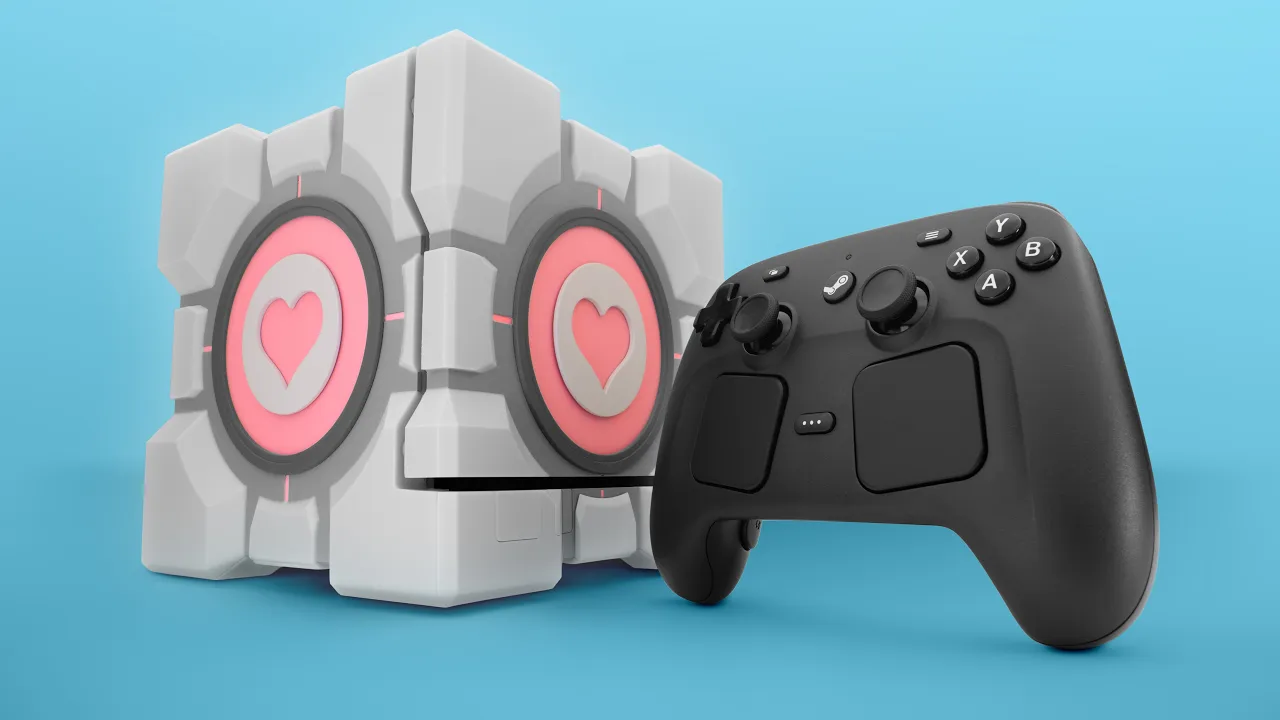
But it seems like Valve is stepping in to be the one to change things. Now, I have to give a shout out to Water CS2 for inspiring this theory, a fantastic everything Valve related content creator, because he's been talking about how Steam is slowly but surely becoming a more console-like experience, gearing towards the release of the Steam Machine, making Steam easier to navigate, more all-inclusive, and a little bit more predictable. Remember, gentlemen, the bet, remember the deal. If the Steam box is above or below, I said plus minus $100 from $1,100, I will be buying and giving out at least five Steam boxes.
If I can get a sponsor to do it, like I I'll give out as many as I can. Like, I I don't need to make any money off of it. I just think it'd be a cool thing to do. Well, and I think this guy's right. I think that that's exactly what they're trying to do right now. But I also think that that's only one small piece of what Valve is building towards because right now we're at a time where trust is at an alltime low in the games industry. It's basically on the floor. And I think that Valve is trying to leverage trust as their brand moving forward.
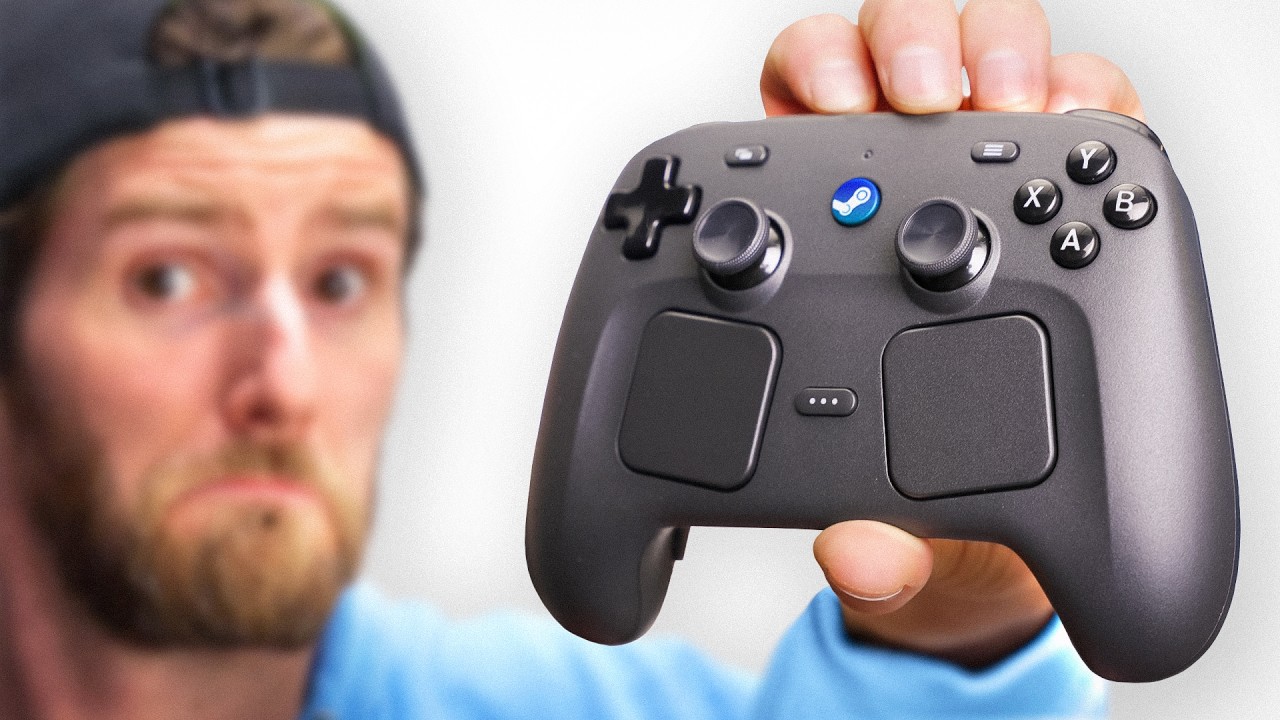
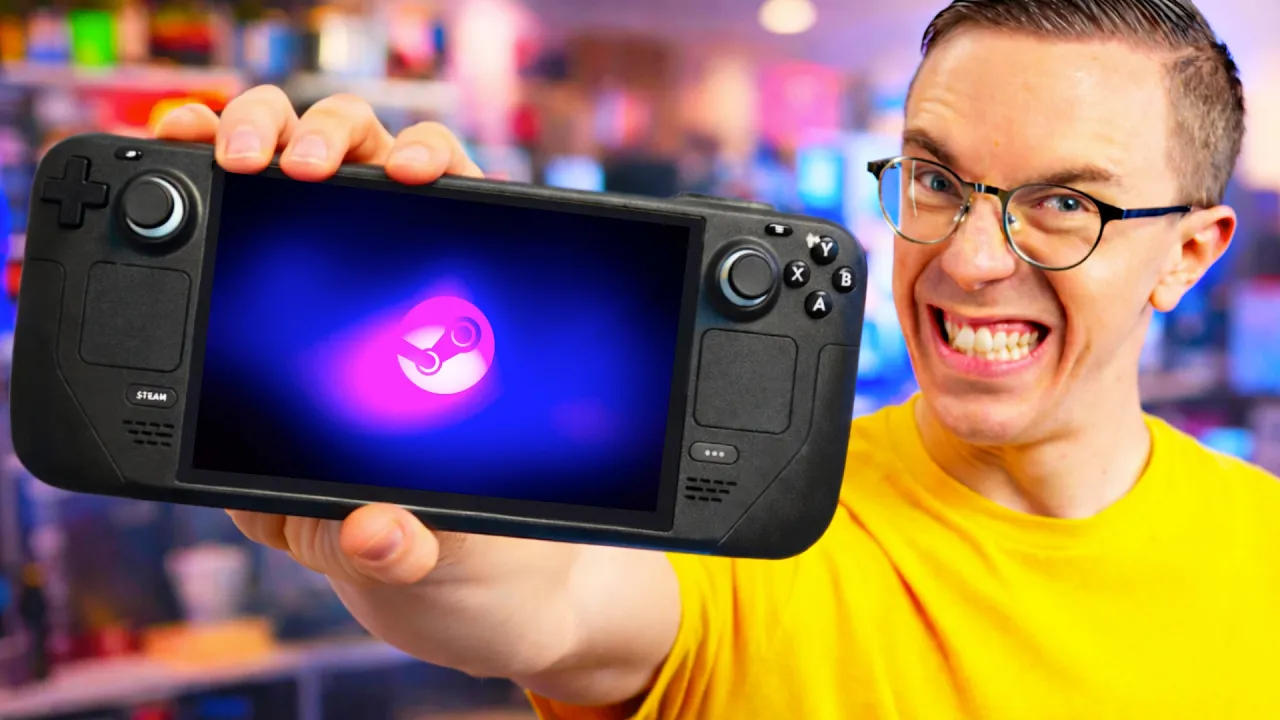
The Steam Machine and the Steam Deck are not just devices. These are hardware pieces in a much larger strategy that Valve is trying to use to create some type of standard around the Steam platform. I think that these guys are trying to certify the quality of games. And I think that we've already seen the early version of this with the Steam Deck verified. Technically, you can download just about any game on Steam and go ahead and play it on the Steam Deck, but that doesn't necessarily mean that all those games are going to play or even work well.
Some games I had a problem playing team uh Slay the Spire 2 on my Steam deck. Uh I had a problem selecting the cards. They kept going to like the top the top left or top which one is this? It's the Yeah, the left. Don't support the controls. Others have text that's too small. Some of them have some weird settings that need to be changed. Some will technically launch but run so poorly that no normal person would ever say that it's playable. So Valve went and they made a simple badge system. They call it the Steam Deck verification.
Verified games means that that game works well out of the box. You buy it, install it, and play it. No tinkering, no guessing. You know exactly what you're getting. Playable games, that's another badge that just means that it requires a little bit more effort. Maybe you have to change some settings or you have to maybe make your own custom controls, but it's not what they would necessarily consider a stable experience. Low performance like uh for example, I played Grand Blue Fantasy Real and it it was low performance. Unsupported means Valve does not recommend that game or it just flat out does not work on the device.
And then unknown means that it's still in the reviewing process. The important part is Valve is not just letting these developers slap a badge on the game and put it on the store page. No, Valve is reviewing these games themselves. They're giving these developers detailed feedback on what actually needs to be fixed and then those developers can go and resubmit for approval. So again, Valve is now taking something that used to be messy and uncertain for the customer and they're turning it into a standard that players can understand instantly, visibly for customers. This is so incredibly simple.
You go to the store page and right there on the game's cover, there is a badge telling you if that game works on the Steam Deck or not. something that is just entirely unheard of and underdis discussed in the games industry. You do not have to actually dig through any forums. You don't got to search Reddit threads. You don't have to watch videos. You don't have to wonder whether or not you're going to spend money on something that is going to technically launch, but they need like 15 settings changes and a blood sacrifice to be able to work properly.
You know what you're getting into before you even hit buy. See, this is this is the thing is that whenever you have a company that's trying to improve the experience of the user, these are the intersections that you arrive at. Whenever you have a company that's trying to improve the experience of the shareholder, you have intersections like gotcha games, pre-order bonuses, deluxe editions, uh you know, the [ __ ] uh seasonal passes, uh you know, bonus events, you know, things like that, daily rewards. We are going to play now. To the best of my knowledge, that kind of visible platform level compatibility system has never existed anywhere else in the industry.
not with this much reach and definitely not directly attached to the same place that you're making the purchase. That matters here because well that badge is absolutely going to decide whether or not somebody's going to buy a game or skip it. And while most of this right now has just been limited to the Steam Deck, Valve is now building the exact same version of that same idea for the Steam Machine. They've already told developers that there is going to be a Steam Machine verified. That's right. But if their game is Steam Deck verified, well then it's going to be pre-approved for the Steam Deck verification because the Steam machine is is But it just makes me worry about it.
Wait, what? More powerful hardware. Why? But the implications of that go even further because if a game is already verified on the Steam machine and my PC is more powerful than the Steam machine, then I can look at that badge and I can have a pretty good idea if I'm going to have any issues running that game. That gives the Steam machine value. probably going to have a separate rating for it because I bet the Steam machine probably has a different background process operation and like its internal like the like for example like the PlayStation 5 runs games better than what that hardware would run if it were put into a PC.
So like I I don't think that's necessarily true, but I think it will help, right? It will obviously help and OS is different. Yeah, exactly. But I I I think that the point is overall good. I'll be right back. We're good. On the people who even go out and buy one, it now becomes a reference point for everybody else. I think this is where this all comes together because Valve is already standardizing a base level of quality on their own hardware and on their own platform. There is a badge right there. there is a green check mark telling me if this is going to work depending on what piece of hardware of theirs that I'm using.
Go ahead and add in the FPS estimates that are based on real user data. And now suddenly Steam is starting to remove doubt from the customer's mind before anybody ever even makes a purchase. This is great for players, but this is also just utterly brilliant business. As a former salesman myself, I have to respect this because doubt is one of the biggest things that stops people from buying anything. Qualifying is the first step and the biggest step of the sales cycle and it is a huge point of friction for a lot of people on PC.
Will it run? People don't want to make a mistake because like think about it. If you buy a $60 game, maybe you're worried that you won't get a refund. $60 is a lot of money for a lot of people. So like losing that money is huge. Will it stutter? Will the recommended hardware settings lie to me? Am I going to spend the first hour of this game fixing the settings instead of actually playing it? Is it going to get worse? the more that I play it. Valve is trying to answer those questions before you even ask them.
This is going to build trust. It's going to protect customers. It's probably going to sell a hell of a lot more games because people are going to feel safer buying them. And I think that's it also sets a standard for other platforms. The part of Valve strategy that a lot of these companies probably aren't going to understand. Doing right by the customer is not a charity. It's good business. And Valve is now going to force the rest of the industry to do good business just as a byproduct. developers are going to know exactly what the baseline is.
They're going to know that this is Valve's hardware and this is what these guys are measuring around. They're going to know that if their game runs poorly on the Steam Deck on the Steam machine or on Steam's FPS estimates, well, that information is going to be visible right where customers are making the decision to buy. Well, sounds like an ad. It should be. It's a great ad. It's true. Another great example of this is how Sony set the example of not allowing people to like buy and sell used games because Xbox was trying to push that.
Microsoft is trying to push an always online camera connected and not able to have any sort of secondary selling market for PC uh for console games with the uh Xbox One and the PlayStation 4 didn't do that and it changed the market and Xbox had to retract all of those different things. So even if Valve never forces a single performance target, the pressure is still there. Optimize for the standard or just let every customer see destroyed him, too. You know, I tend to be a guy with a hell of a lot of theories, but I never say that I'm 100% confident in them.
This one I'm 100% confident in. The reason why is because this would be so effective, so unbelievably effective, and it's such a brilliant strategy, especially given today's market conditions within the games industry, because trust is at an all-time low. So, if you're selling trust, you're going to be making a hell of a lot of money. Now, say whatever you will about Steam. These guys very rarely make the wrong decision when it comes to stuff like this. And if this is the direction that they're going in, it's going to flip the games industry on its head instantly.
A badge on every single game saying whether or not it actually works on a piece of hardware outside of just a handheld being on something that is also effectively not only a console, but also a PC. That's that's a that's a big change, guys. That's a real big change. Now, That's huge. I I think it's going to change a lot, especially for I I think that really this is going to hurt uh it's going to hurt two groups. It's going to hurt the unoptimized Unreal 5 tech demo turned into a video game uh groups and it's also going to hurt very large developers because if you develop a game and you don't optimize it properly, that will result in like very very negative Steam reviews.
And also, I haven't even considered this, I'm thinking about it right now, is that developers should even want this because if people buy your game and then they have bad performance and then they downvote your game, that hurts your game in the algorithm. But if you're able to see ahead of time, oh, this game won't run on my PC, that means they're not going to buy your game and refund it and then rate your game down whenever they have bad performance. So, now that I think about it, actually, it's even better for the developer, too.
I want you guys to keep in mind to add more confidence to this. Think about like I mean, you look at, for example, like how many negative reviews for Monster Hunter had everything to do with performance, for example. Like, it didn't even have anything to do with like the game. People like the game generally, but they didn't like the performance of it. So, if you could just avoid all of those negative reviews, wouldn't that be a great thing? Obviously, it would. And if you had an indicator to say that, okay, well, because also you're going to have people refunding in a lot of cases, too.
So, yeah, of course. Ever since they announced the Steam Machine, they have always been trying to temper people's expectations. It's never been about this being the most powerful piece of gaming hardware. It's not about it being nextg or breakthrough or anything like that. It's about it being wellmade, well-maintained, and reliable. And now you're going to add on top of that that you're going to have access to a storefront that has full transparency that tells you whether or not games do or do not work for that piece of hardware. That's a that's a pretty good position to be able to put yourself in.
You're creating a lot of market separation from you and the rest of your competition because you say whether or not your games work or not. You have a badge proving it. Nobody else does. You can't find that anywhere else. That's how you drive people to buy something. That's something I can't find anywhere else. I want that thing. Now, the funny thing is, you don't even have to want the Steam Machine. You don't even have to like the Steam Machine. You would want the Steam Machine to be a thing. You want it to exist because, well, just by it existing, it's creating a baseline level of quality for players on PC.
You can instantly look and go, "Hey, you know what? Uh, this game doesn't work on the Steam machine. It's probably not going to work on my PC. I'll pass on it." If I'm using a 4080, 4090 or and that also means you're not going to give it a bad review. It's exactly right. This is totally better for users. It's better for developers. It's better for everybody. Generally, the only people that lose when more information is provided to a customer before a customer makes a purchase. The only people that lose are scammers. That's it. Everybody else would be happy.
Like you want the user to understand what they're buying and you should want to understand what you're buying too as a user. So the only person that would ever have a benefit from you not understanding something is a person that doesn't want you to understand it. And a person that doesn't want you to understand what you're buying is probably somebody who wants to scam you or take advantage of you in one way or another. Series card, but it's not working on a Steam machine. It's definitely not going to be working for me. Right. Yeah. That's how that ends up working.
Let's see who wants to stop this. Those are the scammers. Yeah, exactly. It's such a really interesting development to see. It's not something that I expected. I'll tell you that. Sick change. Let's play Deadlock soon, man. These publishers are going to have a real big problem on their hands. They're not going to like this. This is a lot of transparency that these guys are not going to be comfortable with because they have been selling broken games for years. They have been profiting off of broken games for years. And these guys cannot afford to not have their games on Steam.
So, they're just not going to be able to avoid any of this and essentially they're going to have to be completely transparent. Well, I think also like the the day before like I I feel like the day before was probably the most pro the most public and the most prolific [ __ ] of like a video game. Like Steam gave proactive refunds to everybody for that game. That's like unheard of. They've done that like a dozen times ever. So, and this was also like everybody was talking about it. There were like millions of views for videos about it, not just me, but other people.
And I think that that probably like I bet internally that was probably a okay well like that helped them identify a lot of pain points and how they were going to direct things. And it's not just that instance. I think that probably Monster Hunter Wilds was another indicate another indicator from that. And then also like from vice versa, right? You have things like Slay the Spire 2, uh, you know, Eugenics comes out, it does really well. Uh, you know, things like that. Very, very clearly those different games are going to help them understand, okay, well, these are best practices.
And also, conversely, these are also worst practices. Battlefield 2042. Yeah, exactly. Whether or not their game works or whether it doesn't, whether it was actually optimized or it wasn't, the age of quality is on the horizon, my friends. Great. I'm so excited for this. I can't wait to see this come out. Anyway, I hope you guys enjoyed the video. If you guys did enjoy the video, like the video, subscribe to the channel. Make sure that you guys comment down below. Let me know what you guys think about all of this. Do you guys think that I'm looking in the right direction?
Are you excited for these new changes coming to Steam? Especially the Steam Machine verified is just going to be utterly brutal for so many of these companies. It's going to be so I think it's going to be good. As I said, it's going to be good for the companies because that way they're not going to have people buy games and then refund them and then downvote them. It's better more than anything else. Follow me on Twitter. Follow me on Twitter. Follow me on anywhere else I am. I don't know. Follow me on the streets. Don't do that, actually.
Anyway, uh merch down below. Make sure you guys check it out. I'm putting more stuff in there pretty soon. Stay cool. Stay righteous. Stay safe. I'll catch you guys in the next one. Peace. I'm glad to see this. Like, it's a great video. Like it really is. And I think that also like another component to this too is that like we have a lot of like usually gaming news trends towards the negative side. Especially like meta level gaming discussion, there's a lot of negative there's a lot of negative conversation, but I think that there are these very positive things like this that happen that I feel like should be acknowledged and 100 fucking% like appreciated.
When you play Deadlock, I recommend you play around with bots just to learn. Less frustrating, I think. Yeah. I mean, I've Can you Do you think bots could exploit the system? Could bots exploit the system? Yeah, of course. Uh, you're obviously going to have like every system is built with a level of exploit to it. And there you you always like it's always a cat-and- mouse game like trying to accommodate bad actors, trying to avoid uh, you know, other problems that could happen or anything else. Let me leak you guys the video. Make sure to give it a like.
More from Asmongold TV











Get daily recaps from
Asmongold TV
AI-powered summaries delivered to your inbox. Save hours every week while staying fully informed.