The Year of Windows Humiliation

Chapters11
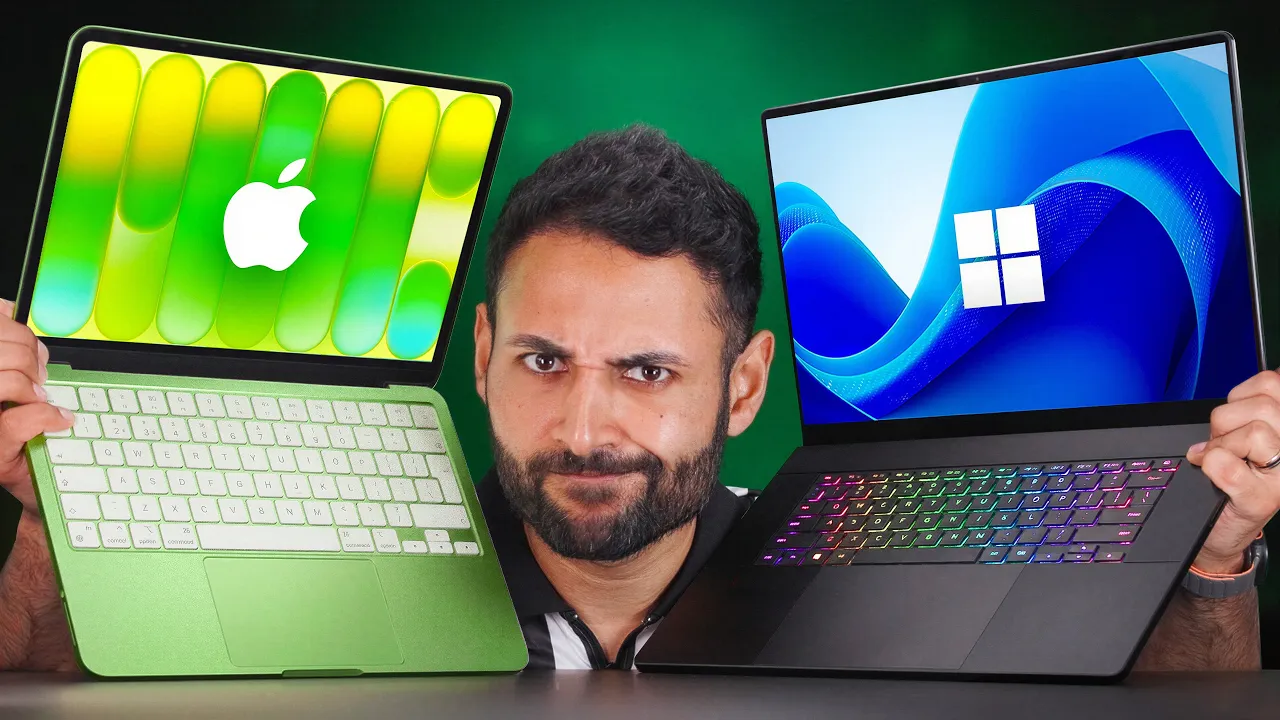
The video argues that the long-predicted “year of the Linux desktop” isn’t here, but Windows is showing cracks and there’s growing evidence that Microsoft is taking the challenge more seriously, including an open letter to the community. It also teases a sponsor segment and sets up the discussion about whether Windows can be turned around.
Despite Windows' dominance, Linux gaming, Apple silicon, and pro-user shifts hint at a future where Windows may finally face meaningful competition.
Summary
Linus Tech Tips’ critique tracks a slow but growing erosion of Windows dominance. Linus argues that, while Windows remains widespread, cracks are widening as Linux gains traction in gaming thanks to Steam Deck, Proton, and Linux-friendly distros like Basite and Catchio OS. He notes Apple’s aggressive hardware moves with the M4 Mac Mini and MacBook Neo, which are reshaping consumer expectations and pricing. Microsoft’s strategy—ads, OneDrive, and Edge—faces pushback from developers and enthusiasts who now see cleaner alternatives as viable. The episode also highlights how pre-built system pricing and marketing strong-arming keep Windows in the lead for mass buyers, despite momentum toward Linux and Apple. Linus even cites the rising Windows “inaction” on some fronts, such as copilot integration and search, as evidence that a course correction is overdue. He playfully laments that the “year of the Windows humiliation” might be closer than expected, without declaring a definitive victory for Linux or macOS. Sponsorship segments aside, the core thesis remains: the competitive landscape is shifting, and Microsoft is feeling pressure to reinvent Windows before its inertia becomes terminal.
Key Takeaways
- Linux market share is edging upward, with Steam Deck-driven Linux adoption contributing to a multi-year rise that culminated in around 5% market share per Steam survey data.
- Proton and SteamOS 3.0 are enabling Linux to run Windows titles more reliably, expanding Linux gaming beyond niche enthusiasts.
- Apple’s M4 Mac Mini and MacBook Neo are redefining value-for-performance on desktop and laptop form factors, pressuring Windows PCs in mainstream consumer segments.
- Pre-built PC vendors still push Windows prominently due to aggressive marketing and partner incentives, keeping Windows as the default choice for buyers who don't specialize in tech knowledge.
Who Is This For?
Essential viewing for PC enthusiasts, gamers, and developers who want to understand why Windows dominance may be cracking and what drives momentum for Linux and Apple in the consumer and creator ecosystems.
Notable Quotes
""Linux market share was languishing for years in the 1% range, 2022 marked a significant turning point with Linux then surpassing 2% sometime in 2024 and 3% in 2025.""
—He cites Tom’s Hardware and timeline data to back up the rise of Linux in the desktop ecosystem.
""Valve spent just about the next 10 years quietly funding the development of the Proton compatibility layer, a software that translates Windows Direct 3D API calls over to Vulkan""
—Explains the technical backbone enabling Linux gaming parity with Windows titles.
""Apple silicon was one of the keys giving Certino complete control over their performance profile, supply chain, and margins.""
—Supports the argument that Apple’s hardware strategy is shifting the competitive landscape.
""Microsoft is clearly taking drastic measures to stop the bleeding.""
—Summarizes the perceived urgency behind recent Windows optimizations and features.
""The year of the Windows humiliation... maybe closer than expected, without declaring a definitive victory for Linux or macOS.""
—Caps the thesis with a cautious, forward-looking takeaway.
Questions This Video Answers
- What factors are driving Linux gaming growth and how reliable is Proton on Steam Deck and SteamOS 3.0?
- How is Apple Silicon affecting the PC market share relative to Windows, and is the MacBook Neo impacting Windows sales?
- Why are pre-built PC vendors prioritizing Windows in their marketing, and can Linux or macOS really catch up?
- What changes is Microsoft making to Windows to win back gamers and power users, and are they enough?
- Is the Steam Deck the turning point for Linux desktop adoption or just a niche success?
Linux gamingSteam DeckProtonSteamOS 3.0Windows market shareApple SiliconMacBook NeoFramework 13 Pro UbuntuXbox modeWindows copilot critique
Full Transcript
For decades, we've joked, "Is this the year of the Linux desktop?" And to a lesser degree, is Apple finally sick of selling iPods with cellular modems and ready to take a bite out of Microsoft's desktop market share. But it's always been just that, a joke. Even within the niche communities that embrace Windows alternatives, the year of is less of an optimistic projection of future success and more of a masterpiece of self-deprecating observational humor that we've spent so long debating the timeline for this grand event that even the deepest believers are no longer sure that it's ever going to happen.
Because in spite of every monumental improvement in the competition, not to mention in spite of every Microsoft stumble, Windows remains as dominant as ever. Or does it? I say it doesn't. And not only are the cracks appearing, but they're starting to widen in a way that could put the critical mass that drives widespread adoption just around the corner. So, it might not be the year of the Linux desktop, but seeing one colossal failure after another, it's starting to feel like the year of Windows humiliation. And I think that Microsoft knows it. My proof, Microsoft themselves, they're not stupid.
They see all the same signs that I do. And after years of Windows and crapification, they finally dropped the facade and published an open letter to the community promising to do better this time. Please take me back. So, what prompted that? Can they turn the ship around or is this all just too little too late? Let's talk about what's going on right now and talk about how uncharacteristically seriously Microsoft is treating it. And let's talk about our sponsor, Vessie. It's the keep your feet dry easy slip-on. No water gets inside. Supremely breathable. We're seriously not joking about the no water thing.
Functionable, fashionable footwear. Vessie, off water storms are coming. A ship storm that is. From April 24th to May 7th, get free shipping sitewide on ltstore.com on any order over $150 in the US and Canada or $225 worldwide. No codes, no fuss, just free shipping. And to help you hit that threshold, we have got some killer deals. And if you want an even lower threshold, you can sign up for our supporter plus tier on float plane for an even better offer. We'll have that linked down below. I want to get this out there before we go any further.
As a lifelong user, I certainly have my share of gripes with Windows, but I'm also no hater and for every complaint is also a counterpoint. I mean, sure, search is a giant swimming pool full of dog water, but how about firing up compatibility mode and running software from my childhood? That's outstanding. So, I'm not rooting for Windows to lose. I'm just observing that if nothing changes, that could be an inevitable outcome. And before you say that's crazy, history is kind of on my side here. Once upon a time, Windows web servers were a thing. Now, the most recent data from W3X has it at less than 10%.
And that's just one of the platform wars that Microsoft has lost over the years. According to the New York Times, in 2007, Microsoft was estimated to have over 60% market share in pocket PCs. Now, that's a big fat zero. But that was the past. Let's talk about the now. Going across the major Windows user groups, starting with gamers. I know that not everyone plays games, but gamers are a loud and therefore disproportionately important demographic because a loud audience can work both in your favor and against it. On the surface, there's not a ton of danger signs here.
Thanks to its broad support for most titles, its often lower prices, and its unparalleled access to modding tools that enhance the gaming experience, learning to navigate the ins and outs of Windows has become something of a right of passage for young PC gamers to feed their habit. And once they're on the Windows platform, many gamers end up stuck due to kernel level antiche and copy protection systems that either only work on Windows or that developers choose to only implement on Windows. And yet gamers are leaving Windows in numbers that we have never seen before. Tom's Hardware observed last year that while Linux market share was languishing for years in the 1% range, 2022 marked a significant turning point with Linux then surpassing 2% sometime in 2024 and 3% in 2025.
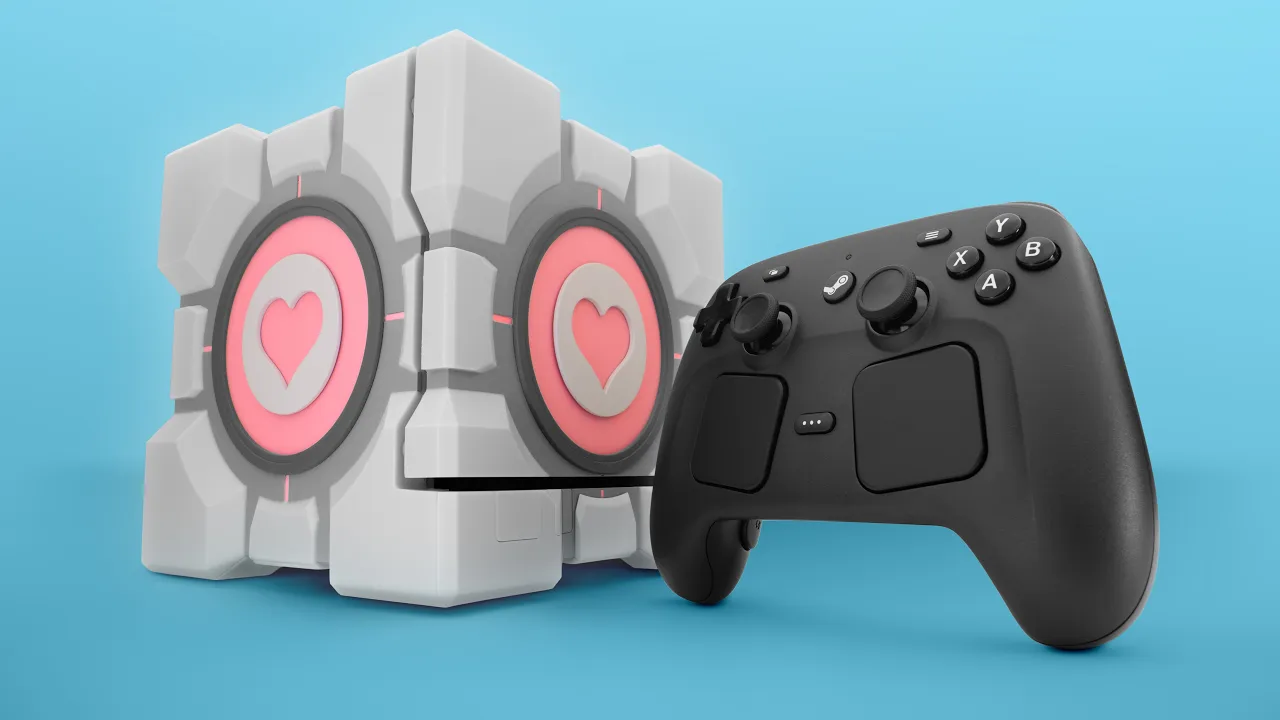
What happened to build this momentum? Well, I'll tell you. After the catastrophic launch of the original Steam OS, a Linux- based Windows competitor back in 2015, Valve spent just about the next 10 years quietly funding the development of the Proton compatibility layer, a software that translates Windows Direct 3D API calls over to Vulcan, an openstandard graphics API that runs crossplatform, including on Linux. This development finally came to light alongside the Steam Deck, a Linux-based handheld gaming PC running Steam OS 3.0. To say that the gaming world was blown away would be a gross understatement. For the first time, any random normie could quite literally pick up a Linux gaming PC, find a Windows game, and press play.
It didn't work all the time, but the intrepid open source gaming community, now with deep pocketed corporate backing, saw an opportunity and has been hard at work taking everything that's great about Steam OS and the Steam Deck and making it accessible across a wider range of hardware through gamerfriendly Linux distros like Basite and Catchio OS. Meanwhile, Microsoft has been doing seemingly everything in its power to turn Windows into a giant ad for One Drive, Xbox Game Pass, and Edge Browser. Ads that I can't simply dismiss and then never see again. I think this Reddit user put it better than I ever could.
Stop asking me. The answer is the same as last time. So, while Valve is only estimated to have sold somewhere in the neighborhood of about 4 million Steam Decks, the groundwork that they laid has resulted in an explosion of Linux usage amongst gamers with the latest Steam survey putting Linux at about 5% market share for the first time in history. Now, there does appear to be some sampling irregularities that led to such a sudden jump, but the overall trend is still crystal clear. Breaking news, editor. No idea where you're going to put this, but Framework just announced that for their new Framework 13 Pro laptop, the Ubuntu version is out selling Windows.
Windows use is eroding and Linux use is growing and Microsoft is clearly taking drastic measures to stop the bleeding. The most obvious example has got to be the new Xbox fullcreen experience or Xbox mode that Microsoft developed to provide a more seamless gaming experience on handheld PCs like the ROG Xbox Ally X that they co-branded alongside ASUS in late 2025. It pairs down system resource usage, particularly system memory significantly, and makes the whole operating system much easier to navigate with a controller. And it's coming to a desktop near you. This is very exciting stuff, but it also raises a big question.
Why now? Microsoft has owned the Xbox brand for nearly 25 years. At any point, they could have taken what they learned there and then stripped the Croft out of Windows to provide a better experience. But they chose not to until they were forced into action. To be clear, I'm not complaining. Progress is progress. And this is a perfect example of why I don't fanboy for any one side. and I only fanboy for competition. But on that subject, let's talk about user group number two, where Microsoft still isn't getting much competition, and that's in pre-built systems.
All right, give me a tier one PC builder. Find me a Linux system on their website. To their credit, they do have them, or they have one anyway. But tell me this, why is it buried three pages deep in the options for this tower? And why is it priced so poorly compared to these deeply discounted Windows machines? I thought Windows costs extra. Well, it does, except that Microsoft has powerful marketing programs that strongly incentivize their partners to position their products more prominently. Anti-competitive, maybe. I'm not an antitrust lawyer, though. Is it effective, though? Absolutely. So, we're probably not going to see much erosion on that side unless something dramatically changes.
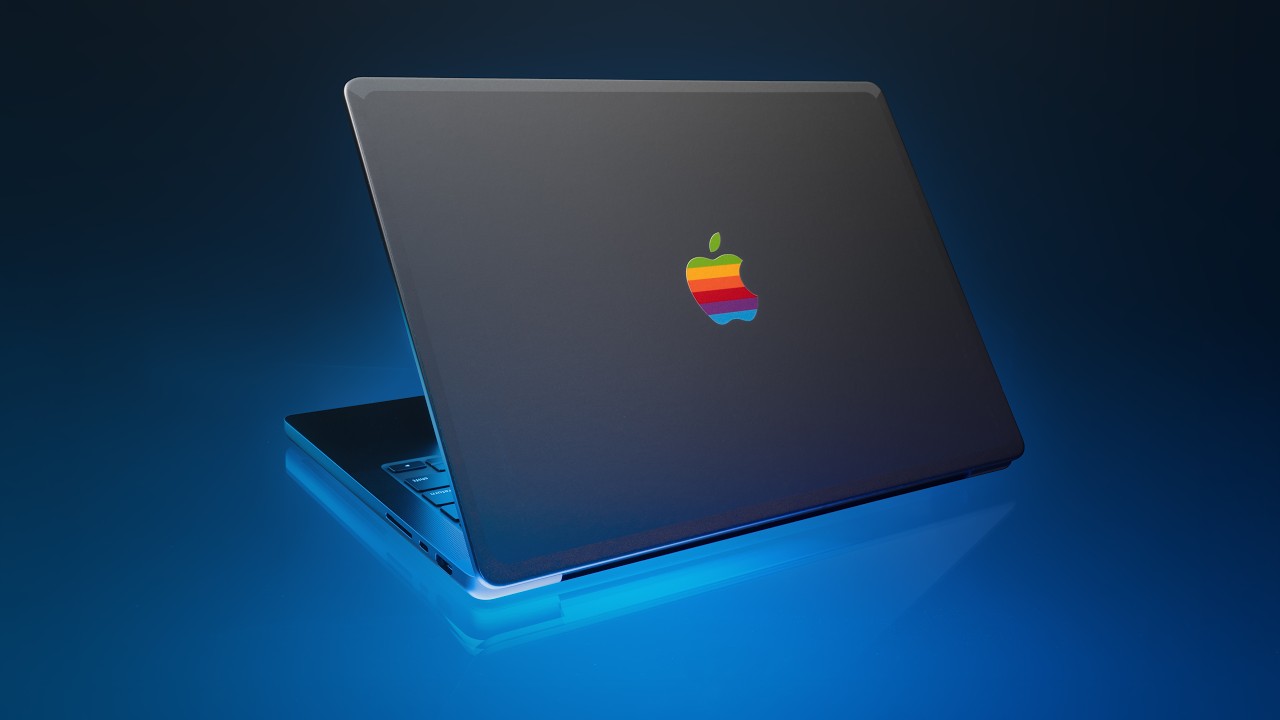
HEY, WHOA, WHOA. HEY, what's going on here? What's going on? Is the sleeping giant has awakened. While Apple's Mac product line has been treated like something of a red-headed stepchild ever since the iPhone completely took over Apple's balance sheet, their share has been slowly but surely growing and in my opinion is on the verge of a major breakout. Apple silicon was one of the keys giving Certino complete control over their performance profile, supply chain, and margins. And while they were content to keep things mostly status quo for a few years, the launch of the M4 Mac Mini was a huge turning point in my eyes.
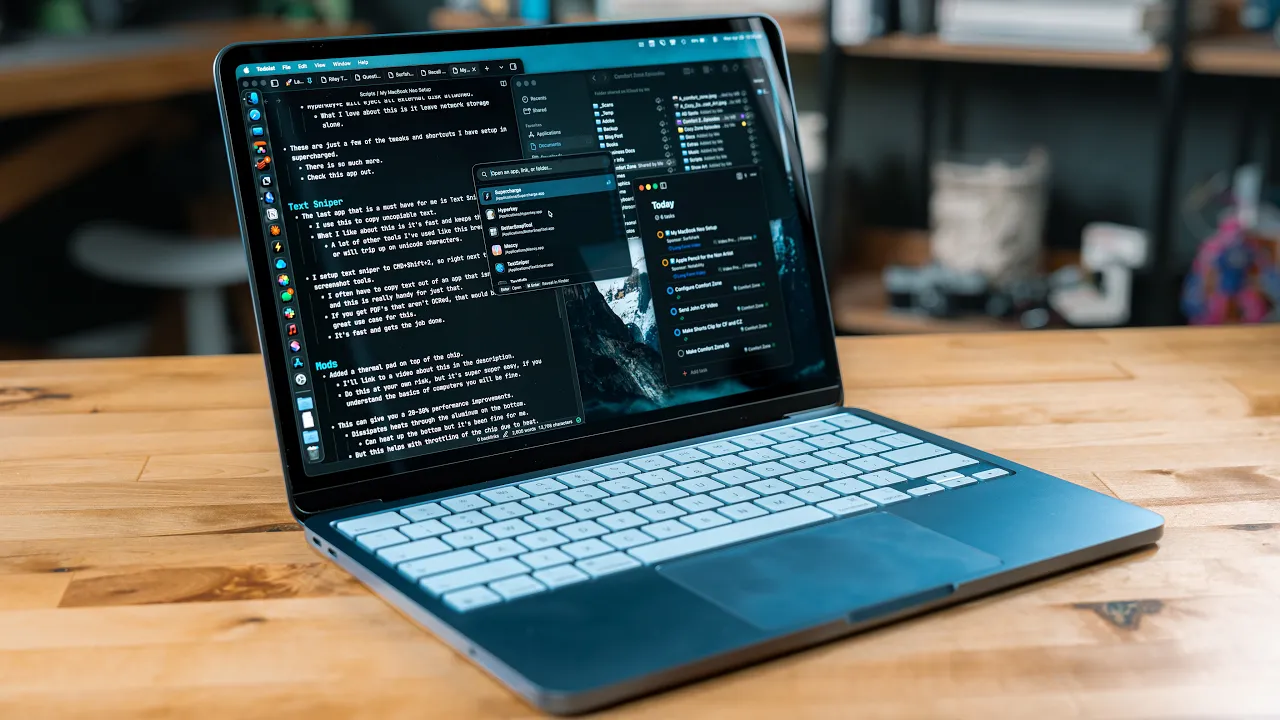
Suddenly, the same company that used to sell $700 wheels for their desktops had a great generalpurpose desktop for less. Then they followed that up more recently with the MacBook Neo, an incredible $600 laptop using their last gen phone chip whose success has surprised even Apple. And did I mention it's only $500 for students in schools? With Apple suddenly aggressively pursuing volume while the rest of the industry is reeling from pricing shocks due to DRAM and storage shortages. I mean, no amount of Microsoft writing checks to Dell or Lenovo is going to suppress that competition for mainstream consumers.
Their sales partners are going to do what they do best and secure large corporate deals for fleet machines, but it's going to get harder. And already I'm seeing feedback that the MacBook Neo has changed the competitive landscape for good in a way that I'm sorry, but Snapdragon Windows ARM laptops just aren't going to be enough to counter. And all of this is against a backdrop of Microsoft's traditional customers being desperately ready for change. I've talked about how Linux is chipping away at mind share among gaming enthusiasts, but both Mac and Linux are now strongly positioned for other types of enthusiasts, AI enthusiasts, software development enthusiasts, freedom enthusiasts, privacy enthusiasts, value enthusiasts.
I mean, these are just some of the passionate user bases that have become so disenfranchised to the point where they will openly admit to only using Windows because I have to. To be clear, Microsoft is doing stuff on top of the Xbox stuff I mentioned. They've committed to pulling unnecessary copilot AI cruff out of tools like snipping tool and finally fixing search, not to mention allowing the taskbar to be repositioned. But all of these things raise the same question I asked before. Why did this course correction take so bloody long? It is better late than never.
Even as I was writing this video from my MacBook Neo, I found myself tempted by Microsoft's efforts to win me back. And they have enormous inertia. So the year of Mac OS or the Linux desktop, it's probably not this year and probably isn't next year either. But staying afloat the way they have isn't a given. Just because the Titanic didn't sink in 30 seconds doesn't mean that it didn't eventually sink. And Microsoft's iceberg is clearly on the horizon. But only time is going to tell if they can avoid it. What I know that they can't avoid is this stylish new color of polo from ltstore.com.
This is part of our basics collection. It's great. Also, they can't avoid this message from our sponsor. Has this ever happened to you? Yeah. Oh, when? Right. Right now. It It just It Well, why weren't you wearing Vessie shoes, silly? Vessie shoes? What's that? Why? Vessie shoes are the puddleproof, functional, fashionable shoes of the future. Can I have that? With its rugged grip, the Vessie Stormbururst keeps you grounded in uncertain conditions. Can you Can you Can I Can you My foot's still wet. While the Weekend Neo's lightweight construction tackles daily tasks with ease. I mean, it sounds Oh, wa.
Cool. My foot's dry. Thanks. I'm going to wear Vessie shoes for the rest of my life. Another shoe problem solved with Vessie. Get 15% off your Weekend Neo or Stormbburst at vessie.com/lt with free shipping, one-year warranty, and 30-day hassle-free returns. If you guys enjoyed this video, why not check out the one we did on the announcement of the ROG Xbox XLI XROG, uh, whatever. We showed the new interface. It's legitimately pretty
More from Linus Tech Tips






Get daily recaps from
Linus Tech Tips
AI-powered summaries delivered to your inbox. Save hours every week while staying fully informed.