This changes everything..

Chapters6
Introduction to Nvidia RTX Spark and the promise of a new class of device AI and agent collaboration.
RTX Spark signals a seismic shift in personal computing, blending ARM CPUs, a powerful GPU, and tight Windows integration for real-time on-device AI.
Summary
Asmongold dives into Nvidia’s RTX Spark reveal, framing it as more than just a hardware preview. He notes the DGX Spark lineage evolving into consumer mini PCs and laptops, packing 20 ARM CPU cores, up to 128 GB of LPDDR5X, and a Blackwell-based GPU with about 6,000 CUDA cores. The video emphasizes Nvidia’s strategy to make on-device AI a seamless part of Windows, with Prism Translation and OpenShell-style controls that let you route data locally or to the cloud, guided by privacy policies. He highlights ambitious claims: all-day battery life in devices around 14 mm thick, 100 FPS gaming at RTX 5070-class performance, and deep software integration with partners like Hermes, Open Claw, and Adobe for Premiere and Photoshop. He also critiques the hype against the reality of desktop GPUs, power envelopes, and price, while acknowledging the potential for a new class of laptops (ASUS ProArt P14/P16) built around this tech. The hands-on segment questions practicality, power, and real-world use cases, pointing out that Linux support is not yet announced and that onboard memory will still cap performance. Throughout, Asmongold keeps a candid eye on whether these advances translate into tangible productivity gains or mostly look-and-feel tech demos. He ends with a contrast between user-friendly design and the gnarly reality of bringing such power to everyday workflows, promising deeper coverage on hands-on hardware later this fall.
Key Takeaways
- RTX Spark packs 20 ARM CPU cores, up to 128 GB LPDDR5X, and a Blackwell-based GPU with ~6,000 CUDA cores for consumer devices.
- DGX Spark’s consumer iteration targets Windows on ARM with deep software integration and guardrails for local vs. cloud model use.
- Devices like the ASUS ProArt P14/P16 push extreme portability with 99.9 Wh battery and 1,600 nits HDR displays, while housing RTX Spark-class power.
- Nvidia claims up to 100 FPS gaming on 1440p in slim form factors and emphasizes long battery life, but real-world endurance depends on power envelopes.
- Linux support is not confirmed yet; Nvidia is prioritizing Windows launch with driver development, leaving Linux as a wait-and-see.
- Key partnerships (Adobe, Hermes, Open Claw) indicate a roadmap for AI-assisted workflows across Premiere, Photoshop, and Windows apps.
- Pricing and practical performance remain under wraps; the base DGX Spark hardware hints at high costs and the challenge of portable AI power.
Who Is This For?
Essential viewing for creators, developers, and PC enthusiasts who want to understand how on-device AI with RTX Spark could reshape laptops and software workflows, from video editing to 3D rendering.
Notable Quotes
"Nvidia finally did it. They just took the lid off of RTX Spark, a super chip that promises to take on device AI from an irritating button that I accidentally press on my keyboard to a deeply useful Agentic Collaborator."
—Intro hype around RTX Spark and its on-device AI promise.
"This is a seismic shift in mainstream personal computing, and you're going to have to know about it."
—Asmongold frames the technology as a major turning point.
"I can actually do something with that without sharing my innermost secrets with Sam Alman or having my wallet catch fire from an expensive subscription."
—Concern about data privacy and cloud subscriptions in AI use.
"Let's dive deeper then and get hands-on with some of these."
—Segue into deeper exploration of hardware/software capabilities.
"A full lineup of devices featuring the RTX Spark. This one right here is a ProR. It features Asus's Luminina Pro OLED display technology doing up to 1,600 nits peak brightness."
—Hands-on with ASUS ProArt devices showcasing display and form factors.
Questions This Video Answers
- What is RTX Spark and how does it differ from traditional GPUs?
- Can Windows on ARM with RTX Spark deliver real on-device AI without cloud reliance?
- How do Prism Translation and OpenShell work together to protect privacy in on-device AI?
- Will Linux support for RTX Spark ever arrive, and when might it be available?
- Are laptops like the ASUS ProArt P14/P16 truly portable with RTX Spark-class performance and battery life?
NVIDIA RTX SparkDGX SparkWindows on ARMPrism TranslationOpenShellHermes AgentOpen ClawAdobe Premiere integrationPhotoshop integrationASUS ProArt P14/P16
Full Transcript
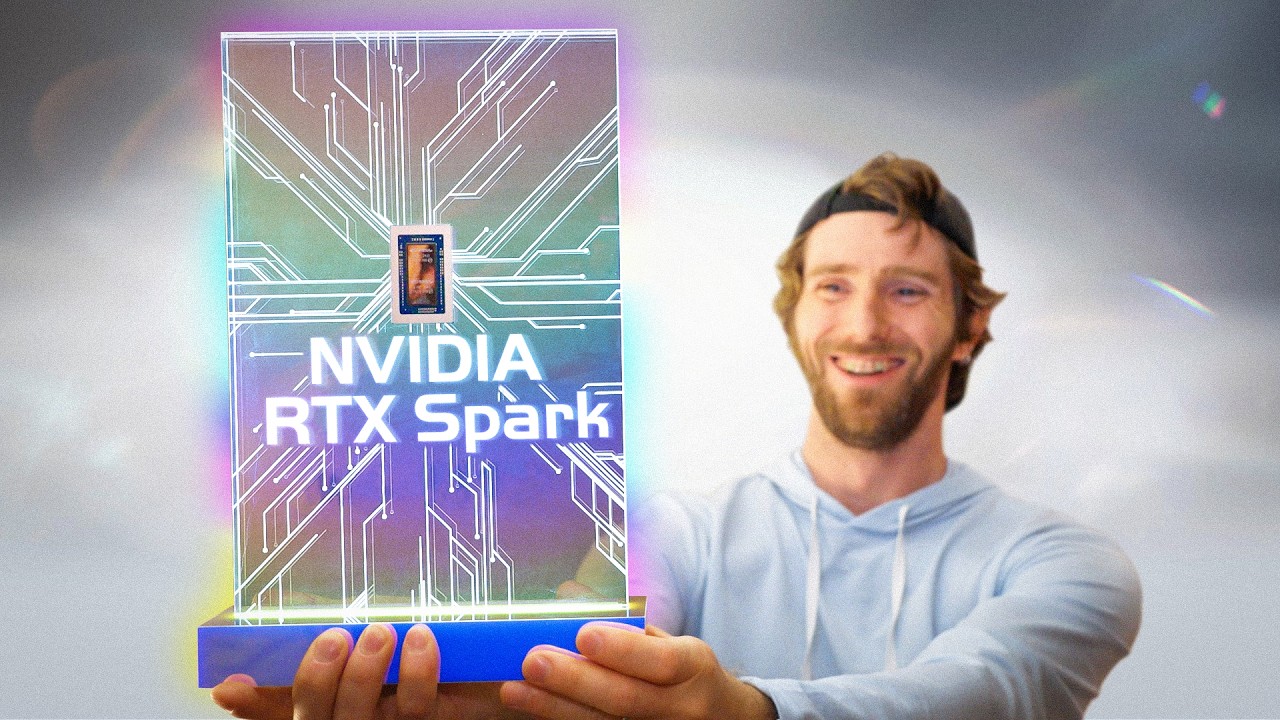
Nvidia finally did it. They just took the lid off of RTX Spark, a super chip that promises to take on device AI from an irritating button that I accidentally press on my keyboard to a deeply useful Agentic Collaborator. And while it would be easy to look at this demo that transforms a sketch and a mood board into a 3D animation and dismiss this entire concept as lap slops, guys, love it or hate it, this is a seismic shift in mainstream personal computing, and you're going to have to know about it. On the hardware side, there's So, the reason why I zoomed back out is because I was like, "Wait a minute.
This is a guy telling every [ __ ] furry deviant art creator that AI is the future. How many people downloaded this video? 5,000 furries downloaded this video. No, no big surprises here. DGX Spark, Nvidia's pint-sized desktop AI computer, was announced over a year ago and has been in user hands since October. It's that but in consumer mini PCs and laptops. So, we're looking at 20 ARM CPU cores, up to 128 gigs of LPDDR5X memory, and a powerful Blackwell based GPU core with a little over 6,000 CUDA cores, which actually raises a pretty big question. What the [ __ ] Why did this take so long?
I mean, if the rumor mill is to be believed, these things were supposed to be announced at Computex last year. Well, according to Nvidia, there was just a lot of work to do. building the hardware, building the software, and building the partnerships to get it right. It really sounds like they've done just that. In no particular order, here's what they're promising. Seamless gaming in Windows on ARM. Whether you're playing an ARM native game or using the Prism Translation layer, you click play and you go. And that includes partnering with top game developers to ensure that DRM protections and antiche will not be an obstacle.
Two is all day battery life in machines as slim as 14 mm with RTX 5070 class gaming performance. Even 100 FPS on 144. Third, of course, is AI AI AI. Nvidia is extremely proud of the deep integration that they're building into Windows in collaboration with Microsoft that will allow users to choose a model or models create boundaries like when or if data is sent off device to the cloud and then turn them into a fast powerful local collaborator. I don't know about you guys but this is what I've been waiting for. I don't want to talk to OpenAI.
But if my laptop can handle a 120 billion parameter model or realistically multiple smaller ones with a million tokens of context, holy holy beans, guys. I can actually do something with that without sharing my innermost secrets with Sam Alman or having my wallet catch fire from an expensive subscription. So let's dive deeper then and get hands-on with some of these. Do people really use AI that much? I've never really used AI that much. Like I I guess for me like you know what I use AI for and I do this actually like it's kind of funny but like I do this on purpose just to test the just to kind of like limit test.
I don't know if you guys ever do this, but like I'll ask it random questions like, you know, what's the best spectre for this build? And it's like, you know, my POE build or something like that, and it's like, okay, what gems should I use? And, you know, I'll ask and it's almost like I I don't even really expect it to give me the right answer, but I just want to see what it can do at work. Really? Yeah. I hardly ever use AI privately. shockingly sexy looking devices. After this shockingly sexy segway to our sponsor, you got braces.
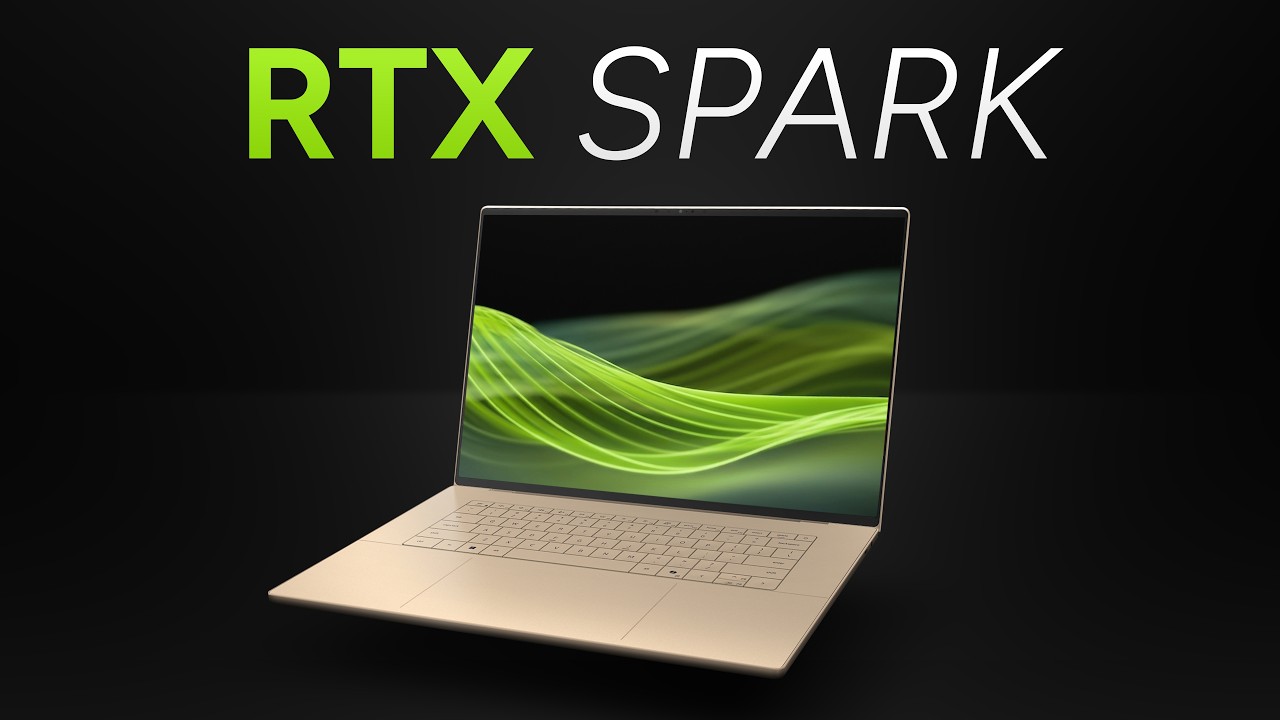
ASUS who jumped at the opportunity to feature their upcoming ProArt P14 and P16 laptops powered by the Nvidia Spark. They boast all day battery life, vibrant 1600 nit HDR screens, and outstanding build quality. We'll have a closer look at these later. Damn. That's actually really Let's start with the elephant in the room. This isn't the first time that Nvidia and Microsoft have announced that ARM on Windows powered by Nvidia is the future. Last time didn't go so well. So what makes the Surface The reason why the Surface failed is because it it came out at a price point that I think was really really high, especially initially.
And people are already attached. Like I mean Apple just they just they they have that market locked down. They do. And I think also the keyboard was off-putting. I do like I mean I and I I don't really like Apple honestly. Like I prefer like I have a Samsung phone. I have uh you know like I've never I the only Apple product I had was an iPod. This different expensive. Yeah. The obvious answer is 13 years and billions of dollars at stake. See, Apple isn't the only one who's realized that building a business that depends on Intel to consistently innovate forever.
Dangerous. Another difference is that ARM has gone mainstream basically everywhere but personal computers. Your phone is ARM, your watch is ARM, and the data center you're being served this video from is using ARM. So software developers are more familiar with ARM and the tools that they use everyday are better suited to compile for different architectures including ARM. The last one is that even for software that isn't compiled for ARM realtime translation layers which allow x86 software to run on ARM are everywhere now. Apple uses Rosetta 2 on the Mac and Valve's upcoming Steam Frame uses FEX.
I've used both of them and they're awesome. And while neither they nor Microsoft's Prism are absolutely perfect, they've all come a long way. So most of your favorite applications are just going to run and you won't even realize that they're being translated. The other big reason that I believe it's going to work this time is Nvidia. They don't always get things right on the first try, but if we look back at their track record on GPU compute, dating all the way back to the first general purpose computing GPU, the 8800 GTX, they've successfully predicted the direction the market was headed at basically every bloody turn.
And this I think that that's generally true. Yeah, I'd say that's generally true. Definitely. Time. I'm not even going out on a limb. On a hardware level, the CPU GPU comboed chip that's at the heart of the RTX Spark is very similar to another wildly successful product, Apple Silicon. Let's see. Efficient ARM CPU, check. Powerful GPU, check. Sophisticated interconnect and high-speed memory that enables them to work together at speeds far beyond traditional PCIe, check, and check. And like Apple, Nvidia is now a $5 trillion company with both the money and the clout to push their partners to support their vision.
I think there's also another big component is that the company is now getting so big that if the company makes a decision, they don't need to predict the market because they can drive the market. I think that's also a big factor. Here's how they laid it out. On the Windows side, that looks like new Windows primitives that deliver identity, containment, policy, and endto-end security capabilities. Then, NVIDIA OpenShell allows users to define what agents can and cannot do, dynamically route queries to local models or the cloud based on the user's privacy policies, and even disguise personal information in queries that are sent to cloud models.
Then there's the third parties. Hermes Agent and Open Claw have both committed to adopting these security and privacy layers in their new Windows apps. So the goal here is to take something that is already broadly adopted by developers and enthusiasts and then make the interface and the controls simple for regular users so they can create agents that will execute tasks in Windows applications, reason through cross app workflows, generate images and video code plugins and apps and semantically search local files. One that's personally exciting for my line of work is the Adobe partnership. The video pipeline in Premiere is being upgraded to take advantage of unified memory and Photoshop is supposedly jumping from about Are you pro or anti- data center?
Am I pro? I I am not anti or pro data center. I don't know enough about the topic. And every time, like I'll tell you this, this is the way like this might sound stupid, but every time that I see the annoying retards on Twitter get mad about something, I assume that it's good. And whenever I see every annoying [ __ ] on the internet getting mad about data centers, I assume that actually data centers probably aren't that bad. Like whenever I see everybody who I dislike that's against something, I I'm just like, wait a minute, there's probably a reason for this.
But I again like I that's an it's that's that's stupid to to make a decision based off of, right? And like just by itself, but it is something that always gives me pause. So I don't have like a strong opinion either way. And you know, I'm not going to just like immediately go with the consensus or not. I'd wait and see. 5% GPU accelerated to 100% whatever that means. Both applications are also hooking into the new Windows agent manager so that your agents will be able to interact with both of them. Now, this is the point where I had to stop the briefing for a moment and ask a question that I'm sure is on all of your minds.
Hey, what about your desktop users? Some of us already have discrete GPUs that are much more powerful, not to mention more expensive than even a mobile 5070. Will their onboard memory be a hard limit? From what I'm hearing, pretty much. Within the constraints of what can fit in your local memory, regular GeForce users will be able to use many of these new goodies and sometimes faster thanks to their superior compute. But there's no magic bullet that is going to turn a desktop 5080 with its 16 gigs of VRAM into a 100 plus GB GPU. Not yet.
Since we're off the rails, I also took the opportunity to bring up Linux support for all of this. And while Nvidia is not announcing anything right now, apparently the driver team is very focused on getting the Windows launch rate right. The Envy folks that I spoke to fully recognize the building momentum around Linux desktops and they aren't ruling out anything. Steam on Linux is 5% market share. No, I think lower. I do I I I feel like this is a huge selection bias because this is a tech website and people that are using Linux are going to be using tech websites at a way higher ratio than what an average user would be using and so like you know I I I think you have a a huge massive selection bias with this if because it said polling right 5% of all pled people so that means it's it's so as soon as you have polling you have to look at selection biases tops and they aren't ruling anything for the future.
Is it from Steam Deck? Oh. Oh, is it? Okay, so Steam So if you're including Steam Deck. Okay, that's different. I didn't understand that. Okay. Announcement has got to be next generation DLSS ray reconstruction. Love it or hate it, Nvidia is committed to ray tracing and like DLSS 4.5, this looks like a major improvement in fidelity thanks to moving to a second generation transformer model. It's also coming to real-time previews in Blender and the results there look really impressive. Yeah, a final side note is RTX Frame Gen is coming to Comfy UI. So your AI generated videos can use AI generated frames in between your AI generated frames.
Wow, nothing's real. Some folks will be very interested in this, I suppose. Let's go look at some laptops. They were not kidding. This is thin. This is the P16 Pro Art from ASUS. And I'm going to be honest, guys. Every laptop I have is a brick. I almost like the bigger laptops because I feel like it's got some [ __ ] weight to it. It's got some heft to it, right? And it's like I didn't really like I mean is that stupid for me to say like like whenever I had like a really skinny one, I'm like, "Oh, bro, I might break this thing or something like happened to it." So like and yeah, the girth, bro.
Like come on. Sure. Not the thinnest laptop I've ever seen, but Mhm. RTX 5070 class GPU in there. How'd they do it? Yeah, evidently like this. Through a combination of an extremely slim 99.99 Watth battery and man, those are skinny heat pipes. And is that also a vapor chamber? Yes. And there's the chip itself. Uh-huh. Man, it's amazing how small it is. All your power delivery right there. CPU, GPU, all fully integrated into a single package and up to 128 gig. Isn't this crazy to see? Like for those of you guys that grew up like around the same time I did where you used to have like the old big motherboards and like it's like you know your idea of what a motherboard is, like this is totally different.
This is nuts, man. LPDDR5X got your house on my wrist right now. And I guess it shouldn't surprise me given the heritage, but the I/IO is pretty robust, too. This unit's got HDMI, obviously, and then three 40 GB per second USBC's, 3 and 12 mil audio, and an SD card along with a USB type A. Of course, the 16-in isn't the one that I would have my eye on. It would be the P14. Mhm. Same IO. Love to see it. A touch thicker. One USB. I don't It's just so annoying. No, it's not. It does get a slightly smaller battery capacity, but I think that's a price I'd be willing to pay for that much power in such a compact form of It is substantially thinner than my current daily driver.
And that's already a lot of performance. Dude, I could not give a [ __ ] less about this. I could not like Okay, so how can it run games like play open up Cyberpunk, open up Crimson Desert, open up [ __ ] like whatever. Get Ginch and Impact, right? Like play the game like Oh wow, it's slightly skinner. It's like 1 millm smaller. It's half a mill. Oh god, what is this? Who cares? Like does it burn my legs? Yes, exactly. In this form factor. This is Stricks Halo Monster Hunter Wild. Yeah. Then in the next room, we've got the Microsoft Surface Ultra.
Oh boy. Also incredibly thin for the performance on tap. She's uh she's running a little toasty, but this has been sitting here running games. First time we came through here was over an hour ago. And with that in mind, so it's already hot. Let me get this straight. So it's already hot and it's in an air conditioned cooled area. It's not on your lap. Okay. So this is I don't know about this one, guys. It's not even loud, dude. Seriously, can you Okay, my mic's right here. Can Can you even hear it? Yeah, I can hear it.
Yeah. Yeah. Yeah. Like barely, though, I assume. Barely. Yeah. That's cool. Given how early this is, I wasn't really expecting to be able to just interact with it. Unfortunately, these are the only three that we get to see today. But across the board, this is the closest I've seen to, let's face it, the gold standard, which is the MacBook Pro, but on a PC. Now, for the uncomfortable, I have like six laptops and I don't use any of them. like whenever I was involved with like because I I bought my own and then I had one my mom was using and then I've been given other laptops by people and so I just have a a stack of laptops that I never use and uh yeah give me one I don't know about that I have like five computers too like five unused computers stuff nobody is talking about pricing and Nvidia's DGX Spark which if you'll recall is basically the same hardware not exactly cheap especially now that it's gone up in price, I can't imagine that bolting a 10 display, a battery, and a haptic trackpad to it is going to make it more affordable.
Yeah. Then there's the CPU. Nvidia and their partners are talking a lot about efficiency, but any mention of performance is conspicuously absent, which is weird to me. Yeah. I mean, the Cortex X925 is a perfectly competent CPU core that's built on TSMC's 3nm process and serve the home found that it can be comparable to AMD's flagship Zen 5, at least in quick and dirty benchmarks. But Nvidia's silence doesn't exactly project confidence in this regard. And then there's the last definitely silent moment during my briefing where I wanted to talk about power consumption. DGX Spark is designed for about 140 watts, which by my math would give us uh less than 40 minutes of battery under full load on something like the Asus P16.
What? So, obviously then Nvidia is tuning the laptop variant for a massively lower power profile. But what how much lower and how much performance is going to be left? A mobile 570 is rated for about 50 watts according to tech powerup with notebook check noting that it can be I thought I thought 140 like I don't know how much a laptop power wattage I've never even thought about this I and this is the first time I've ever thought about laptop power wattage I just assume that like you know like I I have a power supply it's like 800,000 like 1200 you know volts so like I'm like okay 120 is like nothing but like god damn figured for as high as 100 watts Nvidia says that I can expect similar performance but during During our conversation, they also told me that I would be pleasantly surprised by gaming endurance on battery.
And they had kind of like a smug expression when I asked, "Guys, are we talking like two plus hours away from the wall?" I mean, surely there's some efficiency gains from the tight hardware integration, but something isn't mathing here. I guess that's a mystery for later this fall when we get hands-on with shipping hardware and software. For now, we'll be left wondering. wondering when will Lionus do the segue to his sponsor Asus who's working on a I would say like just overall like I don't think that a lot of these like nothing here to me like the I like the the technology of the Spark is like really cool but until you can really like this is one thing that I would say like Apple always did a really good job at like is that especially Steve Jobs he understood that you know tech like tech benchmarks and everything.
None of that really matters. Like, show people the way it works and how they're going to be able to use it. I'm not really seeing that. I'm not really seeing this be like any sort of a of a force multiplier for like my functionality. This isn't going to like do anything crazy. What's the most user friendly? That's just in general, right? Like like for example like you see those Huawei like that's the Chinese like uh computer manufacturer like whenever you see like they can open it up like that's like immediately like damn that's really cool like that's a lot right and so I don't know really if it's going to be able to do that.
A full lineup of devices featuring the RTX Spark. This one right here is a ProR. It features Asus's Luminina Pro OLED display technology doing up to 1,600 nits peak brightness with panone certification and a nice little anti-g as you guys saw before. Shockingly slim for all the performance that it has on tap. And that was no accident. While a large haptic trackpad would normally add significant thickness to the device, ASUS is using a new solution that is much thinner. Asus designed everything about these machines for the most discerning of creators. From the large batteries up to 99.9 watt hours on the P16 to the super slim liquid metal cooling solution to even the surface finishes that are actually.
Wow. Really fingerprint resistant. If you guys enjoyed this video and you want to see Nvidia's AI hardware at a much larger scale, check out the recent data center tour that we I just like I I feel like right now people are just like so deranged about this. They are they're so deranged about this and anytime somebody hears the word AI or data center, they just immediately go crazy. And uh yeah, Linux is what is this here? Takes all your fingerprints. Yeah. Yeah. It doesn't show them because it's taking your fingerprints and sending them to a data center, right?
And so there's the video. Make sure to give it a like. And uh laptops is g [ __ ] They go everywhere. I mean, I guess, right? Like to me, I I I don't really like I don't really I don't know. Like I basically do everything either on my phone or on a desktop. Like I have a laptop, I have a tablet. I don't really use either one of them like that much, right? And all the usual reasons get data centers are stupid. Yeah. I I just I don't want to like I'd have to look into it and and figure it out myself.
But like Yeah. A lot of people paid $6 for butter today. Yeah. It's going to be seven with the data centers. The only thing being slapped is our wallet. It's $4,700. That is insane. Linus blink if you're being held at gunpoint by lobbyists. Let's It's giving off. Let's not record this video uh in a boring chair vibe. Uh here's a tech tip. Running on ARM. So, more efficient than running on foot. Okay. Uh no Nvidia. I'm not giving you $8,000. Video is the wonderful word lap slop. Oh my god. And co-pilot is so liked and well uh successful.
Let's make a more intrusive SQL. People really don't like I I think this is what's happened, right? Is they don't like how intrusive a lot of AI programs are. And I have to say like I I have to end a little bit earlier today because I have I have to do something today. But uh tomorrow we have Summer Games Fest. And so I I'll hang out for maybe like 10 15 more minutes and uh then I've got to go. And so that's my worry. Yeah. Yeah. No doubt. Did you see Ben's new video? I did see Ben's new video.
It was really good. And so uh yeah, I mean I'm a big fan of AI. Like I'm a big I I'm like an AI um accelerationist. I'm I'm an AI believer. Uh I I think that you should go as far as you possibly can with AI. I think that the people that are not doing that are people who just simply want to make AI seem bad because they don't want AI to steal their job. I I think that's the only real reason they have for it. Like it's literally that simple.
More from Asmongold TV












Get daily recaps from
Asmongold TV
AI-powered summaries delivered to your inbox. Save hours every week while staying fully informed.