Nvidia's New Laptops - RTX Spark

Chapters7
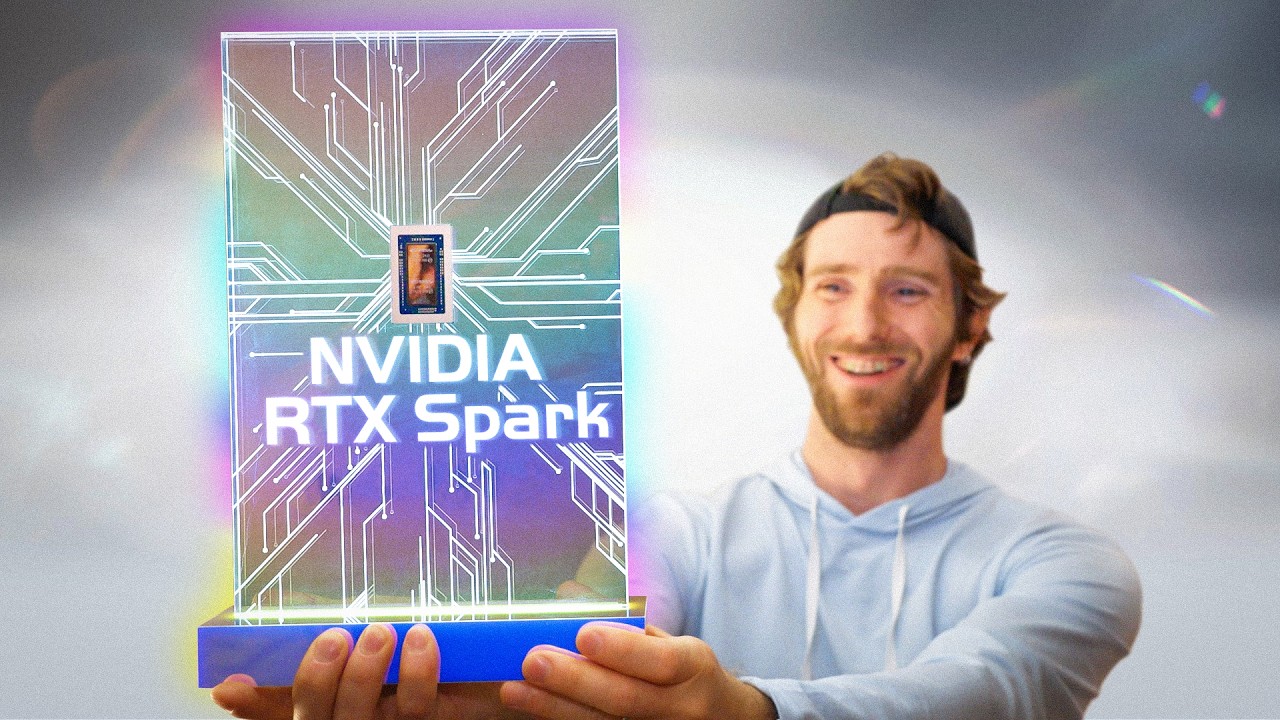
Nvidia introduces the RTX Spark, featuring a 20 core ARM CPU, RTX 5070 GPU, up to 128 GB unified RAM, and full Nvidia software stack in a thin machine.
Nvidia’s RTX Spark blends a 20-core ARM CPU with a 5070 GPU and up to 128GB unified RAM, aiming at agent-enabled Windows laptops, creators, and future AI workloads—pricing and OS integration remain the wild cards.
Summary
Dave2D breaks down Nvidia’s RTX Spark, a bold laptop chip pairing a 20-core ARM-based CPU with an RTX 5070 GPU and up to 128GB of unified RAM. He highlights that this combo fits in ultra-thin laptops (as slim as 14 mm) while keeping full CUDA, DLSS, and ray tracing support. The real bet, he argues, is Nvidia’s and Microsoft’s push toward agents that run locally on the device, not in the cloud, which would demand deep OS integration and substantial RAM. He questions whether Windows can responsibly host such a pervasive agent, given concerns about Copilot-like intrusiveness. Creators aren’t ignored either: Adobe has reportedly tailored Premiere and Photoshop architectures for the Spark, suggesting strong creative upside. Gaming is acknowledged, but the laptops shown skew toward creator/productivity hardware rather than traditional gaming rigs. Dave2D also notes potential price shock and queries whether users would welcome OS-level AI agents embedded in their system. The verdict: the tech is compelling, but the social and UX hurdles—and the price—will determine adoption. He ends by inviting viewers to share whether they’d want this on their own machines.
Key Takeaways
- RTX Spark pairs a 20-core ARM CPU with an RTX 5070 GPU and up to 128GB unified RAM in ultra-thin laptops (14 mm).
- Unified memory and CUDA access are central to enabling locally hosted AI agents on Windows devices.
- Microsoft must implement OS-level agent capabilities (with deep access to files/apps) for the vision to work, raising concerns about user control and intrusiveness.
- Adobe has reportedly optimized Premiere and Photoshop architectures around the RTX Spark, signaling real benefits for creator workloads.
- Pricing isn’t announced yet, but Dave2D expects it to be premium given current market trends and the hardware load.
- The concept hinges on social acceptance of built-in, autonomous agents running on the OS, not just on powerful hardware.
- The laptops in the initial lineup prioritize creator/productivity with some gaming capability, not traditional gaming-focused machines.
Who Is This For?
Creators and power users curious about cutting-edge laptops, AI agents, and CUDA-enabled workflows who want to know whether Nvidia’s bold vision is technically viable and how it might affect OS design and pricing.
Notable Quotes
"So, Nvidia just launched the new laptop chip. It's called the RTX Spark. It's a 20-core ARM-based CPU and it packs an RTX 5070 GPU that has the same core count as the desktop version."
—Intro description of the RTX Spark’s core specs and capabilities.
"Agents are the next step of that. Instead of just responding back to you, they can actually do things for you."
—Explains the central concept of the AI agent use-case.
"The idea is that these agents would run locally on your device instead of the cloud."
—Key architectural shift driving the vision.
"CUDA is the thing that virtually every AI tool and framework and model is built on and optimized for first."
—Emphasizes why CUDA access matters on this hardware.
"If they nail it, it would be incredible. Genuinely incredible because now your computer could do these multi-step tasks that we find boring and time-consuming."
—Balanced assessment of potential impact if the OS-level agent vision succeeds.
Questions This Video Answers
- Can Nvidia RTX Spark really run large language model agents locally on a Windows laptop?
- What are unified RAM and CUDA's role in AI agents on laptops?
- How would Windows integrate autonomous AI agents without being too intrusive?
- Why would Adobe optimize Premiere and Photoshop for the RTX Spark, and what does that mean for creators?
- Is Nvidia’s new RTX Spark laptop concept financially viable for creators or tech enthusiasts?
Nvidia RTX SparkRTX 5070ARM CPUunified RAMCUDADLSSray tracingWindows agentsMicrosoft CopilotAdobe Premiere architecture for RTX Spark
Full Transcript
So, Nvidia just launched the new laptop chip. It's called the RTX Spark. It's a 20-core ARM-based CPU and it packs an RTX 5070 GPU that has the same core count as the desktop version. It goes up to 128 gigs of unified RAM and it's being used in very thin laptops, as thin as 14 mm and it still has all-day battery life and it runs the full Nvidia stack. So, CUDA, DLSS, ray tracing, all of it. Now, I've never had any doubt that if Nvidia wanted to make a laptop chip, they would make a good one, one that's energy efficient, powerful.
There was never any worry, but what I am worried about is what they want you to use this chip for. Because if you watch their presentation, the first third of it or maybe even more, they were talking about agents. So, we got to talk about this cuz this is the main pitch. If you know what an LLM is, like a large language model. So, let's start there. Large language models. So, ChatGPT, Gemini, Claude, things like that. They are like tools that you can type to and they'll type back or respond back, right? Agents are the next step of that.
Instead of just responding back to you, they can actually do things for you. So, as an example, you would ask it to like draw an owl and then make it fly while changing the camera angle. And the agent will go and perform the steps required across your actual apps, checking its work as it does it to complete the goal. It would kind of be like a derpy little intern that lives inside your computer that can do stuff for you. Now, keep in mind there are pre-existing tools today that can accomplish stuff like this, but they definitely require like a little bit of knowledge and they're tools that you have to kind of piece together that typical person wouldn't want to do.
Now, Nvidia's bet, along with Microsoft, is that this will be the new era of PC and they're calling it exactly that. The idea is that these agents would run locally on your device instead of the cloud. And to do that, you would need a lot of unified memory. Because to have a genuinely capable agent, you would need a fairly large model that's sitting inside fairly fast RAM. And like a regular laptop can't do that. Not even a gaming laptop because there's not enough of that super fast RAM in gaming laptops. So, a MacBook Pro could technically do because you can get up to 128 gigs of unified RAM there.
Same with an AMD Strix Halo laptop. That has a lot of unified memory, but neither of those two devices have access to the CUDA software stack. And CUDA is the thing that virtually every AI tool and framework and model is built on and optimized for first. So, the RTX Spark with its 128 gigs of unified memory has access to this CUDA stack. It's great. It's like purpose-built for this vision. However, this is where things get a little shaky. Because if you think about it, this is not Nvidia's mountain to climb. It's actually Microsoft because they're the company that has to build and implement the part of Windows that the agents would live in.
Like this is baked into the operating system, would run from your taskbar. It needs access to your files, your apps. It has to have a lot of access to your system. And if you think of Copilot, most people are actively trying to remove Copilot from the system because they find it too obtrusive. Can you imagine like Copilot extreme? This thing would need more control, more access, and just more It's more capable, right? So, it has to have the ability to do all these things. And I don't know if we're in the position where we actually entrust a company like Microsoft to have that kind of control.
But, it would need it to pull this off. Now, if they nail it, it would be incredible. Genuinely incredible because now your computer could do these multi-step tasks that we find boring and time-consuming. But, at the same time, I also can't imagine Microsoft making a tool that's powerful like that, but wouldn't be obtrusive somehow. But, we'll see. Uh the second thing that the RTX Spark chip is supposed to be good at is with creative work. So, it is a 5070 with a lot of RAM and Adobe apparently has new architecture for Premiere and Photoshop engineered specifically around the chip, which is kind of cool, but we'll have to see what that's all about.
Now, the third thing is gaming and to be clear, it is the third thing because if you look at the list of laptops, these are not gaming laptops. You got like Lenovo Yoga, Dell XPS, ASUS ProArt. These are creator or productivity first laptops that can also game, but Nvidia's throwing some pretty interesting numbers out there. We will have to test all this stuff down the line. They might even be great for gaming. Now, in terms of where I stand on the whole RTX part, I think the hardware is very interesting. Uh I think that pricing, if you actually are interested in this thing, the pricing is not revealed yet, but I imagine we should brace for it to be quite expensive because just the market is that way right now.
Uh the other thing though is just like the vision of the new era of PC. When you think of the complexities around this, like forget about the technical element of it. That's already extremely difficult, but even if they could pull it off, the kind of social acceptance of having a tool like this baked into your operating system, that's a huge ask. I think in this day and age, like if that thing was available today, I don't know if I would want that on my system. Like it's neat, but when I've kind of pieced together myself and I know exactly where everything is, like that feels a little bit more comfortable, but if this is built into the operating system and it can do stuff when you're not even there, I don't know.
It's It is strange. Um if there was one company though, if there was one company that has the kind of clout and reputation and just size to pull it off as a partner, it would be Nvidia. They're super rich. They have a ton of connections with multiple industries, AI, gaming, like productivity, workflows, like so much stuff stems around Nvidia. So, maybe they could pull it off. Who knows? What do you think? Is this something that you would If you think about it, like what it's capable of and the examples they've given, is it something that you would actually use and or want on your system?
Okay. Hope you guys enjoyed this video.
More from Dave2D










Get daily recaps from
Dave2D
AI-powered summaries delivered to your inbox. Save hours every week while staying fully informed.