
Edward Sturm
SEO, digital marketing, organic social media marketing, growth hacks, and founder stories. Everything I'm doing to grow my ...
Why Niching Down Makes SEO 10x Easier (And More Profitable)
The speaker uses Manhattan’s tight-knit neighborhoods as an analogy for SEO: focus intensely on a small niche, dominate it, and you’ll gain authority, targeted keywords, and stronger branding before expanding to adjacent areas. He argues that niching down makes SEO easier, drives higher quality traffic, and builds lasting trust and top-of-mind awareness, while large brands often overextend and lose topical authority. Practical takeaways include niching deeply, building branded searches, collecting and leveraging testimonials, and gradually expanding to nearby niches once the core niche is solid."
The #1 SEO Productivity Mistake That’s Killing Your Results
The speaker argues that taking deliberate breaks is essential for productive, high-quality work, especially in SEO. He shares personal experience with bottom-of-funnel SEO pages, the Pomodoro technique (two-hour blocks with four 25-minute sprints and short breaks), and breaks between sessions to prevent rabbit holes and fatigue. Real-world examples include improving a new editor’s output and refocusing on high-impact tasks to reach profitability and better results, emphasizing that breaks boost creativity, efficiency, and outcomes.
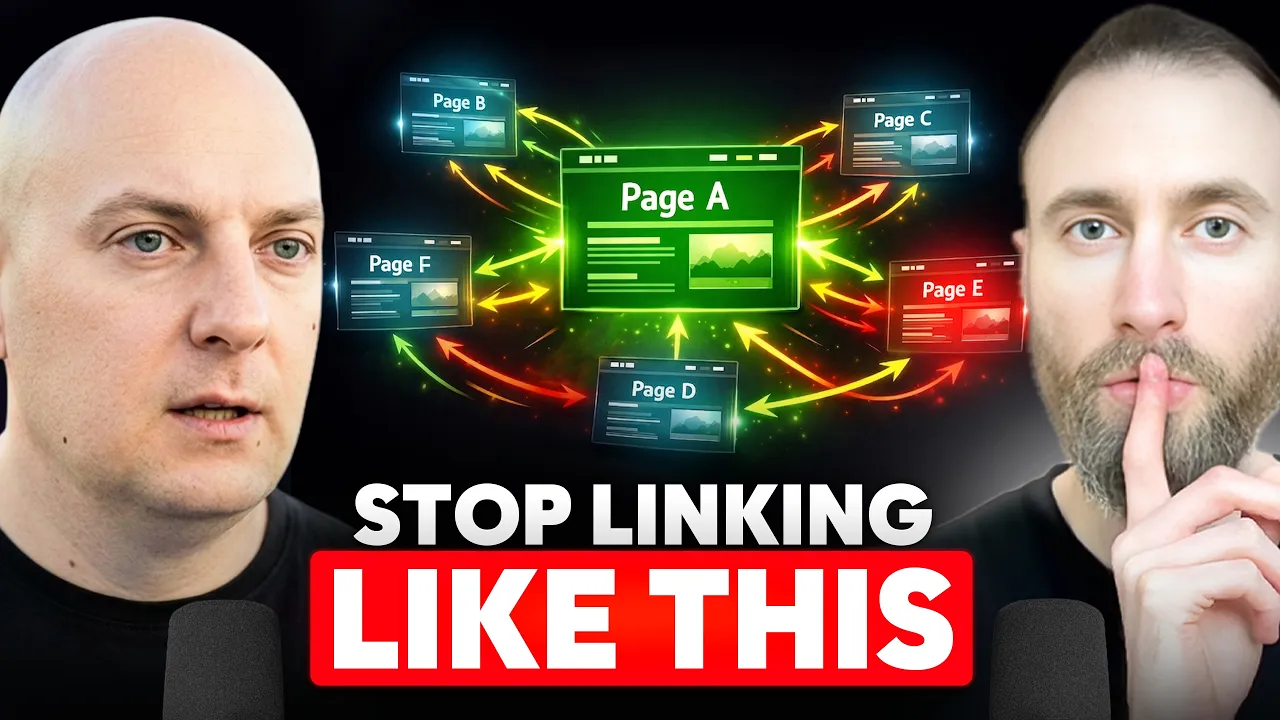
The First Rule of Internal Linking (That Most SEOs Ignore)
The discussion centers on the nuanced practice of internal linking in SEO, debunking myths about automatic ranking from sitemaps and the idea that more links always help. The speakers emphasize distributing link equity wisely, monitoring page performance, avoiding over-optimization, and building topical authority through selective, strategic internal links, with practical testing via analytics and Search Console.
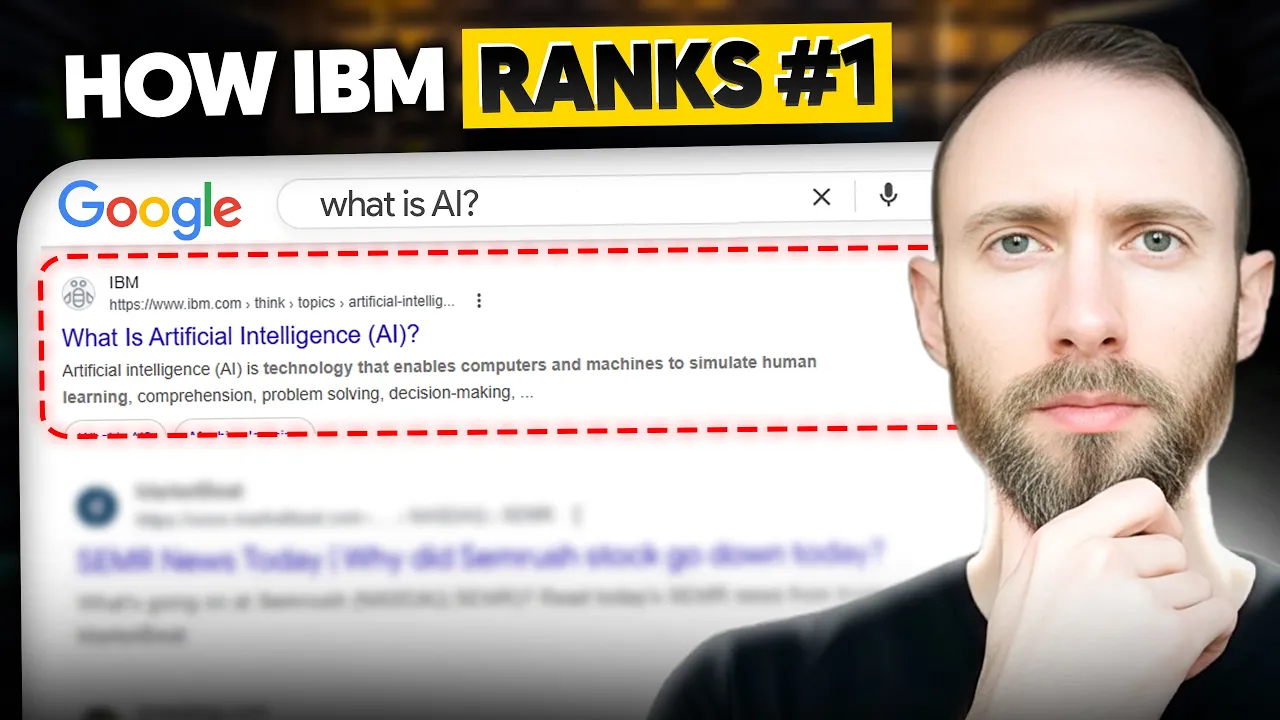
How IBM Took Over “AI” Keywords on Google (And What You Can Steal)
The video examines IBM’s high‑impact B2B SEO approach, praising its Think blog and AI content for strong structure, internal links, and multimedia that rank well for terms like 'AI' and 'AI agent.' It also discusses pitfalls (like keyword stuffing on the AI agents page and HubSpot’s tipping point from overreach) and offers takeaways on prioritizing high‑intent, top‑of‑funnel content and careful expansion.

AI Is Flooding SEO… And That’s Why It’s About to Get Easier
The speaker argues that vibe-coded (AI-assisted) websites will reshape SEO by making it easier to rank and convert, especially for brands embracing this approach. He shares a practical process: outline pages with AI, use section-by-section creation for coherence, focus on conversion and branding, and treat AI as an assistant rather than a full architect, emphasizing hands-on outlining, testing, and cohesive messaging across pages.
LLM SEO, Unlinked Mentions & Chiang Mai’s Wildest Ranking Tactics
The speakers praise Chiang Mai's SEO community and stress keeping SEO simple and focused on solid content and site structure before chasing complex tactics. They explore modern strategies for ranking with LLMs, including topical maps, compact keywords, fresh listicles, UNL/brand coverage, EMDs, guest blogging, Reddit and YouTube citations, and brand-building to create a durable, cross-channel presence while avoiding penalties.
How $18K in SEO Turned Into $1.7M for a Garage Door Company - Sarvesh Shrivastava
The episode breaks down how the garage-door client grew from a struggling local business to a six-figure performer through a data-driven local SEO strategy. It covers fixing Google Business Profile, auditing competitors, building service-area pages and unique, high-intent pages, leveraging compact keywords, and using thoughtful link-building (guest posts and local mentions) to drive sustainable growth. Along the way, the hosts emphasize a measured, results-focused approach—prioritizing quality over quantity and aligning content with real customer intent and local signals.
$18K to $1.7M in 11 Months: The Local SEO Strategy That Actually Works
The video outlines a local SEO playbook used to transform a struggling garage door company into a booked-out business, emphasizing fast, practical moves. Key tactics include optimizing and prioritizing Google Business Profile, creating conversion-focused, local-optimized service pages, publishing capacity-building blogs, building solid backlinks, and masterfully organizing site architecture for strong keyword rankings and user trust.

Google’s March Core Update: The Semrush Glitch, YouTube’s Takeover & a New SEO Threat
The video analyzes the mixed impact of Google's March core update, noting rapid spikes in some sites driven by YouTube and video-based reviews, while highlighting reporting inconsistencies in SEMrush data. It warns against scaling SEO with AI content, suggests safer strategies like using satellite domains, and advocates for authentic, brand-focused review formats and a stable approach to SEO (e.g., the presenter’s Compact Keywords method) to weather future updates.
SaaS SEO in 2026: Link Building, Topical Authority & the GEO Hype
David Quaid and guest discuss practical SEO for software-as-a-service, debunking myths like DA as a sole authority measure and emphasizing topic authority, site structure, and real-world link building. They explore techniques such as PAA-based authority, compact keywords, guest posting nuances, broken-link outreach, internal linking, and strategic content planning for SAS, with cautions about overoptimization and the importance of data-driven decisions.
How to Build High-Quality Backlinks in the Health Niche (That Actually Work)
The video analyzes credible backlink strategies for health sites, highlighting the risks of low-quality links and the value of focused, high-quality outreach. Key ideas include prioritizing long-tail keywords, guest posts on legit health blogs, HARO and journalist outreach, and building topical authority, plus practical methods like using AI-assisted outreach and maintaining follow-ups for sustained coverage.
SEO Listener Q&A: AI Writing, Outbound Links, Ranking Without Backlinks, and Is SEO Still Worth It?
In this episode, the host answers listener questions about using AI for SEO writing, when and what to link out to, and how to humanize AI content without losing trust. They cover practical tips on citing sources, avoiding obvious AI writing signals, the implications of Google’s patents on AI and ranking, and the idea that SEO remains a core, still-rewarding channel—especially when paired with product-based monetization and cross-channel content like videos.


Get daily AI recaps from
Edward Sturm in your inbox
Get AI-powered summaries delivered to your inbox. Save hours every week while staying fully informed.