Search Marketing Predictions for 2026 (HISTORIC Changes Coming)

Chapters9
Discusses how AI and generational shifts have redefined SEO and search marketing, with AI platforms changing how users discover and interact with content.
Exposure Ninja’s Charlie and Dale predict 2026 will be defined by AI-driven multi-channel search, a tech SEO revival, agentic AI, content pruning, and a shift toward brand citations and digital PR.
Summary
In this year-end discussion, Charlie and Dale from Exposure Ninja lay out five bold 2026 SEO predictions. They argue that 2025 was a watershed year for AI in search, with ChatGPT, Gemini, and Perplexity altering how brands must think about visibility. A multi-channel search ecosystem emerges as Gen Z and other users spread queries across TikTok, YouTube, Reddit, and AI assistants, not just Google. The team emphasizes that not every business can flood every channel, so strategic budget allocation and a focus on where target customers search remain essential. They also foresee a sharp return of technical SEO focus, driven by AI crawlers and agent-like systems that require clean site health, schema, and clear entity relationships. Agentic AI optimization is highlighted as a big lift for large players (e.g., Expedia, Skyscanner) who partner with AI platforms early, with true mainstream adoption likely later. Content pruning takes center stage as AI slop content is weeded out to clarify a site’s purpose, while brand citations and broader digital PR become more influential than traditional backlinks, since AI platforms cite sources and context rather than just links. The conversation ends with practical takeaways: set aside an AI-search experimental budget, audit content quality, and adopt robust self-attribution in analytics to understand AI-driven touchpoints. Both hosts stress that the funnel remains real, but the touchpoints and formats are increasingly diverse and powered by AI.
Key Takeaways
- Dedicate a portion of your marketing budget to AI search optimization in 2026, prioritizing early adopters and sectors with high reliance on organic channels.
- Expect a resurgence of technical SEO as AI platforms rely on crawlability, structured data, and clear site relationships for accurate indexing and answers.
- Prepare for agentic AI to influence purchase decisions, especially among large, resource-rich brands that can partner with AI platforms; mainstream use will ramp up gradually.
- Implement content pruning to remove AI-generated or low-quality content (AI slop) and focus on high-quality, clearly targeted pieces that answer specific user intents.
- Shift emphasis from traditional backlink building to brand citations and digital PR, since AI tools value context, mentions, and credible sources over exact hyperlinks.
- Use a content strategy that supports query fan-out on major AI platforms, tailoring content to the formats those platforms prefer (long-form articles, videos, and repurposed clips).
- Enable self-attribution in analytics to track AI-driven touchpoints and understand how AI platforms contribute to conversions, even if attribution remains imperfect.
Who Is This For?
SEO and digital marketing leaders at mid-market to large enterprises who want to navigate AI-driven search changes in 2026 and beyond. This is also valuable for CMOs and marketing strategists planning multi-channel campaigns and AI partnerships.
Notable Quotes
"We’ve seen that people are not only searching on Google... we’re seeing people searching across different platforms."
—Introduces the multi-channel nature of future search behavior.
"Agentic AI optimization is going to be a trend in 2026... for the big movers in the market."
—Highlights the enterprise-facing shift toward AI-enabled agents.
"Content pruning... AI slop content... is going to be the year where people realize they’ve got to cleanup."
—Emphasizes quality over volume in AI-era content strategy.
"Brand citations over backlinks... AI needs context and references more than just a hyperlink."
—Describes a strategic pivot in how reputational signals are used by AI.
"Self-attribution is probably one of the greatest ways of knowing how people found you... add it to your forms."
—Practical analytics tip to measure AI-driven touchpoints.
Questions This Video Answers
- How will AI search change my marketing budget in 2026?
- What is agentic AI and which brands will be affected first in 2026?
- Why is content pruning important for AI-driven SEO?
- What’s the difference between brand citations and traditional backlinks in AI search?
- How can I track AI-driven traffic in Google Analytics or Looker Studio?
AI search optimizationmulti-channel searchagentic AItechnical SEOcontent pruningbrand citationsdigital PRLooker Studioself-attributionGoogle AI overviews
Full Transcript
[music] Hey, hey, hey. [music] Hello and welcome to the Dojo search marketing podcast by Exposure Ninja. This week we're going to be talking about search marketing predictions for 2026. But before we do, Charlie, how has 2025 been for search marketing? Hey Dale. 2025 has probably been the biggest year of change for search marketing since I've worked in SEO, which is crazy when you think back on it. And that's because AI has pretty much changed everything, right? Like Chat GBT, Gemini, Perplexity, they all exploded onto the scene for most people really around the end of 2024.
They were out before then, but actually users started taking notice of those platforms around November, December 2024 time, I would say. And so 2025, businesses, I think, have started to think, wow, things are changing here. SEO is more important than ever because it underpins how well a website does in so many different platforms. And we also have like a generational shift going on with how Gen Z, our youngest generation, actually search and use the internet, which is very very different from boomers, millennials, and the the the older among us, me, myself included within that, how we use the internet.
And so I think there's been a huge shift and particularly brands that market towards Gen Z have probably probably at the forefront of this of realizing where they show up online, how SEO works for them, how search marketing works for them needs to change a lot. And we've started to see businesses make those changes throughout 2025. I would say that for some things, particularly AI search and optimizing for chatbt, Gemini perplexity, there's been so many debates this year in the SEO community. Anyone who follows uh some very well-known SEOs on LinkedIn probably has heard exactly the same kind of narratives going on around like what is SEO, AEO, GEO, AI search, is it any different?
And actually I think we're still in phase of early adoption where there's been so much debate over definitions that a lot of businesses haven't even yet got on to what do we actually do because these platforms no matter what you think chatbt Gemini perplexity claude gro they exist and people are using them I've had the absolute privilege of speaking about AI search globally this year and in every room I've been in one of the first things I do is take a temperature check of the room and I ask everyone if you use one of these AI platforms like chatbt, whichever your favorite one is, raise your hand.
And unanimously across all of those events globally, the whole room raises their hand. But then when I asked the same room how many people have actually started making updates to their website, their SEO, their PR strategies to show up in AI searches. Three, four, five people in a room. less than 5% of the audience will raise their hand. And that's true in rooms that are full of technical SEO, some of the best minds in our industry. It's true in rooms of CMOs, COOs, seuite level roles, and it's true in rooms of marketers. It is just not got to the stage where every business is yet thinking about this.
We're still in early adoption. It's still the market leaders who are actually making changes in 2025. I think one of the recommendations we made across the year from 2024 into 2025 was that you would dedicate a certain amount of your budget towards AI search optimization and they would maybe be part of the experimental side of the budget. Do you think that there's a budget change required um for AI search optimization going into 2026? Yeah, I absolutely do. And I think we've seen ourselves this year as an agency. We're very fortunate to work with businesses in Footsie 250, German DAX, top 30.
It's those businesses who have that early adoption mindset, who want to be the first movers and whose business critical decisions rely on being the first movers in their sector that have actually started allocating that budget, fighting for it internally to make sure that the marketing is paying attention, doing those early experiments and making the moves that they need to make. And this is true of early adopters, right? It's going to be the bigger businesses who actually have the resource and the understanding internally to make the decisions to go after AI search which is why I say we've not yet got to the phase where the whole the whole world realizes that they need to start doing this in their marketing but for businesses who want to be effective and for businesses particularly where search where SEO where Google search where organic search is a significant channel they definitely have to section out an experimental part of their budget to start looking at this.
One thing I've always liked about disruptive companies disrupting different sectors is that they can because they tend to be smaller, they could just go all in on one thing and it is a bit of a risk. So they may go all in on, you know, Instagram is their only channel rather than trying to do social media and using all of them. I think for some scrappy businesses, not necessarily startups, but even scrappy businesses that are like in a three to five million mark of they're still kind of breaking through, they're still trying to crack the top 20, top 10 of their sector, can say, "I'm going to go all in in AI search." And, you know, I'm not going to work on the other parts.
And that that's that's, you know, a bold choice. I think it may pay off for many of them because, again, as you as you've seen, there's still not enough people kind of adapting and and bringing AI search into their their strategies. Yeah, and I think this just goes to the point of who is your target customer and how are they most likely to buy? Because every marketing strategy, it doesn't matter whether you're a 1 million revenue, 5 million revenue, 50 million, multi-billion revenue company, you don't have the resource and the time to do every single marketing channel.
There are budget restrictions in companies of every size. There's resource restrictions. We only have like 40 hours in our working week. I know some people have a bit more than [laughter] that in their working week, but realistically we're time bound and we're resourcebound. So in business, we always in our annual marketing strategies have to think where is this resource best placed to get the maximum return on my investment. And that's going to be based on where the target customers are actually looking, where they spend their time online, where they spend their time offline as well.
Well, let's take us into the trend like the predictions for next year then. So, have you I imagine you you've given it a lot of thought because you've been planning ahead. In fact, you you and I have talked about it all year about how we see the next couple of years going. But what what are you predicting uh for next year? So, I've got five big trends that I'm predicting to be big in 2026. The first one is multi- channelannel search. We've seen it already. We've seen that people are not only searching on Google even though Google is still dominant but actually we're seeing people searching across different platforms.
So chat GBT, Gemini Perplexity and other AI chat bots, that's one, but we also know that people search on Tik Tok, they search on YouTube, sometimes they search on Reddit. There's lots of different ways that people's search journey is actually happening. And we can look to our younger generation. We can look to Gen Z to see this. most of the time they actually turn towards Tik Tok, Reddit, and YouTube first before they get to Google. They still use Google, but there was a recent survey that showed around 53% of Gen Z actually use Tik Tok, Reddit, and YouTube first.
So, the channels that people use are changing, and that's exactly the same for everyone else. Chat GBT, Gen Z is the the biggest demographic user of ChatGBT as well. But also, so many of us have co-pilot at work or similar AI tools. So, how we search is not just putting keywords into Google anymore. We're actually using keywords. We're using longer queries. We're using them across different platforms and we're seeing those all feed in. And quite often, a lot of the time, Google forms part of that search journey, but it's not the sole search engine that's being used.
And I think we're going to see more of this in 2026. Yeah. And it's not lateral as well. Like you may have previously thought that you just go from one step to the next step to the next step of you know search engine website phone call sale completed or whatever it is. But now it's it's everywhere. It's like a bit of a pinball where you just hop from you see a LinkedIn post, you go to watch a video on YouTube, you then go listen to a podcast, you then go watch a webinar, and then you then you're over to Google search or you maybe you go over to an AI platform to do some more deep diving.
It's literally a bit of everywhere. But it still goes through the funnel as far as I'm concerned in terms of awareness of, you know, become aware of it. You develop an interest. there's eventually a desire for that service, for that product, and you take some action. It's just the platforms, as you say, have changed. Yeah, I agree. And I still think the simplified marketing funnel in terms of becoming aware, going into research phase, consideration, and eventually making a purchase exists. It's a very simplified version of what is actually happening when someone makes a purchase. And even more so, like you say about the pinball machine, Dale, it is like we have contact across so many different channels with brands, with products, with services these days that it isn't a linear we go straight to Google, then we go straight to the website, and then we check out.
Sure, that sometimes happens, but it's actually quite rare. A lot of the time we actually see an ad on one platform. We actually then see maybe an organic post on another platform. Then an influencer does this and then maybe there's a YouTube ad and we're back to comparing in chat GBT this brand versus this brand. And finally a Google search that we might make will take us to the website and eventually we might make a decision to check out. But a lot of the time marketing and sales funnels are not that linear anymore. Ultimately though, someone is still going through the process of finding a problem that they need to solve, researching that problem, considering one brand against another brand that is a possible solution to their problem, one product against another product, and then ultimately trying to solve it by making a purchase.
That still exists. And I think it can get very over complicated in the minds of marketers when you're thinking about pinball machines and all of the huge number of touch points that we have online. But ultimately someone is still going through that process of research com comparison and purchase and it's on us as marketers to actually do the diagnosis and check like how people are going through that journey by you know trying it for ourselves. Actually speaking to the customers is probably the first thing you should do before you're trying it yourself. Um, but I don't want to get too much into the strategy and tactics of what's required for multi- channelannel search because we have other videos on it, other podcast episodes too.
But with this multi- channelannel approach, do you have to create like one piece of content and hope that it pops up in all of them or are you recommending that people have to create certain pieces of content per platform? It's a great question and one of the big questions I get asked when I speak about AI search is do you have to create different content for Google SEO than you do for AI search type of SEO? And actually most of the time you can use a piece of content both to show up on Google and to show up on a AI platforms as well.
As long as that content is well written, it's broken up nicely, it uses the right kind of formatting, it answers queries, it thinks about the query fan out, all of that type of thing, content can actually show up. Well, the same, let's not forget that Google's AI overviews, which were around one in 10 searches shows an AI overview, the AI summary we see at the top of the Google search results. That's also AI. that is also using and scraping blog content in the same kind of way that we see it surfaced in platforms like chat GPT.
So when we're talking about Google SEO, it's not an entirely independent completely separate thing because it's also using AI and that's the direction Google is also heading. When it comes to platforms like YouTube where video is so much bigger, I do think we're now looking at different content formats, but that doesn't mean you need to reinvent the wheel. If you've already got a great blog post, you've pretty much got a script for what can go in your YouTube video. And if you've got a YouTube video, you can break that into short segments, little short videos that you can potentially use on LinkedIn, particularly if you're in the B2B sector, that you could use on Tik Tok.
All of that type of thing is a content repurposing strategy. You don't have to create entirely separate pieces for all of the channels that you're using. But also going back to what I said at the beginning, I think it can get really overwhelming when we're thinking about 101 platforms and all these different types of content that we could be creating. And really laser targeting in on where our target customers actually search and the formats of content that they like is by far the most important thing to be doing. If I can make one recommendation to anybody watching or listening to the podcast this week would be to go over to our YouTube channel, youtube.comexposurinja.
We've got a video which is all about how to do AI search optimization audits for yourself to check like how visible you are, where you're getting picked up, how you're being picked up in terms of what types of content are they looking for, you know, articles are looking for videos. Like in our case, our videos pop up a lot in some of these platforms rather than our blog post, which is great. I'd rather it was both. But if you want to yourself like how you need to go about making your strategy for next year, just do the diagnosis.
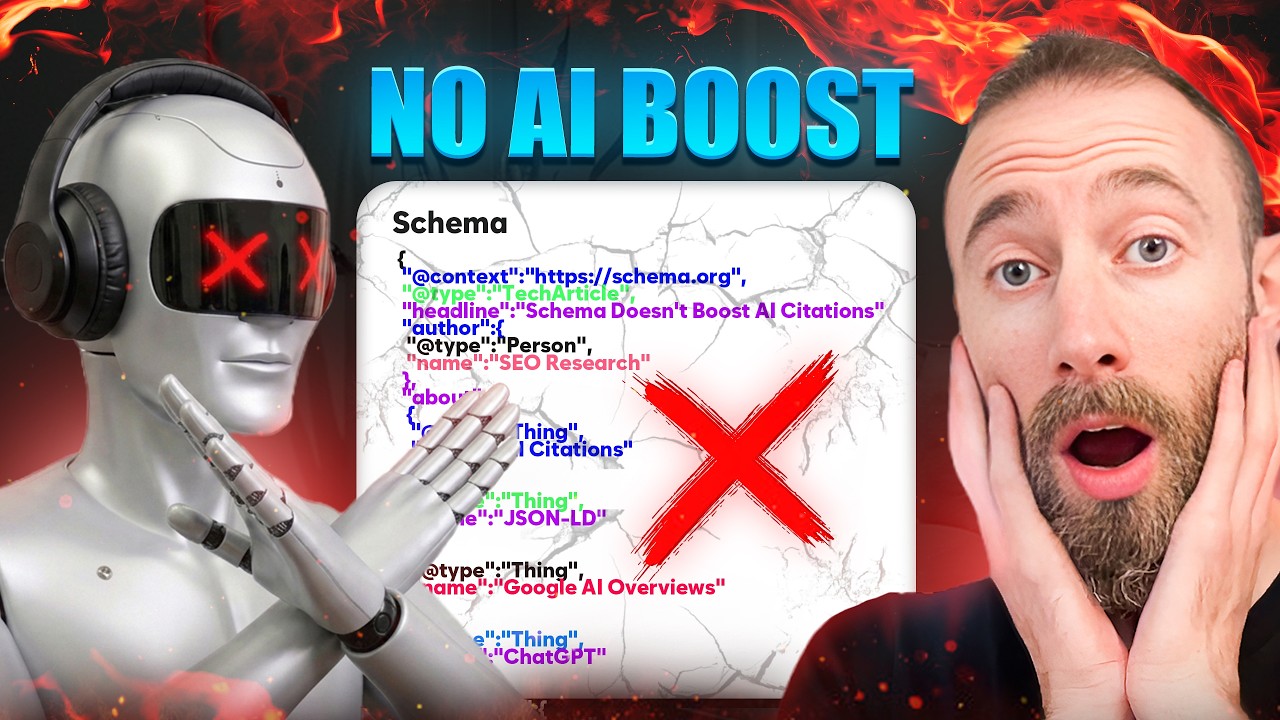
hop over to our YouTube channel. There's a great video all about that. Um, Charlie, what's your second prediction for search marketing for next year? Second prediction, a little bit drier. I think we're going to see a big resurgence of technical SEO. Like technical SEO hasn't died, but let's be honest, it's quite dry. Technical SEO, and I don't think it's the bit that gets people excited. The exciting thing about technical SEO coming into 2026 though is how incredibly important it is for AI platforms. Things like our schema, taking care of our site health, making sure we don't have broken links, broken pages, internal links that don't go anywhere, 404 errors, all of that type of thing that is incredibly important for Google SEO is also incredibly important for AI.
And I think that as businesses start to realize, oh, hang on, this is also important for AI, we're gonna start to see more of a focus. I think we're going to see more people realizing they actually need to do a cleanup. And this is because AI search platforms like ChatBT, they don't browse in the same way as humans. They're relying heavily on the technical side of the website, being able to crawl it really well, index clarity, structured data, really clear relationships between what something is and how it is a part of that business, very clear entities within it.
And so I think some businesses will have probably found that they've left technical SEO a bit on the back burner because it's not the fun thing. Perhaps they don't have a technical person leading in their marketing function. Whereas technical SEO isn't a oneanddone thing. You've not just completed it in the first month of working on an SEO campaign. If you're a small website, you're probably going to find you generally have less technical errors. So maybe you can leave it to a quarterly review. Brilliant. If you're a massive, massive corporate website or you're running a huge e-commerce store, your technical SEO is going to be a weekly task.
And I think that we're going to see a huge resurgence of the importance of technical SEO this year, which is really fascinating to me because I've been in the trenches in technical SEO and is dry as you get, but I love it. Like I always enjoy deep diving into you know your server is shared by 150 other websites which then makes it slower because it's got just so much other stuff on there. So you need like a dedicated server this kind of stuff and that can make an impact into your loading time and every little half a second you know half of loading time halves your conversion rates and stuff.
It's really fascinating like if but you have to kind of articulate in that way to make people see like this is revenue we're talking about but yeah it again gets kind of left behind because people aren't thinking of it like that unless you have a large enough website or you know you really crucially need that conversion rate to be higher when you're like an e-commerce versus a lead gen where you can get away with you know half a second not being too much of an issue. Yeah, absolutely. And one of the reasons that I also think technical SEO is going to become so foundational and such a priority for businesses in their marketing function is that more and more as we start to think see things like chatbt's agent mode and chatbt Atlas also uses agents as well on the browser.
This agentic AI that we're moving towards and I don't think we're fully going to get there by 2026 but we're moving in that direction. and search is moving in that direction. Technical SEO, if there's errors on your website, these AI agents that are essentially running virtual browsers and doing part of the process for you, whether that's shopping for pet food or buying your monthly coffee subscription or booking your flight tickets, they don't they're not going to continue on a site with errors. If there's technical errors on the site, they're just going to use a different website.
They don't care about who your brand is, none of that. They're not They're just going to exit. They're not going to try and get around technical errors on the site. And I think businesses are going to start to realize there's this level of AI where it's surfacing content, recommending your brand, kind of where we are now, where we're going in 2026, that technical SEO is important for. But then if we're thinking really far ahead, 2027, 28, 29, wow, then we're at the next level where AI agents are also going to be caring about this technical SEO side.
In fact, Charlie, you and I were discussing predictions beforehand and I believe Agentig is one of your big predictions for like next year is going to potentially take off. Correct. Yeah. So, let's come on to number three then. I think agentic AI optimization is going to be a trend in 2026 but and there's a huge but I think this is for the big players the big movers in the market and I'm talking about big sites like Expedia Sky Scanner Ticket Master those huge businesses who know that this agentic AI is going to start influencing purchase decisions and for them, it's going to hit them way earlier than it's going to hit the average business.
So, they're going to be thinking about how do we actually optimize our website for Aentic AI? How do we become the website where tickets get booked? How do we become the website where someone checks out? And this is going to be incredibly important for e-commerce as well. But I really think it's going to be the businesses the big movers in in the world if we're honest who have the power to start making partnerships with open AI who own chatbt and that kind of thing who are looking at what do we do now in 2026 to start taking care of agentic AI and when just before I kind of referenced agents maybe becoming more of a thing in 2027 28 29 I'm thinking then about the majority.
I'm thinking about e-commerce websites. I'm thinking about when searchers become more at one with the idea of using agents. At the moment, agents are still they're still developing. They're not perfect. They still make errors. And I don't think the adoption has yet been that rapid. They're not part of a normal search journey, but they are being used. There are early adopters, early people who search. I mean actually using them to take care of tasks. So I think it's a a big big mover move for next year. Yeah. I was talking to somebody the other day about the adoption rate of aentic browsers and things like that and how it's you know probably a lot slower than people would have predicted with Atlas coming out.
I'm not really hearing that many people talk about it. even like you know the people who are power users of AI platforms like they're not really as much as I would have expected but I liken it to any big platform that's taken off over the last 15 to 20 years of it's slow going at the beginning it takes a while but then it ramps up like I think I brought up as an example um a graph of Instagram's users how it was really really slow like at the time it looked rapid but if you look back it was like fairly slow but then it has that hockey stick effect of it just takes off at some point because there's just it's a question of timing, it's a question of availability, it's a question of advertising to make sure people are more aware of it and it may likely be the case for agentic too.
It seems an inevitability just slow. Ultimately, I also think it's a question of force. If someone had asked you five years ago, would you be happy with Google answering your questions with AI? I think most people would have said no. Nope. I'm happy to look at the 10 blue links and make decisions. Ultimately, those AI overviews that we see on roughly one in 10 searches on Google, they were forced upon us. Google decided that that was the direction that their search engine was going and now they're using it. Google will quite likely decide the AI mode.
Another option on the browser that you can see if you if you uh go onto Google Chrome, search for something, you can switch into AI mode. It gives you a full AI answer. Quite likely Google will decide that that is where search is going and will be forced into using it because it will become the main search engine. And I think we're probably going to see the same for agentic AI AI agents. At the moment, the average person is not going to be thinking about how to use AI agents, how to set them up, how they work.
That very early stage where actually it's quite manual for the user to decide they want to do something like that. Most users won't even realize that they exist. Which is why I think this trend is not going to be a big news story in 2026 for most people and most businesses. I think this is just going to be for the very very big companies who know what's coming. I liken it to Google's if you have Google Home, you have a Google Home device, there's automations in there and you can set them up so the lights come on when you get home so it detects that your phone is close by and so on.
The uptick on people using it is really low because it's so manual. You have to go through and make these changes and figure out how it works. Whereas they've now brought in the ability where you just click a button and the AI pops open. You can speak to Gemini and say this is what I want to have happen in my automation and it will just create those bits for you. I think it has to get to that point with aentic AI within some of the platforms where you don't even realize that it's happening. You just have the simplest interface of it.
So with you've done a lot of experimentation with using the agent parts of chat GPT to try and do ordering for you if you're coffee beans and various things. It needs to get to a point where it's so rapid and it doesn't need to show you that the browser is doing that activity. It just happens in an instant. It just pops up. All that work has been done. You actually could get very little interaction with the agent itself. You're just purchasing as far as you're concerned as a consumer. Yeah. Yeah, and you've absolutely nailed it.
Right. At the moment, we still have to go into Chachi BT. You still have to select the AI agent to do the task for you. You still have to set it up to do it. Arguably, if I buy coffee beans every month, which I do, is it quicker for me to just go direct to the website that I usually buy from and set it up or even set a subscription up because a lot of e-commerce stores you can just set up your monthly subscription. That's by far the easiest way until you have a task like booking a flight ticket for example that you know is going to take you a lot longer because you've got to price compare.
So in a in an instance like that I'm more likely to actually use an AI agent to do the research for me. But ultimately I would change my search habits if AI agents were faster, if they were the default, if it had become normal. if I just put in a query and then it runs for me without me having to go and decide that I'm going to select that as an option and I think that that will be the same for the majority of searches. Yeah, as you said before that chat GBT are bringing in this connection with Shopify.
So therefore e-commerce stores and bigger movers who are going to be immediately impacted by just improved functionality chat GBT side you might not necessarily see they're going to the ones to be impacted they need to optimize your agentic AI faster for sure. Yeah absolutely. Well let's take us on to the fourth um prediction for next year then Charlie. What what are you predicting? Fourth prediction is also a bit of a a sidebar one. I think we're going to see a huge amount of content pruning going on on websites. I think 2024 and 2025 have been the years where there's been a lot of websites that have produced a significant amount of AI spun content.
And some of that AI content is good, but a lot of it is bad. This is where the term AI slop has come from. People just whacking in a keyword, write me a blog post on this, publishing on their website. And we've seen a bit of that at scale. And 2026, I think, is going to be the year where people realize, ah, we've got all of this really lowquality content on our website and it's not doing anything. And now they're actually going to have to pick up the pieces of those marketing decisions and go through a whole content pruning strategy in order to make sure that their website is very clear about what it does, what it sells, and who it sells to.
And all of this huge amount of AI content that's been pushed out into the world on people's blogs and their news sections, their knowledge bases, wherever on their website is actually going to have to be sorted out because what happens when you put out thousands and thousands of AI slop type articles is it becomes very unclear what the website's even about. And AI systems like ChachiBT are looking at all of this content across random topics thinking, how does that relate to this website? what is this website meant to be doing? Creates confusion. The majority of that content is just going to be doing nothing as well.
You're going to be looking in your Google Analytics. Traffic's going to be zero. Conversions are going to be zero. It was a waste of everyone's time. And I think there's going to be a lot of people coming to the SEO teams coming to SEO agencies to say like this is just not performing. We put out this huge amount of content. What do we do about it? And there's going to be a really big trend towards pruning back that content. Find it quite interesting. I I'm a big fan of content pruning. Done it back in my SEO days as well.
But is it not counter to what we may be suggesting for the query fan art that you referenced earlier of AI agents pick one that they do the search for your prompt or conversation or whatever it is that you're having and then it does like five or six different searches in the background to find content that backs up or you know gives him more research to kind of make his own decisions from that. you kind of need content for all those different pieces, all the different searches in the query fan out. Are we not kind of pruning but at the same time forced to go and create extra content for all these variations that may come up in the query fan out at the same time.
So this is exactly where the confusion has come from where websites, website owners, businesses are thinking, "Oh my goodness, I need to create so much more content because AI references all of this different kind of content and surface it." The thing is, it's just not surfacing the content if it's poor. And if you created poor content using chatbt, so did 11 other of your competitors, if not more of them. And then you've all got content that's not performing. So ultimately, someone's going to have to do something about it. I don't think these two things are opposing forces.
This is about creating really high quality content that actually does what you want it to do. And when it comes to the query fan out, ultimately you're not going to be able to create something that answers a hundred different queries. But if you go on to Perplexity and you search for uh a type of prompt that's really important to your business, a keyword that you know brings lots of volume for example, you're probably going to see the query fan out on there. The actual queries that it it breaks it down to probably three, four, maximum five, I would say.
Usually I see just three different queries. So, when you're creating a piece of content, you actually just want to be thinking about what is actually fanning out for some of these AI platforms and what is actually valuable to your user. That doesn't mean that you have to create a thousand articles. You can create one really strong article or maybe two or three really strong articles around this topic and around the queries that are fanning out behind it to get a great result. And actually, if you create a thousand poor articles that are lowquality, really thin content and that are potentially just duplicating each other, one of the big big issues is content just duplicating itself.
That's always been bad for SEO. We've also seen the same for some of our clients as well. client we worked with in the financial sector had a blog post uh around mortgage calculations that they wanted to perform really well. But that blog post had duplicated so many different bits of content throughout different sections in the same post. There was so much repetition within it that AI was just not picking it up. It wasn't showing in Google's AI overviews. It was it was doing okay. It was still on page one of Google. It wasn't a terrible piece of content.
But all of that duplication was so confusing the AI didn't even know what to reference from it. And when we just cleaned up that blog post, we still kept it. It was still a great bit of content. We just cleaned it up. Removed the repetition, removed duplication, remove like AI isms, you know, those kinds of phrases that AI always gives you as well. And it performed really well. It it got into the AI overview after that for a really important keyword for that business, which is great. And I think this is about how we actually format, chunk up our content, what we write into it.
It's not about how do I create 101 pieces of content to try and match the query fan out. When you say about you fine-tuning a blog post for better ranking and you kind of taking some bits out, some duplication and you talk about content pruning, are we also talking about pruning content within content? So, for example, [laughter] traditionally through SEO reasons, we've often gone in a direction depending on what the search query is of creating a longer piece of content where it's a thousand words or 2,000 words or 10,000 depending on what it is. Are we now being forced to kind of prune that back for some terms specifically for AI search platforms or is a long piece of content 2,000 words still as applicable today as it has always been?
I think we'll see different lengths of content performing well for different types of queries. If you're asking a very simple question, you don't need a 2,000word answer to it. And the same you would expect in human conversation. You know, you've asked someone where the nearest bus stop is, then if they gave you 2,000 words about where it was, you'd be like, "What are you doing?" Whereas, if you ask them, you know, their political opinion on tax changes, you might expect a 2,000word answer to that over a glass of wine. To be fair, I like to think of this a bit more like a garden, right?
There's going to be weeds. That's the content that we actually prune, the stuff that we pull out. We don't want it in our garden at all. It's causing havoc. The same our garden is the website, right? It's causing havoc for the website. Then we're going to have piece of pieces of content that are the plants that we want there. There are rose bushes. Some of them are absolutely thriving and they're doing fantastically. They bring in loads of traffic for us. They bring in loads of conversions. That's great. We want to keep updating those, making little tweaks.
We don't want to mess them up. We don't want to overwater it and suddenly we've lost one of our thriving pieces of content. And then we're going to have things like our rose bushes, bits of content that do okay, but actually maybe they're getting a bit too big. They need a seasonal prune to make sure that the content is really clear, the content is really good. So we can think of think of it a bit more like our website is a garden. How do we take care of the content that performs really well? How do we make sure there's not any weeds in it?
And then all of that middling content. What can we do to help it grow, to help it thrive? Well, on the the subject of getting our content referenced in AI search engines through pruning the content that we don't want, taking away those weeds or just adapting the pieces we already have. Let's go through to your next prediction for for 2026. Have you read all my predictions and they're not an absolute surprise to you? You've read them ahead of time. Maybe not. [laughter] [gasps] Um, so my fifth my fifth and one of the biggest SEO trends for 2026 is brand citations over back links.
And what I mean by this is in SEO for a long time there's been link building. the idea of getting an article published on another website. That might be a news news website, that might be a blog, wherever that has a hyperlink back to your website. And there's loads of different strategies that go on with link building. Some of them we consider black hat, absolutely terrible, and shouldn't be doing. Some of them are considered normal parts of SEO actually you know building authority trying to improve the domain authority of your website ultimately to improve your rankings your traffic and your conversions at the end of the day is why this is such a huge part of SEO.
What I think we're moving away from is needing to get this hyperlink. And I think this is one of the greatest changes that we're going to see because this building links has become such a playground and not necessarily a good one [laughter] of different different tactics trying to get links that say certain things on the on the text that link towards different pages and some of it's quite messy. Google's struggled to keep track of it and make sure that people aren't just buying loads and loads of links from some random website and therefore improving their rankings.
Now, we're moving much much towards brands citations and AI understanding that actually you don't need a specific hyperlink for us to know that that website is this business. AI doesn't need to see that backlink in the way it's previously worked for traditional Google SEO. Now, we can just get our business referenced on third party websites, whether they're charity websites for charities that we support, local news websites, bloggers, all sorts of different websites. And I think the context around it is going to be so much more important than getting a specific link. It's going to be what did this person at that business have to say if they're quoted for example by a journalist and how does that how does that inform the context of what the business is what the business does.
This is going to be so incredibly important and I think it's a fantastic and amazing change for SEO next year. I remember a couple of years ago back in the day when Google added in a whole bunch of updates and there's like rank brain and then there's one called BERT which is based around the transformer technology that GPTs are you know are the child of um and I remember around those times the narrative started to switch around from you got to get the link and the the anchor text the words used in a link have to be like bang on to doesn't necessarily matter the link itself, but it's the paragraph it's in.
It's the words around it. And I think that that that was like the earliest signs of what we now well it's still SEO and it's now a a part of AI search optimization too of it whatever was reading that paragraph was understanding and learning about like what the business was or the subject matter was and going oh there's a link I'll follow the link and I'll learn more and it's just yeah it's interesting to see how that's now ever more so important today of like it's not just the link itself ates the everything about that piece of content you produced.
Yeah. And the reason that these sort of brand mentions, brand citations, references in third party websites are are so important in AI is because when you get an AI answer in chatbt, Gemini, Perplexity, whichever one of those, what that AI answer gives you is its sources. It gives you the websites that it actually cited as part of giving the answer. Similar to when we wrote essays at university and at the end you had to give all of the references of the people that you'd actually read and referenced in your essay. AI works exactly the same and you don't automatically get those on your screen for the search results, but you can click to open it.
So for Plexity, it's at the top. You just click sources, it will show you the list of citations. For chatbt, it's at the bottom. You click sources, it will show you a whole list of citations. and it actually links over to the articles that it's cited. And this is the same on Google's AI overviews, which is hugely significant. That also shows you a panel on the right hand side of your screen of the sources that have been cited to give that AI answer as well. Now, the clickthroughs to these sources, I would say, are probably extremely low, dismally low.
But the important point is the information that's being taken from these sources and actually put and surfaced in that AI answer supports your business with being referenced more frequently. So, you know, if I'm looking for the best CRM software for 2026 for my business, you know, I've got three people in my sales team. I want an absolutely fantastic software. My data hygiene is currently a mess and it needs sorting out. I'm looking for the best CRM that's affordable at my price point, that's going to meet my needs as a business. If you're searching that in AI, what you want to see is an answer or comparison, right, of a couple of different CRM that fit the criteria that you've put in.
And what AI is actually going to reference is going to be reviews on other websites. It's going to be a small percentage probably of the content on your own website. It's going to be then comparison articles on other websites. It's potentially going to be awards and accolades, accreditations that these have got. It's going to be review posts on uh blogs that like tech blogs that actually talk about CRM and this kind of software. That's all going to come up in those citations. So, you want all of these different places on the internet, all of these different articles speaking about you, your CRM positively, and you want it to understand the context of what your CRM does and who it does it for.
This is where the brand citation part has become so important and will become even more important in 2026 to improve your visibility both in Google AI overviews and when we're thinking about AI chat bots like chat GBT. During all of that I remember was meeting with a friend recently and we were discussing all these different things and making recommendations like oh I think you really like that. I think you really like this. Oh no I don't like that. Blah blah blah. for all of the different things that we talked about these different I can't remember what it was books and various things I only actually sent one link to that person in the end like you know the following day but we talked about a whole bunch of different stuff the the it doesn't matter really how many pieces of content you have it's all about being mentioned in that first response like you just have to be included in there because you just can't guarantee that there's going to be a link that somebody's going to click at the end of the day they need to just encounter your brand, learn why it's best.
The sentiment needs to be really high. Your brand visibility needs to be as high as it possibly can. No matter what the prompt is, you're coming up top. Um, but it makes me actually wonder, do you think that links will be less of a priority? We shouldn't chase them down. We shouldn't be chasing or working towards earning links in 2026 as well. I do think links will become less of a priority in terms of the actual hyperlinking articles. I think we will see SEOs, content writers, digital PR people being less uptight about the idea of actually getting a specific link.
But in terms of the broader digital PR strategy that includes things like link building, guest posting, newsjing, trying to get featured in journalist articles in the news, for example, that I think we're going to see an increased amount of as businesses realize how important that digital PR site is. So the pure pure link building part I think will start to become smaller but it's going to become eclipsed by a much broader bigger better strategy of digital PR in a more wholesome way like how do we make sure that we have loads of great PR about this business that isn't just all about trying to get links however I do think there are still going to be old school SEOs those old school SEO agencies where link building still becomes a particular focus in their SEO campaigns and that's just because a shift like this takes time.
It's interesting we talk about digital PR being like really important this year whereas when I joined Explosion Ninja like 10 years ago it was something we were already selling like something we were already delivering for clients. So it's kind of it's kind of great that we've got like you know a decade's worth of experience to throw behind the camp that we do with our clients. Just 10 years too early. [laughter] [gasps] No, it's amazing. And if we're honest, like a lot of businesses have had, especially when we're talking large enterprise businesses, have had some kind of PR going on before AI came around at all.
It's not unusual for uh large businesses, footsy 250 type businesses to have press teams who are dealing both with the very traditional side of press releases, which still have a place. A lot of journalists still reference press releases, particularly about large and enterprise organizations. And now we're actually seeing a shift where the role of these PRs is even more important, infinitely more important. And some of those press teams and PRs are probably thinking, my goodness, like this AI side is is way beyond my knowledge and skill set. The reality is it actually isn't. Like it's a little bit different.
It's a little bit of a shift. It's a little bit of an upskill to understand AI search and how it's working. But these people that already exist in many large and enterprise businesses have the skill set to also be doing a broader digital PR strategy that supports with AI optimization as well. And that's an amazing thing because we already have these people within our businesses most of the time. Yeah, definitely more than any other year, you really need to kind of make sure that your team's all integrated and communicating with each other because everybody needs to be saying the same thing and in a way that well first of all your consumer is really clear on what your positioning is, what you're offering to them, whether that's service based or or product, but that you know your entire teams are saying exactly the same thing and it's picked up by by AI search which okay may not be appearing in your analytics as [snorts] Oh, it's now 60% of my uh traffic source or lead generation source, but it's happening and is not as trackable as you might like it to be.
It may never be, but it's happening at the very at some part of the buyer journey. It may just be AI search within an existing platform like Google where it's adapting and doing AI overviews or AI AI mode or it's people going and doing these searches on chatbt in a you know closed environment. You can't see it but it's absolutely certainly happening. Anyway, um, no wait, now that you've made that point, I do also want to dispel a myth, which is I often hear people say there's absolutely no way to track my traffic and conversions from AI.
And it's not as simple as you go in your Google Analytics and it's immediately reported. However, because there is referral traffic coming from AI chat bots like chatbt as in people do click links that sometimes show and as anyone who uses chatpt and other AI chatbots will know there's not always a link. So like you say Dale, it's impossible at the moment to know exactly how many people had a touch point with an AI platform before they actually converted on your website. You can however separate out that referral traffic that's come by chatbt, Gemini, Perplexity, Claude, whichever ones you want to track in your Google Analytics.
It's not already set up this way, but you can create a channel group specifically to show the referral traffic and conversions from AI traffic, which is amazing because it actually gives you a starting point for your business to understand how much is coming through AI at the moment. If you use something like a Looker Studio report as well, you can create a filter in there without separating it first in your in your Google Analytics 4 account, which is also amazing. Actually, Andy Tuxford, who's our head of SEO, tells me it's easier to separate it out in Lucer Studio.
So, if you're using Lucer Studio, then you've you've pretty much won this jackpot. That's great news for you. And all of our clients we have bespoke Lucer Studio reports for as well. So they can very easily see if they've got AI traffic and conversions, which AI platform it's actually coming from on a on a lovely pie chart, and which pages the traffic is going to and converting on on their website as well. And certain CRM are actually adding in as a referral choice as well. Like if you're in HubSpot, it's now reporting whether it's via AI platform as well.
But the one recommendation I'd make to everyone, whether you're lead generation or e-commerce or doesn't matter what you sell, if you're B2B or B2C, anything, selfattribution is probably one of the greatest ways of knowing how people found you and just goes completely unused by far too many businesses. Like I was doing research for a B2B lead generation video uh just yesterday and the amount of websites that were just completely lacking all these really really useful things like selfattribution. Where did you hear about us was astonishing to me. And if it's in our own uh lead generation forms as well, especially our um marketing review.
So if you're not familiar, we have a free website marketing review where we will analyze your website and see where your opportunities are. And if you go to exposureinja.comreview, you'll be able to go through that form and see for yourself the question of where did you hear about us? And you'll be able to say the podcast because you're listening to this. [laughter] But then at the end of the end of the week, the end of the month, I can look through and see, okay, there were this many people saying they found us via AI platforms.
When you then check against their CRM um where they appear in our CRM, it may not say that. it may say organic um you [clears throat] know a search engine or via video or whatever it is but the first time they encountered us may have been actually an AI platform. So unless you're using that you will never know. So the first and my only recommendation from this podcast would be to go and add a where did you hear about us option to your form if possible leave it blank so people can describe it for themselves but not every platform is going to allow you to do that.
Like in our case it's you have to pick from one of the things. Um, actually taking us on to recommendations, Charlie, I do want to wrap us up. What are your recommendations? Taking all these predictions for next year. Um, for marketing leaders, my recommendations for next year for marketing leaders are putting a certain percentage of your budget towards AI search now and thinking about how important it is for your business. making sure that you understand your target customers incredibly well and where they're searching before you split your marketing budget for next year. And I think the last one I'm going to say is focusing in on this digital PR side much more heavily than you have done in the past without thinking too narrowly about just getting back links.
Brilliant. Well, thank you everyone for joining us this week uh for what I imagine will be our last podcast of the year, Charlie. Um yeah, because it's holiday time for me this week. [laughter] Yeah, everybody celebrate. Well, thank thanks everyone who's joined us for the entire of this year for for all of our podcast episodes and for the series we did about marketing strategies 2026, which you can find by going to exposure.ninja/strategies2026. Um and just again, thank you so much for joining us week in week out. It's really appreciated and we'll see you again in the new year.
Merry Christmas and a happy new year. See you in uh 2026 to dominate search marketing. Absolutely. Take care. Bye.
More from Exposure Ninja
Related Videos
5 Levers That Separate Winning AI Investments from Disasters
 AI News & Strategy Daily | Nate B Jones
 00:27:46

Top 3 AI Courses To Learn In 2026 | Best AI Courses To Future Proof Careers In 2026 | Simplilearn
 Simplilearn
 00:05:04
Top 5 Machine Learning Certifications In 2026 | Best Machine Learning Courses In 2026 | Simplilearn
Simplilearn 00:05:35

Generative Artificial Intelligence Full Course 2026 | Gen AI Tutorial For Beginners | Simplilearn
Simplilearn 22:38:08
Get daily recaps from
Exposure Ninja
AI-powered summaries delivered to your inbox. Save hours every week while staying fully informed.