Will Google’s New AI Hover Links Actually Increase CTR?

Chapters9
Explains the new AI overview and AI mode hover cards that show source links, images, and a meta description, and notes they are currently desktop only.
Google’s new AI hover links on desktop add citation previews, nudging publishers to optimize for AI overviews and AI mode to boost visibility and trust.
Summary
Exposure Ninja’s Dale Davies and CEO Charlie Martin unpack Google’s rollout of AI overview and AI mode hover popups, which now surface citation previews with source links, thumbnails, and meta-like descriptions. They confirm the feature is already appearing in desktop searches (not mobile) and discuss why Google is pushing it now: to boost engagement, increase trust, and help users access quality content faster. The hosts compare this to past disruptors like featured snippets, noting AI search is reshaping how brands earn visibility through citations rather than traditional backlinks. They argue that transparency around sources could empower smarter content strategies and better PR alignment, while acknowledging risks of gaming the system. Practical advice centers on prioritizing citation-building and context-rich brand mentions over chasing specific links, plus running a focused experiment on top keywords likely to be cited. Finally, they tease a webinar on AI search strategies for 2026, underscoring the momentum behind AI-driven visibility and buyer journeys.
Key Takeaways
- AI hover cards for AI overview and AI mode now show source links with thumbnails and a snippet, increasing context around each result.
- Tests across the UK indicate these hover previews appear on desktop searches, suggesting a rapid rollout in that environment.
- Google’s rationale cites higher engagement and easier access to great content, but publishers remain wary of zero-click downsides.
- Transparency of cited sources in AI results could shift SEO emphasis from backlinks to brand mentions and citation authority.
- Marketers should pivot toward building citation authority and context relevance for target topics, rather than chasing exact page-level backlinks.
- Desktop search behavior is more research-driven with longer dwell times, making hover cards potentially more impactful for B2B and complex queries.
- If click-through improves, prioritizing AI overview citations could become a core SEO tactic; otherwise, brand presence and trust remain valuable even without CTR gains.
Who Is This For?
Essential viewing for SEO professionals, content marketers, and digital PR teams who want to understand how Google’s AI hover previews affect visibility, traffic, and measurement. It’s especially relevant for those focused on B2B buying journeys and content strategy in 2026.
Notable Quotes
""AI overviews and AI mode now show citation previews, which looks like a little popup card that comes up with source links.""
—Describes the core change to AI search results that the episode analyzes.
""They are only on desktop. So, they're not available if you're searching on mobile. They're just going to be there for mouse hovers when you're doing searches on Google on desktop.""
—Clarifies current rollout limitations and user interaction model.
""If I could only focus on one, I would spend less time trying to get specific text hyperlink to specific pages in backlink building. And I would focus much more towards getting your brand mentioned in the correct kind of context.""
—Key strategic advice prioritizing citations and context over raw backlinks.
""This is essentially the new position zero for many searches. It's the top position.""
—Highlights the potential prominence of AI hover previews in the SERP hierarchy.
""There will be opportunities where people attempt to game the system here, but actually having such a significant waiting in AI searches on third-party sources is going to mean it's much more difficult to game than it used to be.""
—Notes the governance risk and futureproofing aspect of the new model.
Questions This Video Answers
- How will Google’s AI hover previews affect my SEO strategy in 2026?
- Should I focus on building citations rather than traditional backlinks for AI search visibility?
- Which top keywords are most likely to appear with AI overview citations on Google?
- How do AI mode and AI overview citations influence trust and click-through rates?
- What steps can I take today to start earning AI citations for my brand?
Google AI overviewAI modehover cardscitation previewsbrand mentionsdigital PRSEO strategybacklinks vs citationsAI search transparencyzero-click searches
Full Transcript
Heat. Heat. [music] [music] Hello and welcome to the dojo research marketing podcast by Exposure Ninja. My name is Dale Davies. I'm the head of marketing at Exposure Ninja. I'm joined by our fantastic CEO, Charlie Martin. Hey Charlie, how you doing? Hey Dale, doing great. How are you? Pretty well. Um, I am absorbing all of this week's information in a very uh quick fashion and and kind of absorbing there's a whole bunch of stuff that we could be talking about this week, but I hear there's some big news out of Google about AI overviews. Yes, there absolutely is.
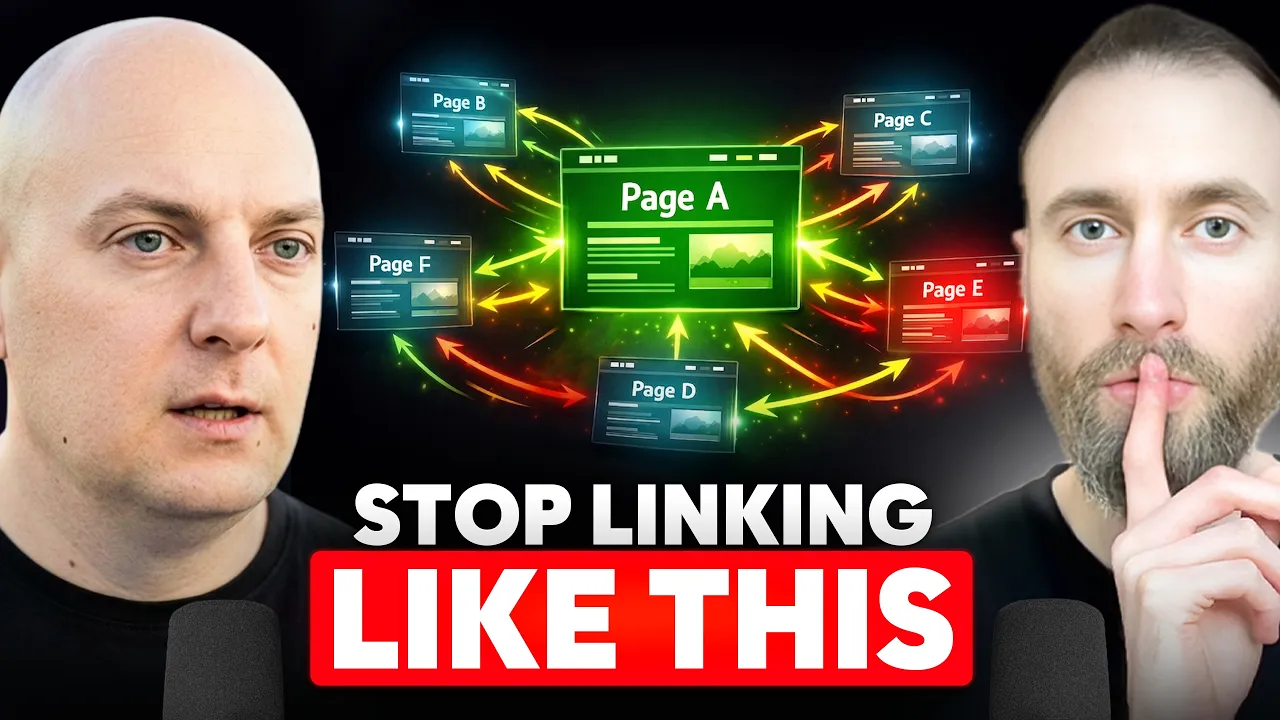
So, Google has announced a new AI overview and AI mode hover popup. Essentially, what's happening is AI overviews and AI mode now show citation previews, which looks like a little popup card that comes up with source links. And those source links, they quite often include an image, a thumbnail, quite a small kind of square image, the name of the article, and the start of what is akin to a meta description. So, the start of a description of what the link actually shows, which I think is really exciting. Are they starting to appear like everywhere or is this like a limited test?
Is this like just a grand change that everybody should be seeing regardless of like what they're searching for? Yeah, great question. So this morning I ran 10 different tests all from UK and every AI overview and AI mode result that I went into had these hover pop-up cards showing source links already. So we're seeing this rolling out pretty quickly. Um, we've also seen Google already say it was Robbie Stein who is the VP of product over at Google Search say that they have been testing this new user interface already and they're already sure that it's more engaging and it makes it easier to access great content across the web.
So, we're expecting to see these everywhere. However, they are only on desktop. So, they're not available if you're searching on mobile. They're just going to be there for mouse hovers when you're doing searches on Google on desktop. Why do you think that they're adding this change in now after we've had AI overviews for what it's like a year and a bit now? Plus, there was the uh search generative experience as it was called the beta beforehand. Like why is it taking us two years to come to this point? Well, I think Google's under a lot of pressure at the moment to show that they are supporting publishers and websites.
What we don't really know is whether this is definitely going to be good news. It feels like good news for publishers or whether it's just going to be optics from Google. So, they're claiming already that testing shows higher engagement here. But publishers are of course really anxious about zeroclick searches. This has been a big issue for businesses, big issue for content websites where AI overviews have been eating up a large portion of the above the fold of search engine results pages on Google, particularly onformational searches. Many many businesses and websites have seen uh increases in impressions, but huge drops in clicks, especially for top of the funnel kinds of searches.
So, we might see this in the most positive light as Google trying to send more traffic back to publishers from those AI overviews. But on the other hand, we could, if you're a glass half empty kind of person, think of this as Google trying to reduce criticism about how AI overviews and AI mode are eating up those clicks. You've obviously been in the SEO world for like going on what 11 12 years now. Do you think that this is really going to have the impact that is intended or do you think this is just Google trying to, you know, prevent the negative uh press that they've been getting?
I honestly feel quite positively about it. Even if they are trying to prevent the native press, anything that actually supports websites and businesses to get relevant traffic through to their site, increase their brand awareness, increase the brand stickiness, I think is a a great result. Um, we know, of course, clicks have been nosediving since the broader roll out of AI overviews. And even if the click-through rate didn't increase from these new hover cards, I think there's lots of benefits of them. They show the brand. They show context around it. They potentially increase trust of searchers who are seeing that brand, remembering it.
It's becoming sticky to them. If a business has actually been optimizing for relevant AI overviews, is appearing in lots of really strong top and middle of funnel queries relevant to what they do, what products and services they actually sell, then I think that's a great result. Even if it was originally intended by Google just to reduce criticism, if the result is a net win for businesses, then great. And I think it makes AI overview significantly more useful to brands and businesses. Whereas before, there's a lot of questioning about the value of going after AI overviews.
Do we definitely want them? Having these hover cards actually show links through to sources. very very strong tick in my box towards wanting to own relevant AI overviews as a business. Do you see any similarity in how this is running and rolling out to how feature snippets uh first came along and were super disruptive and there was a creation of the zero position or position zero and everyone panicking about a complete drop off in traffic. Yeah, there's a lot of similarities that happened with featured snippets and AI overviews have essentially eclipsed featured. They've featured snippets almost don't exist at all now because AI overviews are so dominant that I think a lot of people would have even forgotten about them.
So yes, I think there's a large percentage of that. I think it's even more akin though to other types of AI search that we're seeing. So AI mode, but I'm also talking about chatbt, Gemini, perplexity, where more and more we're seeing sources being shown. So the actual research that the AI has used to give its answer being shown. And I think this is incredibly important both for trust in how AI search works, but also for brands and businesses in making sure that they are updating the right content on their website, the kind of content that AI wants to surface.
And I'm talking about their own product and service pages, but also blogs andformational content. And even more importantly, it gives very strong indications and visibility to businesses on what third party type of websites and PR they want to be going after because it's so much more transparent now that we know what sources are cited in AI searches. We can visibly see it, including in AI overviews and AI mode. That's great. Whereas the Google algorithm behind those 10 blue links has always been a bit is this backlink going to be worth it? How do we make sure we're getting on really credible high domain authority websites?
But we don't actually know exactly which websites are influencing our website to show up higher. I actually think there's a lot more transparency coming with AI search that I'm really pleased about. the more visibility there is on the links behind the results that are being generated via AI overviews or AI mode, does that not create opportunity for things to be gamed if we know exactly where we should be seeking out um opportunities to increase brand mentions, branded links, all that kind of stuff. Yeah, this is a negative view of it, but there's always an opportunity for everything to be gamed in SEO, in digital marketing, and there'll always be people who attempt to do it.
And I think the question is, what is a really strong strategy that is going to be futureproofed when it comes to AI search versus what is a short-term game or short-term wins that you're going to get, but that might lose you the long-term game. So from my perspective, you know, black hat SEO has always existed in some form and most of the time it gets penalized very shortly after. There will be opportunities where people attempt to game the system here, but actually having such a significant waiting in AI searches on third-party sources is going to mean it's much more difficult to game than it used to be because you need to get all of those publishers on board.
But also because new PR articles, new uh third party publications, blogs, content pieces can gazump old citations quite quickly. So there's a kind of proactive strategy that you can be taking around what topics you think are going to be cited based on trends you've seen, but there's also the reverse engineering strategy, the going backwards, trying to jump on things that are already cited. There's no perfect answer to game the system there. A combination of going after really, really relevant topics on relevant publications is going to be the best strategy. And I hope that a lot of publishers will a lot of businesses will see it that way and a lot of publishers will be thinking ethically about it as well.
Do you think this will make marketers the people who are involved in AI, search optimization, SEO, content creation, digital PR, do you think it'll make them look differently at how they do strategy or potentially how they look at the measurements of success? Like you've previously spoken about brand mentions, brand visibility, brand sentiment and so on. Do you think people will change their views or what they do? Yes, I think this is another step towards people changing their views. I think one of the hottest topics this year is going to be citation building. Actually thinking about how your website gets cited in AI answers and I'm speaking about AI overviews on Google AI mode Gemini Plexity all of these AI platforms I'm speaking about there.
And that's going to focus really heavily away from backlinks as we know it in traditional SEO and PR work and much much more towards what sources get cited by AI platforms and there's nuances between them. So even in this example if I'm searching in traditional Google the answer I'm being given in AI overviews and the sources that get cited are not match for match when it comes to AI mode. even if I switch directly into AI mode from that search. So we know that different types of websites and content are cited by AI even in Google's own ecosystem.
So firstly huge huge focus on that. I think a lot of those who work in SEO content PR type roles are going to be learning about building citation authority understanding how to review trends in those sources. It's going to be a really really hot topic this year. And in terms of measurement, I think that is going to start to change. There's a lot of very traditional SEO strategy still not focusing on earning AI overviews for relevant topics. I think we're going to see more of a push towards that. Particularly if data comes out showing that this change is increasing click-through rates for businesses, then I think it's going to be very very strongly desired as part of a strong SEO strategy this year.
Would you prioritize aiming for the citations and these links and hoping for like an increase in click-through rate or would you lean more towards the brand mentions at this stage? because I see the value in both, but there's only so much time and resource and everything for most marketers to be able to put towards any number of things uh for their SEO strategy, AI search optimization strategy, whatever it is. Like if I could only focus on one, where would you put that focus? If I could only focus on one, I would spend less time trying to get specific text hyperlink to specific pages in what's what's commonly known as as backlink building or link building.
And I would focus much much more towards getting your brand mentioned in the correct kind of context that is relevant for your business, for your target market, and the positioning that you want to have. Because those brand mentions are incredibly important in AI search. AI isn't concerned about whether you have a specific link. If you're able to get the backlink at the same time, then winner winner. It's a double win. So great, do it if you have the opportunity to. But I would not hyperfocus in on links. I would think more about context, where the article's published, and the kinds of topics you want to show up on.
And do you think that this update, if it sticks around, if we still see it in a couple of months from now, do you think this will impact how buyers use AI platforms like Chib Claude or AI overviews in this case? Do you think it will just change the buyer journey and how much is compressed within these chats that happen in say AI mode? Yes, absolutely. So what we've seen in AI overviews has been a right hand side panel and it's been very very easy to ignore the right hand side panel that usually has three sources linked in it.
So you sometimes might have the brand recognition from seeing like a visual image of a brand particularly if it's a product for example or if they have a very strong brand logo that's quite memorable but the reality is very few people actually click on those sources. The thing that's different here is because those sources when you hover a center screen, you are definitely going to be looking at them. If your mouse hovers over the specific word, the specific phrase that brings them up. So firstly, that's great. They're much more center of mind. The big question I think everyone's going to be asking is, are they going to increase rate, which would be huge if they did?
I think there's a little bit to unpack here though about whether they will. So, at the moment, we know they're only on desktop. And what we also know about desktop is it's it's much more likely to be used for longer research, particularly B2B. Very few people who sell B2B are actually or buy B2B are actually on mobile. They're mostly going to be searching from their work computer. And we know that people often have multiple tabs open. they actually spend a lot longer on desktop. So they have longer dwell times compared to mobile and that's because desktop is more commonly used for things like research journeys, research heavy topics, B2B queries, high consideration queries.
So on those kinds of topics, I think it's very possible that we're going to see increases in clickthrough rates direct from AI overviews. For simple queries, I think much less so. And the thing to bear in mind also is only around 35% of searches happen on desktop. So mobile is is really really dominant. But if we are thinking about specifically these these desktop searches and how this changes the buyer journey, the big trend for me is AI is just becoming so much more integrated. Even if you wanted to ignore that AI, it would be incredibly difficult now.
If you make a search on traditional Google, the likelihood is extremely high that you're going to be served an AI overview. Now, it's increasingly more likely that you're going to see one of these hover cards. And particularly if you are on a researchheavy journey or a buying journey, it's quite likely you might actually open one of these hover cards or go in or from AI overview, they're very very strongly pushing you to move into AI mode to have a have a conversation and that is essentially working on compressing the buyer journey more and more. So, I definitely think this is going to impact how people shop online and how they find their next purchase.
So, either way, no matter how people change or how people search, they're always going to stick to using AI overviews. They're always going to stick to use AI mode and and your biggest priority is just get mentioned there no matter what. Get cited there is a preference. Absolutely. I think if you weren't doing it before, now there's even more reason to actually do it. If click-through rate does improve, then you definitely want to be there because this is essentially the new position zero for many searches. It's it's the top position. Not always, but often the AI overview comes comes up highest.
If you So, if you've been ignoring it, stop it and start thinking about them. Start thinking about the ones that are relevant. jump into Semrush or SE ranking to figure out which AI overviews which which of your target keywords show those AI overviews, which ones you own, which ones you don't own. And I also think there's a very strong brand recognition piece here more and more where we're seeing visuals. We're also seeing YouTube videos come up in many of these AI overviews as well. So, if you're creating content on YouTube, you're already ahead. If you're not, you're probably starting to fall.
And the other thing is the strong headline for the types of content that's going to be cited matters now because it's actually going to be showing up front and center if anyone hovers on desktop sees one of these hover cards. The biggest thing you're going to see is the headline of that article, that content piece. So the framing that you want to have is hugely more important than it was before. Knowing what we know about this obviously very recent update, is there anything you would suggest to people that go ahead and do today to you know work on this or do we sit and wait and give it a couple of weeks to see if it sticks around?
My recommendation for what you should do today is to understand which of your top priority keywords have AI overview showing and start working on getting your content cited in those. And I would start with a small experiment. If you've never done it before, then start with a top 10 that you actually want to optimize and get mentioned in the AI overview for so that you're in a much stronger position if this does continue, which I think is very likely considering that Google have rolled it straight out and they are confident that the testing has gone well, that they're more engaging.
I think it probably will be sticking around for a long time. Better to have done some early work so that you have the foundation to do more and more optimizing of AI overviews than to have sat on your hands for a couple of weeks and have your competitors go after them first. Fantastic. All right. Any final thoughts to shareh this update before we wrap up for this week? No, I think that's everything. just that next Wednesday you and I will be running a webinar on how to dominate AI search in 2026 looking at everything from AI overviews AI mode right into everyone's current still favorite AI chatbot which is chatbt all of the Gemini users I can hear them screaming already that it's their it's their new one but we'll be talking about all the techniques that you absolutely must be implementing in your search strategy this year and if you want to attend that you go to expos exposure.ninja/webinar and it will take you through to the registration page and you'll be able to sign up before the seats are gone.
I checked this morning there are about hundred or 100 or so left and I saw that we sent out another email about that today. So there's probably even fewer than as we record this. So just head on over to exposure.ninja and you'll be able to do that straight away. Thanks so much Charlie and see you all next week for another episode. Take care. Bye. See you. I know.
More from Exposure Ninja


Get daily recaps from
Exposure Ninja
AI-powered summaries delivered to your inbox. Save hours every week while staying fully informed.