The PC-book Neo is HERE from Intel (Also New Gaming Handhelds)

Chapters11
Premium, affordable PCBooks with Core Series 3 (Wildcat Lake) are redefining value, offering metal builds, solid displays, and long battery life at MacBook Neo-competing prices, while Intel showcases ARC-driven handhelds and a Cooler Master sponsor plug rounds out the segment.
Intel’s PCBook Neos pitch premium, upgradeable laptops at MacBook Neo prices, plus a lineup of ARC G3 handhelds that push portable gaming further.
Summary
Linus Tech Tips’ overview centers on Intel’s Wildcat Lake PCBook Neos, which aim to mix premium build quality with higher RAM ceilings than Apple’s MacBook Neo. Linus emphasizes metal chassis, solid keyboards, and upgradable memory choices (up to 48–64 GB in some models) as a key advantage over Apple’s 8 GB limit. He highlights several competing devices (Acer Swift Air14, Dell XPS 13, ASUS Expert Book, Lenovo IdeaPad Slim 5i) and notes pricing that tightens the gap with the MacBook Neo. The piece also covers Intel’s ARC G3 handhelds, praising the efficiency and battery life gains from features like Intelligent BIOS Control V3.5 and core parking, and explaining how pre-compiled shaders and day-zero driver support improve gaming on handhelds. A light sponsor segment follows, with Cooler Master’s MWE Gold 1000 V4 power supply and a nod to the MSI Claw 8 Exai Plus handheld at an estimated $1,500. Overall, Linus argues Intel’s Wildcat Lake strategy provides more RAM flexibility, better upgradability, and a broader hardware ecosystem to counter MacBook Neo’s locked-in config—though battery life and GPU performance remain nuanced tradeoffs.
Key Takeaways
- PCBook Neos enable memory expansion with up to 48 GB LPDDR5X or 64 GB DDR5 in some models, a clear upgrade path vs. the MacBook Neo’s fixed 8 GB.
- Lenovo’s IdeaPad Slim 5i is confirmed to use a sodium memory slot, suggesting a lower-cost upgrade path for RAM long-term.
- ARC G3 handhelds show significant efficiency gains and 11-hour potential battery life in lightweight titles through core parking and runtime management.
- ARC G3 software stack, including XCSS and pre-compiled shaders, aims to reduce first-launch latency and improve frame stability with day-zero driver support.
- Claw 8 Exai Plus handheld is the first pricing anchor publicly reported, estimated around $1,500, signaling premium handheld positioning.
- Acer Swift Air14 and Dell XPS 13 are highlighted as strong, price-aligned options at around $699–$799 for base configurations, demonstrating real competition in affordable premium laptops.
- Intel claims a 42% lead over AMD at 35W with ARC, and comparable performance to Ryzen AIZ2 Extreme at half the power, emphasizing efficiency as a primary advantage.
Who Is This For?
Tech enthusiasts and budget-conscious buyers who want premium laptops with upgradeability, as well as gamers eyeing portable ARC G3 handhelds. Also valuable for PC builders tracking Intel’s material roadmap and RAM expansion options.
Notable Quotes
"PCbook Neos, as I'll be calling them, have a lot of other things going for them that could attract budget laptop shoppers."
—Linus reframes PCBook Neos as budget-friendly yet capable alternatives to MacBook Neo.
"These are premium feeling machines with metal chassis, decent displays, strong battery life, and at least adequate performance, and coming in at prices that take direct aim at the MacBook Neo, with some even borrowing the idea of advertising $100 discounts for students."
—Summary of what Wildcat Lake laptops bring to the table against MacBook Neo.
"Our graphics are all grown up, you guys."
—Line highlighting improved handheld graphics capabilities in ARC G3 devices.
"Intelligent BIOS Control V3.5 may not have the sexiest name, but it does a couple of sexy things to dramatically improve frame rate stability."
—Explanation of ARC G3 power-management features boosting gaming stability.
"The Claw 8 Exai Plus. And MSI is estimating around $1,500."
—Pricing anchor for the high-end ARC G3 handheld.
Questions This Video Answers
- how upgradeable are MacBook Neo competitors with RAM beyond 8 GB?
- what is Wildcat Lake and how does Core Series 3 compare to Apple silicon for laptops?
- what are ARC G3 handhelds and how do they achieve longer battery life?
- which laptops offer the best value for RAM expansion around $700-$800?
- how does Intel’s ARC G3 software suite improve gaming on handhelds (XCSS, pre-compiled shaders)?
Intel ARC G3Wildcat LakeCore Series 3MacBook NeoPCBook NeoRAM expansionLPDDR5XDDR5Acer Swift X Air14Dell XPS 13 (202x) review`,`ASUS Expert Book`,`Lenovo IdeaPad Slim 5i`,`MSI Claw 8 Exai Plus find
Full Transcript
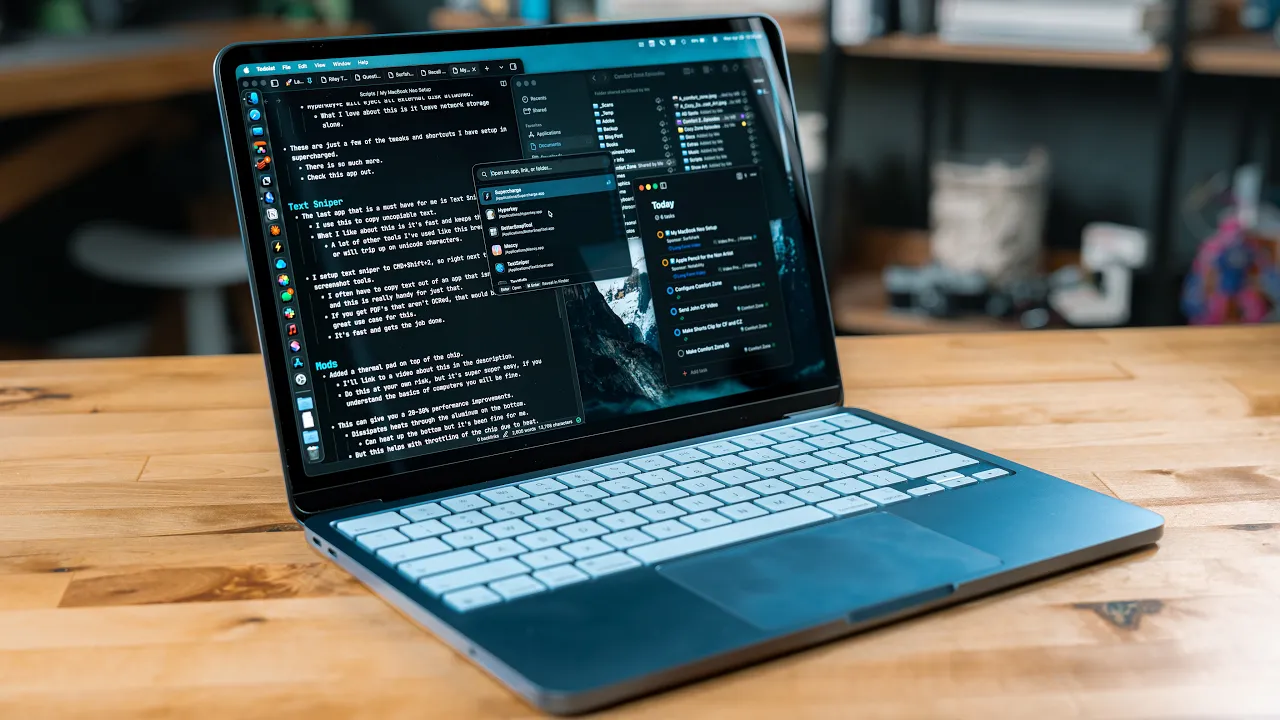
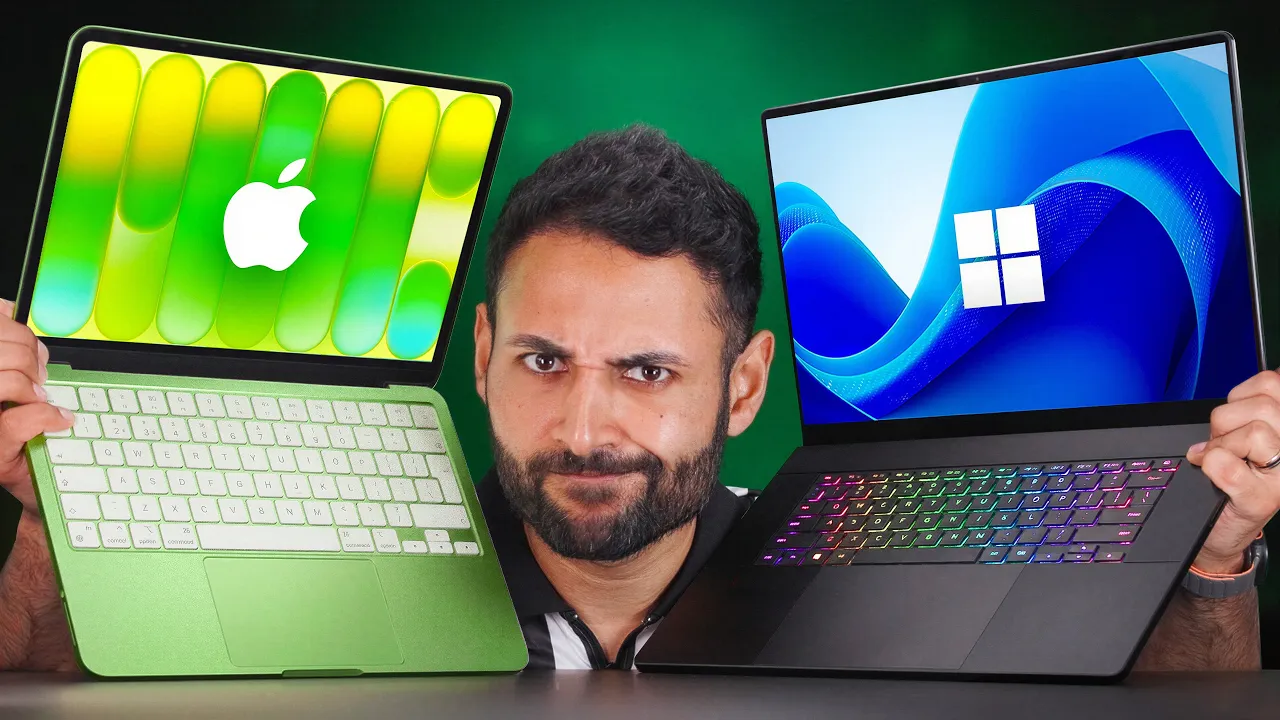
MacBook Neo with its 599 price was described by ASUS CEO SY Sue as a shock to the entire market. Well, you know what? Maybe the market needed a shock because here we are just a few months later and we are looking at a smorgus board of core series 3 code name Wildcat Lake Laptops that are putting affordable PCs back on the menu, boys. And I'm not talking cheap plastic Chromebook wannabes. We just got hands-on with devices from basically all the major OEMs. And while the details differ from one to the next, the overall message is the same.
These are premium feeling machines with metal chassis, decent displays, strong battery life, and at least adequate performance, and coming in at prices that take direct aim at the MacBook Neo, with some even borrowing the idea of advertising $100 discounts for students. Intel also showed off this year a whole lineup of powerful gaming handhelds featuring their new ARC G3. A chip that was tuned specifically for compact PCs and boasts performance and efficiency that according to Intel vastly exceed the market leader AMD. Just like I'm going to vastly exceed your expectations for this segue to our sponsor.
Now probably about met expectations, Cooler Master. Make sure you've got all the power you need for the latest GPUs with their MWE Gold 1000 V4 power supply. Use our link down below to learn more. If you somehow missed the mountain of memes, memory pricing has skyrocketed in recent months, driven by insatiable demand from the AI industry. That makes building an affordable computer these days very difficult, but not necessarily complicated. You just use less of it. That means that any laptop that competes with the MacBook Neo on price will also compete with the MacBook Neo on RAM.
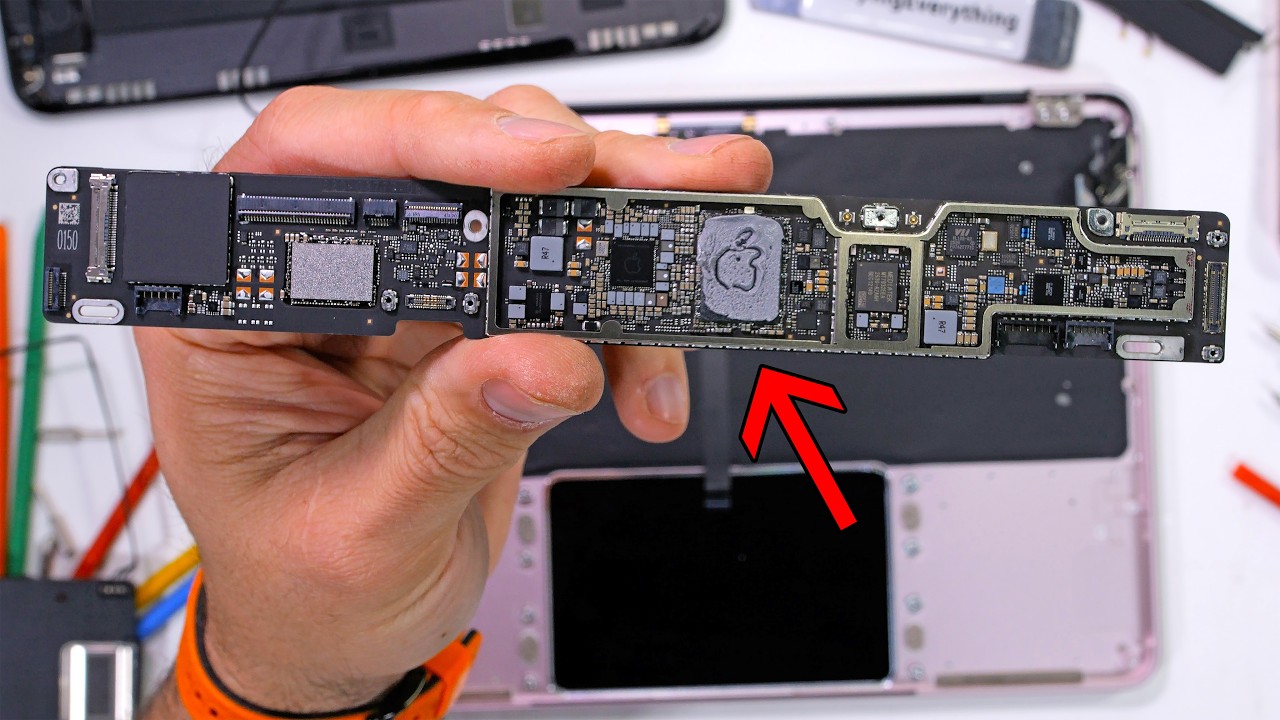
This is a bit of a downer because I don't relish the idea of running Windows on an 8 gig machine any more than anyone else, but PCbook Neos, as I'll be calling them, have a lot of other things going for them that could attract budget laptop shoppers. For one thing, you at least can configure them with more than just 8 gigs of RAM. Apple's A18 Pro, the SOC that sits at the heart of the MacBook Neo, was originally designed for a phone rather than a laptop. So, it's locked at just 8 GB of memory, and it's not upgradeable.
By contrast, Core Series 3 supports up to 48 GB of LPDDR5X memory or even 64 gigs of regular DDR5. And that right there is advantage number two. While it will cost you some performance, especially in workloads that rely on the GPU or the AI cores, some PCBook Neos, like this one from Lenovo, are built with memory slots, allowing them to be upgraded after the fact. Another highlight is performance. The MacBook Neo is going to have the advantage in short singlethreaded sprints, but its weak cooling and less impressive multi-core performance means that Intel's six core designs should keep pace fairly well.
And while Intel isn't making any bold claims with respect to GPU performance, Core Series 3 will still at least benefit from a decades deep catalog of lightweight games that can be enjoyed on a PC, but simply aren't compatible with Mac. The last highlight has got to be variety. The MacBook Neo is the MacBook Neo. Screen size too small? That's nice. Don't like the keyboard? Too bad. But on the PC side, we've got a lot of choice. And we just got hands- on time with half a dozen systems from the usual suspects. Starting with one of our favorites, the Acer Swift Air14.
This one really feels like pretty much the complete package. Metal chassis, decent rigidity, long key travel on the keyboard with a satisfying trackpad, not to mention a convenient one-finger lift lid. Now, I know I saw your comments. That's not a makeorb breakak feature for a lot of folks, but what it is and the reason that I look at it is a solid overall indicator of the attention to build quality because it does take a bit of extra time to get it right. Now, the display on this one probably isn't going to win any awards, but it looks solid and this is one of the few units that we've got pricing for.
It's starting at $699 with 512 gigs of storage, which puts it right smack in line with the MacBook Neo. The other one we've got pricing on is probably the one that most people agree is straight up best in show, and it's the Dell XPS 13. I love the name, by the way. Goodbye. We copied Apple's branding. Hello, XPS. It's back, baby. And with characteristically outstanding chassis rigidity, an XPS worthy keyboard and trackpad, and remarkably, a touchscreen. All starting at the same $6.99 or 599 for students. Welcome back, XPS. Because as long as the 16 gig upgrade isn't priced out of whack and the only two USBCs for IO isn't a dealbreaker for you, this looks like the one to recommend for any relatives who want something decent that isn't going to break the bank.
That is, unless the ASUS Expert Book has something to say about it. Build quality here feels darn near on par with the XPS with a nice tactile, albeit louder keyboard, and it also has a touchcreen alongside much more practical IO and a hidden stylus that you can use when it's flipped around in tablet mode. She is a bit of a fingerprint magnet, and we don't have pricing, so it's hard to compare directly, but if it's in line, this is one to keep your eye on. HP's Omnibook 5 didn't jump out at us, but seems like an overall solid machine.
And MSI's modern 16S offered up the biggest screen of the bunch with a compact number pad as a bonus. Though again, without pricing for this one, it's hard to say how compelling it is. The last one I want to highlight is the Lenovo IdeaPad Slim 5i. Not because it managed to wow us with its build quality. The deck flexes enough to be noticeable while typing, but because it's one of the few Wildcat Lake designs that we were able to confirm uses a sodium slot for memory expansion. Obviously, no one wants to be stuck with 8 gigs of RAM forever, but a budget's a budget.
So, this machine feels like a great way to start with something affordable and then hopefully expand your memory once things get a little bit less insane. And now to change gears and talk about something totally insane, and that's Intel's new ARC G3 handheld gaming chips. How do I put this? These things look freaking awesome. Intel was showing off four different devices in the suite that we visited from MSI, Acer, and 1X player. And while the details vary, like screen size, stick configuration, and whether they have a kickstand, detachable controllers, and a flipping keyboard, what they all have in common is performance that is borderline gamechanging.
Our graphics are all grown up, you guys. To tune their Panther-Like chips for handheld gaming, Intel did a few things here. They dropped high performance PC cores from 4 to 2, XC display engines from 3:2, and Thunderbolt 4 from 4 to 2. This helped them save some power and hopefully some cost since they can use chips that didn't make the cut for laptops. The other big change to power is in management of it. Intelligent BIOS Control V3.5 may not have the sexiest name, but it does a couple of sexy things to dramatically improve frame rate stability.
First, it prioritizes GPU frequency, which okay, that's pretty obvious, but some of the other stuff is a lot less obvious, like it prioritizes your ecores, your efficiency cores rather than your P performance cores in gaming loads. What? Well, it turns out that Darkmon ecores are enough for most things. And by using those rather than the more power- hungry ones, it helps with that aforementioned GPU clock speed prioritization. The other big one is core parking. At 12 watts or less, this new chip will stop using its peak cores altogether, which alongside Intel's new endurance gaming mode, which limits power and frame rate, can push your battery life as high as 11 hours in lightweight games.
Like, I knew Panther Lake was efficient, but damn. And this efficiency manifests in other areas, too. While Intel was proud to boast a 42% lead over AMD at 35 watts, they know that most folks aren't using 35 watts away from the wall. Most people are going to want to game at more like 17 watts. And they claim that they can achieve similar performance to the Ryzen AIZ2 Extreme at half of the power. So you can get the same gaming experience just for way longer. And all of this is alongside the ongoing software improvements that Intel has been making to ARC, including XCSS super resolution, XCSS multiframe generation, XC low latency, and maybe most importantly, a rapidly growing level of engagement with game developers to provide day zero drivers to ensure that art customers are not left out in the cold when a new game launches.
Another fun new feature is pre-ompiled shaders. Intel's been working on a way to do all of that for you. So, when you first launch a game, you just jump right into the action. Sick. There is a catch. The only handheld that I think we have pricing for so far is the Claw 8 Exai Plus. And MSI is estimating around $1,500. So, these are going to be expensive toys for grownup boys, at least until the global DRAM shortage chills the freak out a little bit. something that it seems like we'll need to keep waiting a little while longer for.
But what you won't have to wait for is the segue to our sponsor, Cooler Master. Cooler Master's MWE Gold 1000V4 power supply is built with the latest generation of gaming systems in mind. Thanks to ATX 3.1, PCIe 5.1, and its native 12volt connectors, it's going to work with any current high-end GPU. They also have this cool feature called GPU shield that can help detect things like abnormal currents and respond in real time, alerting you with an LED indicator. That 80 plus gold efficiency rating also lets you know that you'll be saving a little bit of power even under a heavy load.
The fans are built to be silent, so no more putting on headphones in an attempt to ignore that gut hum coming from the bottom of your PC. And it's fully modular and backed by a 10year warranty. So stay protected with intelligent GPU monitoring built for nextg gaming hardware by checking out the link down below. If you guys want to check out what the competition's up to, we just did a video on the ROG Xbox Alli X20, an evolution that involves an OLED display, a bunch of tweaks to the overall fit and finish, and even TMR joysticks.
More from Linus Tech Tips











Get daily recaps from
Linus Tech Tips
AI-powered summaries delivered to your inbox. Save hours every week while staying fully informed.