How to Find The PERFECT 6-figure YouTube Niche (Full Course)

Chapters7
Introduces niche 2.0 as a shift from traditional niching to positioning yourself as the niche and evolving topics without losing your audience.
Shane Hummus lays out Niche 2.0: be the niche, evolve with audience needs, and fuse personality, method, and demographics to build a scalable YouTube business.
Summary
Shane Hummus argues that traditional niche picking is outdated on YouTube and introduces Niche 2.0, a framework that lets you evolve your topic without losing your audience. He shares his personal journey from college-degree videos to a broader “everything related to making more money” approach, emphasizing that the real shift was how he positioned his expertise. The core idea is to be the niche: position yourself so you’re the one people follow, then expand later as your audience grows. Shane provides concrete tactics, from identifying a niche hypothesis statement to using psychographics (not just demographics) to tailor content and offers. He also details practical validation steps, including rapid market checks via Amazon books, Udemy courses, Fiverr/Upwork services, and Meta Ad Library insights. Throughout, he blends strategy with storytelling—puddles, ponds, and oceans—to illustrate scaling from a tiny audience to multi-million-dollar outcomes. He covers content taxonomy, high vs. low effort production, and balancing education with entertainment, all while maintaining a hybrid personal-brand approach that preserves growth and sellability. The takeaway is that you’re not stuck in a single niche—your personal brand can drive multiple successful ventures while you stay aligned with your audience’s needs.
Key Takeaways
- Define a precise niche hypothesis statement (I help X get Y using Z) to target a specific outcome and methodology.
- Go down multiple levels (niche within a niche) to find an underserved puddle, then expand to larger audiences as you become the 'king' of your niche.
- Use psychographics (values, interests, lifestyle) rather than just demographics to tailor content and increases your relevance.
- Validate ideas with quick-market checks: Amazon books and reviews, Udemy courses, Fiverr/Upwork gigs, and Meta Ad Library insights.
- Adopt a hybrid personal brand: leverage the trust of a personal persona while building scalable, sellable businesses behind the scenes.
- Prioritize the emotion you create—the saying 'People will forget what you said but never how you felt' underpins successful content.
- Test multiple related topics and let audience response guide pivots, maintaining at least 80% consistency while exploring 20% new directions.
Who Is This For?
Essential viewing for YouTube creators and entrepreneurs who want to scale beyond a single topic. This guide is especially valuable for established brands considering pivots, as well as beginners who need a framework to position expertise for rapid growth.
Notable Quotes
"I wasn’t trapped in a niche. I was the niche."
—Core pivot of the framework: your identity as the expert is the asset.
"Be the king of a puddle. Start with a very specific niche and dominate it."
—Practical advice for beginners to establish authority before expanding.
"People will forget what you said. People will forget what you did, but people will never forget how you made them feel."
—Emphasizes the emotional aspect of content that drives long-term engagement.
"Niche 2.0 means you are the niche, giving you the freedom to evolve topics while maintaining your audience."
—Summarizes the overarching value proposition of the framework.
"If you’re going to pivot, do it slowly—80% the same, 20% new ideas."
—Guidance on strategic pivots without losing viewership.
Questions This Video Answers
- What is Niche 2.0 and how does it differ from traditional niching on YouTube?
- How can I validate a new niche quickly using Amazon or Udemy data?
- How do psychographics improve targetting for YouTube content?
- What is a hybrid personal brand and why is it valuable for scaling businesses?
- How should I balance education and entertainment when growing a YouTube channel?
Niche 2.0Hybrid Personal BrandNiche 2.0 selectionPsychographicsContent strategyYouTube growthNiche validationFraming and positioningGrahics of audienceMeta Ads Library
Full Transcript
The traditional concept of picking a niche is completely outdated in today's YouTube landscape. And I discovered this after building a YouTube channel with over a million subscribers and a sevenfigure business and helping over 20 other people build seven and 8 figureure businesses from YouTube. And one of the main reasons I was able to do this is because I went beyond conventional niching strategies. So whether you're a complete beginner trying to choose your niche on YouTube or if you've already established yourself in your industry, you don't need a new niche. You need a framework for how to position your expertise.
And this is what I call niche 2.0. And it's the secret behind my 20 plus clients who have gotten to seven and even eight figures a year. Now, you might be thinking, I already have a niche. Why should I watch this YouTube niche course? Well, let me tell you a story. When I started on YouTube, I thought I was locked into creating college degree videos forever. So, I was basically a career/col coach and I would help people either choose to go to college or choose a better alternative for them that would lead to them getting a good career.
And I basically thought that I was locked into just creating college degree videos for the rest of my life. And I was making around 10 to 30K per month, but I felt like I could do so much more. But I was stuck and I got stuck for years. And then using what I call the evolution method, I tested different content areas. And I gradually moved from college degrees to courses to certificates to remote jobs. And finally, I can basically talk about anything on my channel as long as it relates to making more money and it does well.
Just to give a few examples, I've had videos on investing that have done extremely well. I've made videos on grant writing that have done well. I've made videos on remote jobs, work from home jobs, certificates that people can take, colleges where people can graduate in a very short period of time, colleges that you should avoid, side hustles, etc., etc. And this wasn't random. It was a strategic evolution based on audience response. So, it took a lot of time and guesswork when I was figuring out how to do it. Right? So, I had to discover the evolution method.
And that's what I'm going to be teaching you today. so it doesn't take you years. Now, one of my big Eureka moments was after years of trial and error, the key wasn't changing my business. It was changing how I positioned my expertise. I wasn't trapped in a niche. I was the niche. And this shift took me from 30K per month to over 300K per month. And it's the foundation of what I now call niche 2.0. And it didn't just work for me. I've helped 20 plus businesses get to seven and eight figures on YouTube. For instance, Antoine went from burnout and earning $0 to making 100K per month.
Davis's sales went up by 400% and he's now making over 100K per month as well. Stan already knew a lot about YouTube and he was successful, but he learned even more and he figured out how to optimize his business and now he's doing over 400k per month. Thomas already had a successful business doing 100K per month, but we figured out how to optimize his YouTube and that freed up a bunch of his time and it allowed him to scale his business to $835,000 plus dollars a month. And Troy said that I helped course careers become a billion-dollar company and they make millions of dollars a month today.
But here's what most businesses get wrong. Most business owners try one of two approaches. One, building a corporate channel where it's basically just the name of the business. Or two, creating a traditional personal brand. And this is usually [clears throat] just your name and then you talk about whatever the niche or the topic is. And both of these are fundamentally flawed. Now let's talk about the corporate channel problem. So Meta recently tried to shift to basically being a virtual reality company and they've lost over $45 billion and counting trying to make this shift in the last 5 years.
And the reason for this is because corporate entities have rigid identities, right? If Coca-Cola, for instance, all of a sudden tried to make a computer company, that probably wouldn't work very well. They are stuck in their niche and they might be able to go from, you know, sodas to soft drinks, right? tiny little shifts, but if they try to completely change their niche, it's just not going to work. And that was the mistake that Meta made here. And that's why they've essentially been burning money the last four to 5 years. And when you set your YouTube channel up like a corporate channel, it makes pivoting extremely difficult and costly.
Now, let's talk about the traditional personal brand problem. This is where creators become the real estate guy or the keto diet expert, and they get trapped in a single topic when markets change. And one big problem with this one is it's almost impossible to sell as a business, right? Would you buy a business named Elon Musk or Shane Thomas? Probably not. And nobody else would either. Now, the solution, we'll get there in a moment. But first, let's talk about niche 2.0 selection, a framework that gives you the freedom to evolve without losing your audience. And we're going to talk about why this approach works for people who are brand new, and it may even work better for established business owners.
But you might be thinking, Shane, I spent years building my business in this niche. I have no plans of pivoting now. Well, I'm not saying that you have to pivot your business, and that's not what Niche 2.0 selection is all about. All right, quick break, guys. This week, I'm going to be hosting a free live workshop that's going to be designed to help you grow and make money on YouTube. So, click the link in the description below to check out when that will be happening. And at this workshop, I'm going to be giving away my brand new tool, the Niche Validator Pro 1.5 completely free.
This is a powerful GPT-driven tool that I've been working on, and it's been trained on thousands of hours of my teaching, my philosophy, and coaching sessions. And with it, you can uncover hidden profitable YouTube niches and generate viral content ideas with just one click. And I'm going to be giving it away for this one time only at the workshop. So, make sure you show up. Click the link in the description or the pin comment below. And when you're done registering, make sure to click on add this to your calendar. So, it'll show up in your Google, Apple, or Outlook calendar.
So, you won't miss a chance to grab this free AI tool. Now, you'll also be able to ask me questions live. So, I look forward to meeting you. See you this week on the live workshop. Click that link in the description in the pin comment below to sign up and make sure you put it in your calendar. Now, back to your regularly scheduled programming. Meet Josh. When I first met him, he was making less than $1,000 per month with his YouTube channel, and it was in the remote job and IT career niche. And he had the knowledge to help people land entry-level IT and cyber security jobs.
But he was struggling to reach his audience effectively. And the problem wasn't his business niche. It was how he was positioning that niche on YouTube. And now, after implementing the niche 2.0 framework, he didn't change his business focus at all. What he changed was how he presented his expertise. He began creating more targeted content that addressed these specific pain points his ideal clients experience. And within 6 months, Josh went from making $1,000 per month to having his first $5,000 a month and then quickly scaling to $10,000 a month. And by consistently executing on the advice I gave him, he got all the way up to $186,000 a month.
And this was the channel at the time that was around $100,000 subscribers. And that's the power of niche 2.0 selection. It's not about changing what you do. It's about positioning it properly for YouTube's ecosystem while creating a system that lets you consistently deliver value to your audience. So, what is niche 2.0? Well, a traditional niche is a specialized market segment, which is basically what you do and who you serve. And I still recommend you do this. Specifically, I recommend you come up with what's known as a niche hypothesis statement. And that is I help X get Y while using Z or I help X get Y with Z or I help X get Y using Z.
So an example of this from one of my clients would be I help accountants become financial controllers with my straight line framework right so a financial controller is a very highle accountant that usually make over 200k per year and it's very specific right it is accountants and you're helping those accountants get a higherp paying job as a financial controller and you do it with a certain methodology so that is a specific niche and I do recommend starting with that but I don't want you to get trapped here now there's some very advanced training on selecting your niche hypothesis statement and basic basically finding hidden niches.
And I'm actually going to insert that training right here. And this is going to show you a bunch of the different tools that I use to find niches, how I help clients find the right niches, how I help them pivot, how I help them understand the psychoraphics of the actual people that they're talking to that are within that niche, and what other topics those people are interested in. So, this is some extremely advanced training and I'm going to insert that right now and then we'll be back to this training. you know, I was barely getting any views and I was, you know, I was recording just like this.
And if you notice any similarities here, um, you know, this looks like kind of like Graham Stefen's setup. And there's a reason for that is because I was kind of becoming like my own little version of Graham Stefen. So, I was being a little bit of a copycat, right? You know, a lot of the stuff he did, even the intros and stuff, I would I would kind of copy. And that's something that a lot of people do and it's a terrible idea. And now, you know, I have my own unique style. I've got a channel that has over 800,000 subscribers.
This, of course, is my second channel. And, you know, I get a ton of views as well. So, this is, you know, my record for views in a day, 268,000. I'm able to travel the world. Um, and I'm able to just have a great time and be myself while I'm doing it. So, let's talk about how you can do this as well. First tip, you need to be the king of a puddle. Okay. So, start by absolutely dominating a very specific niche. Okay. So, this is when you're a beginner, when you're just starting out, or even when you have a small channel, you have to start with a very specific niche.
Okay? So, instead of uh trying to just make money on, you know, make money online or something like that, you need to go down further. So, there's a lot of different ways to make money, right? Because wealth is one of the big niches, right? And there's a lot of ways to accumulate wealth. So you could save money, you could invest money, you could make money with a job, uh or you could make money by starting a business, right? So those are four kind of subniches, but you need to go even further than that because there's lots of channels out there that talk about those as well.
So you got to go down one level. So pick one of those and then go down one level. So in my particular case, I picked originally the make money with a job uh subniche and even that was not enough. I had to go down one level further. So, how do you get a job? Well, you have to get educated, right? So, you have to get some kind of education to get a job. So, I started talking about college degrees and different types of alternative education that you can, you know, do in order to get a job and to get a good job.
And so, that is kind of my sub subniche that I picked. And not many other people were doing it. And you know that's what you got to do. Like even if it's a mega saturated market like the fitness niche, you can succeed by focusing on a super specific audience. The audience I was focusing on is people who were skeptical about college degrees, but people who might still want to go to college. So I talked about the pros and cons of different college degrees. I talked about which ones I thought were good and which ones I thought were bad, which makes a lot of sense because I actually got a doctorate.
So I know a lot about the college degree system. And so I uh I talked about you know hey if you want to get into this career you don't have to get a degree you can actually go this route or if you want to get into that career you can get a degree but you can get it from this accelerated university so that you can save yourself a bunch of time right so I I got into the nuance of different careers and different degrees and different ways of getting educated as well like boot camps certifications certificates online courses etc.
Okay, so another example is one of my clients who helps wealthy French dads over the age of 40 lose body fat and get fit. This is one of my clients. You want to guess how much he makes? He makes eight figures a year. He makes $10 million a year. And this is how niche he is. Wealthy French dads over the age of 40. Usually these are like executives, lawyers, doctors, business owners, etc. lossy lose body fat and get fit. Okay, so that's what you want to do in a saturated market. You might have to go down three levels.
You might even have to go down four levels before you find your niche. So, a niche of a niche of a niche of a niche. Okay? But be the king of that puddle. And then at that point, you can expand. So, this particular client is now expanding to the same exact offer, but for moms instead of dads. So, it's the exact same offer, but it's for moms. Okay? So, this client is expanding. He's probably going to double his revenue by doing it. Okay? So this is how niche you have to get if you go into something like fitness or something like make money online or anything like that.
And you have the other end of the spectrum where the niche is barely known, you know. So there's some niches out there where you know there's almost no one covering it. And so in that case, you don't have to get very very, you know, you don't have to niche down any further, right? But so it's going to be different for every niche. Some niches are very well-known, very saturated, lots of people covering them. In that case, you have to go down many levels. Other niches are not very wellknown, not that saturated. So, you can stay at the top level, right?
So, an example of that, a friend of mine offers a very specific type of service like a retainer consulting model where whenever a small to medium-sized business has issues with Google or some other type of um uh technology that they use, they just contact his IT guys and they pay him $5,000 a year to have an IT person on retainer. So, it's a specific types of software that business owners very typically use. Um, but they don't have very good customer service, right? So he offers IT guys that are specialized in that particular type of software and of course you know he helps them whenever they have issues and it's on a consulting retainer basis.
So they pay him $5,000 a year to do that, right? And uh he also makes 10 million plus a year. Okay. So this is how you can do it. This is an example of someone who went into a mega saturated niche. This is an example of someone who went into a niche that is not saturated at all. um and he didn't have to go down very many levels, right? So, whatever niche you go into, you want to be the king. You want to be able to be number one. You want to be able to give the absolute best advice in that niche and you want to be able to absolutely dominate it, right?
So, if you have to go down to the puddle level where you're just a king of a tiny little puddle, then do it. Another example of this, this is a perfect example of someone who's a king of a tiny little puddle is another uh client that I that I know and and a friend now. um he has a basically a recruiting agency where he places a very specific type of position for business owners. This is a position that business owners have a lot of trouble hiring for and it's a position that's a massive headache for business owners to fill.
Okay? And he places this very specific type of position in their businesses. Now, he only gets about a hundred views per video and he makes millions of dollars per year. Okay? He is the king of a tiny little puddle. And you know what? He's happy with it. if he wanted to expand, he could, but he doesn't, right? Because he's happy with it. He's happy making millions of dollars a year. Okay? So, once you're the king of the puddle, you can choose to expand to a a pond and then expand to a lake and then expand to a river, then expand to a sea, and then expand to the ocean if you want to.
But if you don't want to, you don't have to. Okay. So, let's talk about another way of becoming the niche. Combining different interests and passions. So this is very very interesting here guys. So this is where you really get to showcase your personality and your lifestyle and really set yourself apart. Now here's another very saturated market which is trading. Okay, there's a thousand maybe 10,000 trading channels on YouTube. And this girl was able to separate herself from the rest of the market by really showcasing her personality in kind of a hilarious way. I don't know if she meant for it to be hilarious, but um like my friends and I find it hilarious.
And basically her name is Humbled Trader and she combines pole dancing with trading. So, she'll go through like, "Oh, day in the life of a trader and then it'll start off with her pole dancing or like pole dancing will be on the thumbnail or something." It's kind of hilarious and it's also kind of genius. I don't know if she did it on purpose, but here's one of her videos, a day in the life of a millennial day trader and she's got the pole dancing in the thumbnail, which I think is just really funny. Another one of her videos here, uh, she shows bull dancing with like this the trading indicators in the background.
Dude, I I'm not judging. I mean, it works for her and that's awesome. The whole point here is showcase your personality, okay? And you can be get really weird with it. Like just just literally mark down all the things that you do and you can get really weird with it. Like mark all the things that you like, all the things you do on a regular basis, all your hobbies, etc. and then just put them into your content, right? So, you could merge something really, really weird such as pole dancing with trading. And an example of that would be Humble Trader just right here.
And she's madly successful. I mean, she's got like, you know, hundreds of thousands of subscribers. Actually, she's got millions of subscribers. And I can almost guarantee you uh that she makes even if she's terrible at monetizing, she probably makes $100,000 a month. I mean, if she's absolutely horrible at monetizing, if she's good at it, she's probably making millions. Okay? A millions a month. not a year, millions a month. Okay? So, um, if a lot of your audience watches MMA and you like MMA, talk about MMA. If you're a lot a lot of your audience plays chess and you like chess, talk about chess.
If you like heavy metal music um, with business content, that could set you apart. This is an example of what Alex Becker does. You know, not a lot of people on YouTube like heavy metal music, but there's like hundreds of millions, maybe even billions of people out there that like heavy metal music. So just the fact that you like heavy metal music will make them relate to you, right? So just be yourself and just showcase the things that you already like. Um Alex Becker used to play a lot of heavy metal music in his old videos and you know his outros were heavy metal and he probably attracted a lot of people who also like heavy metal, right?
So um another example of this would be let's say you really like reptiles, right? You really like collecting snakes or or lizards or whatever. H how about you, you know, start your video with like a lizard on your shoulder or start your video holding a snake, right? It's going to attract other people who are really into herping. That's what it's called, herping. Okay? So, just showcase the things that you already do and the things you already like and your hobbies in your videos, right? Just showcase them and that's going to attract a lot of people to you because you have something in common with them, right?
And then they're going to be more likely to watch you in the future. Another one is specialize in a demographic. So focus on a specific demographic. For example, financial planning for divorced women over 50 who are high achieving. Okay? So not just financial planning, but financial planning for divorced women. And not just financial planning for divorced women, but financial planning for divorced women over 50. And not just financial planning for divorced women over 50, but financial planning for divorced women over 50 who are also high achievers. Okay? So people who want to make a really good return on their investment.
Okay, that is a way you can really set yourself apart by specializing in a demographic and your personal experience can be a strong asset here. So if you're a just happen to be a woman over 50 who want, you know, wants to teach people about financial planning and you're divorced and you're a high achiever, well guess what? You'd make a really good person to teach other people who are in your situation uh that exact thing. So, uh, your personal experience can really be a strong asset, guys. Um, for example, one of my clients who was a foreign exchange student was able to get into an elite US university, UPEN, which is also known as Wharton Business School.
Um, and he ended up making 80K per month just by helping other international students get into Ivy League schools. Okay? So he literally just did the like he just served a demographic of people that were just like him, right? So again, this kind of goes back to the whole be yourself, right? Be yourself, but be the best version of yourself and focus on a specific demographic. And in many cases, this specific demographic is going to be I'm just going to write it here. In many cases, it is going to be Let's make that smaller. the younger version of you.
Okay? In many cases, this demographic is going to be the younger version of you. You for a few years ago trying to solve, you know, problems. You had a painful problem. You were able to solve it. Guess what? There's probably hundreds of thousands, if not millions of other people out there that have the same exact painful problem. This client's painful problem uh was that he was trying to get into an elite US university and he did it. He figured out how to do it and you know especially as a foreign student an international student it's not so easy and then what did he do?
He helps a bunch of other foreign and international students get into Ivy League schools as well. Brilliant. Right. So just solve versions for the p solve problems for the past version of yourself. Right? That's another really good one. Solve problems for the past version of yourself. This is a really easy way of making content. All right. Another way you can set yourself apart, create a unique methodology or framework. For example, you can develop a proprietary system for learning languages that combines neuroscience, gamification, and cultural immersion. So, you know, everyone has their philosophies out there for how to learn a new language, but does everyone um integrate neuroscience, gamification, and cultural immersion into their framework for teaching people?
Probably not, right? There's probably, you know, a bunch of people who do, you know, space repetition and stuff like that for learning languages, but there's not a lot of people who integrate this stuff. And people who are interested in immersion are probably going to vibe with this solution, right? This methodology for solving the problem. So, if you can figure out some kind of proprietary or unique methodology or framework for how you do something, it can be a really good way of being your own niche. So, this is, you know, when you when you've got a niche, you've got a person, a very specific type of person, and then you've got a problem, you know, obviously a very specific type of problem, and then you've got a solution for that problem.
So by coming up with new versions of these, these are kind of like three different dials that you can play with in any specific niche. So the niche could be, for instance, make money online, but the person could be African-American females, right? If you're an African-American female watching this or an African-American male watching this, there you go. That could be your niche. Or an Asian woman, right? So that could be your person. And then you could get even more niche than that. An Asian woman over 50 who wants to get in shape or who wants to, you know, learn how to trade, right?
Then you've got the problem. Okay? And this is something you can mess with as well because all different people out there have many different problems probably related to money. You know, some people want to make more money, some people want to invest their money. You can pick that problem, right? Pick the problem that they have. And then the solution, you can play with the solution as well. There's probably a hundred different ways to solve the problem and all of those different ways are going to vibe with different types of people, right? For one person, one way of solving the problem might be the best.
For another person, a different way of solving the problem might be the best. You know, all the business models, for instance, work, right? So, if the the problem is, let's say the problem is escape 9 to5. Okay? Okay. Escape 9 to5, right? They want they hate their nineto-ive job. The person is a let's just say I don't I don't know like a black male, right? Let's just say a black male. Okay. Wow, really bad handwriting there. Blackmail problem is escaping 9 to5. They hate their job. And there could be a hund different solutions to that, right?
So, you know, and the different solutions are going to be better for different people. Every single business model works. Um, you know, ecom could be really good for some people like drop shipping, right? ecom, you know, SMMA can be really good for some people. Now, I personally think that YouTube is the absolute best and I'll die on that hill. I think that YouTube is the biggest opportunity. There's a reason why all the gurus use YouTube and that's their primary platform. Um, but yeah, that can be your solution. There could be hundred other solutions. So, think of these three things as the three dials that you can turn in order to make your niche more unique, right?
Um and then one thing you can do is get really really specific, right? So get extremely specific. So most of the time this is going to be something that you have solved. So basically become the go-to expert and you're just the absolute best at doing it. So for instance, you can become an expert in solving a very specific problem like setting up a CRM uh setting up CRM tracking in Salesforce for ecommerce companies. So, this is just brute forcing the whole, you know, going super niche thing, right? Um, [snorts] and it's like you're kind of going super niche in two different areas because, um, you're going super niche in the ecom area, but you're also going super niche in that you are setting up a CRM for a very specific type of software, right?
So, you're combining two super niche areas. Like, almost think of like two circles that have a little bit of overlap right there in the middle and that's your niche. Okay? Um and that would be solving a highly specific problem. You can even set up tracking for e-commerce companies or set up tracking specifically for software companies for instance, right? And that can give a ton of value. So solve a highly specific problem where you know you might even you know get really niche and then you combine two different niches. So that would be like you know ecom and also using software using CRM right and you can also offer an unconventional twist on traditional services.
So provide a unique twist on a traditional service like offering hiking therapy. Okay to get over depression. So an example of that is this actually what my sister does. My sister does ecoin therapy which is if you didn't know this is horse therapy. So, you basically get outside, you ride horses, you spend time around horses and that can work really well for some people. It really helps uh alleviate some people's uh depression. Okay? And she likes to have people uh ride horses and that's her thing that helps people and gives them therapy or a oneperson business model instead of a typical team structure.
Right? That's kind of what Dan Co did, right? So, he talked about doing, you know, doing the whole make money online thing, but he's like, you know what, you don't have to hire a team. you can do a oneperson business model because he found that that was, you know, probably something that a lot of people don't want to do is hire a team. And uh he believed in doing it all on your own instead of hiring people the way that companies do. And he's absolutely crushing it. His philosophy really resonates with a lot of people.
A lot of people out there do not want to hire people. And as a side note, guys, um I kind of disagree with him a lot there. Um and you know, I think I can confidently disagree with him. you know, here's a lot of, you know, Stripe screenshots that I had, you know, made a lot of sales in a short period of time there. Here's, you know, 243,000 in one day. Um, so yeah, I I think I can confidently uh disagree with him there. But to be fair, um, you know, I I do like his his uh ideas.
I do like his content, and he probably resonates with a ton of people. So, that's what a lot of people out there need. It's not like there's one right answer for everything. Some people should hire a team, some people shouldn't, right? Um and then you can also focus on overlooked subniches. Okay, so instead of a like general topics, you know, the three general topics are health. These are the ones that everyone always talks about, health, wealth, and relationships. Okay, these are the three general topics. But what if you don't want to focus on any of these three topics, right?
What if you want to focus on overnight care for exotic pets? Okay, I guess you could say that's kind of relationships. You you could maybe make that stretch. Um, but what about um teaching people how to use Excel? I don't think that really falls under wealth, does it? I mean, you they're not necessarily doing it to make money. Maybe teaching people how to knit or crochet or teaching people how to um create a bunker to survive the nuclear war. Right? So instead of general topics that almost everyone uh covers, you could specialize in a subniche that's often overlooked.
Okay? And those are all niches, by the way, that people are making a lot of money with. And then leverage cultural trends. So create a a personal brand that ties a cultural trend with your niche. So an example of this would be a minimalist Michelin chef. So this is someone who creates gourmet meals using only five ingredients or less. like really really good meals using you know less amount of ingredients. So this is something that you know anyone could potentially cook because it's so few ingredients and it's probably a lot healthier because we're all I think a little bit concerned about all those weird chemicals that are in our food, right?
Uh and we, you know, a lot of them it comes out, you know, a few years later that they give you cancer or something and it's like uh that's not cool. I've been eating that for 15 years now. Um but yeah, so minimalism is a cultural trend and cooking is a very wellestablished niche, right? And so cooking gourmet meals with only five ingredients or less, right? Minimalist cooking and uh you know it's like you're a minimalist chef where you try to keep things very simple and healthy without all the extra stuff that you read on the cans.
Just create gourmet meals using very simple methodology and you can offer your services in an unconventional setting or format. Okay. Um, and another way to really set yourself apart, guys, is to adopt a unique style or time period. Now, this is really rare. Um, not a lot of people do this, but I have I have actually seen people do this and pull it off. It is super super rare. Um, but you could adopt like a different time period. So, for example, I I saw one channel [snorts] that um basically kind of acts like a a 1950s advertising man, and that's kind of how he differentiates himself.
So, there's this show called Madmen, and it's a pretty good show. I haven't quite finished it, but I have watched a couple seasons of it. And uh it's all about advertising, but it's in the 1950s. And this guy kind of positioned himself sort of like his image and persona is that of a 1950s advertising man. Okay? So, he's an ads man. And that's just another weird way of differentiating yourself. Another channel that I know about uh talks about history. This isn't really the type of channel that I typically recommend, but he always dresses up like an Englishman from the 1600s.
He dresses up in like historical uh different his, you know, historical outfits. Another channel talks about history and he dresses up in like Italian or Greek outfits, right? So this is another way you can kind of set yourself apart by dressing up uh you know like the time periods that you're talking about. You know the 1950s was a renaissance time for uh advertising. It's where they kind of made a lot of huge leaps in advertising and uh dressing up in this period when you're teaching advertising principles and marketing principles does make a lot of sense.
And then discuss taboo topics. So talk about controversial or taboo subjects that others avoid like politics, religion, uh, etc. Uh, or just things that are, you know, are culturally, you know, you're not supposed to talk about them to attract a highly engaged audience. So it, you know, when with this stuff, it it really just comes down to supply and demand, right? So, if most people are not willing to talk about this stuff, that means that there's going to be a lower supply than there is demand. So, if you talk about it, that means that you are likely going to attract a large audience of people.
And not only are you going to attract a lot of people, but they're going to have a lot of respect for you for actually talking about it. Now, you're probably also going to make the other 50% of you people hate you if you do this, right? The moment you reveal your political affiliation or, you know, talk about religion or anything like that, a lot of other people are not going to like you a lot, but the people that like you are going to really like you. Now, you got to be careful with this because, yes, you can get uh shadowbanned doing this.
You you can get uh shadowbanned. You can get in trouble. Um you can get uh demonetized. Um yeah, you can get like monetization demonetized. Um, so you got to be really careful doing this. Uh, make sure you understand what you can and cannot do on YouTube. [snorts] Um, you know, a really good example of a channel that did this was uh Hamza. Um, he he got he talked about a lot of controversial stuff and it looks like he didn't get in too much trouble for it. So kind of pay attention to what he did um and how he was able to do that kind of thing.
And uh yeah, you know, this is a spectrum as well, right? So it's not like you have to be 100% controversial. You can be like, you know, 70% controversial. You can be like, you know, 50% controversial. So it's it's a spectrum, right? So um but this is a way that you can attract a lot of people. When I was a smaller channel, I did do some controversial stuff. And I think that if you are going to do this, this is not legal advice. It's not uh accounting advice or anything like that. Um if you are going to do this, it's probably a good idea to do it as a smaller channel.
Another example of a channel that did this was Meet Kevin. So he basically went after uh Grant Cardone. Um he, you know, like there was this prank that he did where he took a bunch of people, dressed up as elves into Grant Cardone's office and delivered flowers to him or something like that. And he basically just made a bunch of videos just going after Grant Cardone, kind of calling him a scammer and stuff like that, right? And this initially grew his channel when he was really small. grew his channel like crazy uh when he was really small.
But as he grew bigger, he kind of stopped talking bad about other people because if you get big enough, you can get sued and that costs a lot of money. Whether you're right or wrong, you're going to have to pay the lawyers, right? And so it's not as much of a good idea to do this as you get bigger. It makes a lot more sense to do this when you're small. When you're small enough that it's just not worth it for people to, you know, punch down at you, so to speak. Uh but again, it's not legal advice.
uh don't necessarily recommend doing that. It does require a lot of nuance and skill to pull this off without getting in trouble. Okay, so in summary, uh start with a very specific niche and become the best in that area, right? King of the puddle. As you grow, you can expand to larger niches, king of the ocean, and use a combination of skills, demographics, methodologies, and unconventional approaches to further differentiate yourself. And by solving specific problems and integrating your passions or cultural trends, you can create a unique presence in your field. And another thing I want you to pay attention to, and this kind of all ties into this, is the emotion, right?
What emotions do you generate in people's minds when they watch your content? And when it comes to emotions, always remember this quote. People will forget what you said. People will forget what you did, but people will never forget how you made them feel. All right, quick break, guys. This week I'm going to be hosting a free live workshop that's going to be designed to help you grow and make money on YouTube. So, click the link in the description below to check out when that will be happening. And at this workshop, I'm going to be giving away my brand new tool, the Niche Validator Pro 1.5, completely free.
This is a powerful GPT-driven tool that I've been working on, and it's been trained on thousands of hours of my teaching, my philosophy, and coaching sessions. And with it, you can uncover hidden profitable YouTube niches and generate viral content ideas with just one click. And I'm going to be giving it away for this one time only at the workshop. So, make sure you show up. Click the link in the description or the pin comment below. And when you're done registering, make sure to click on add this to your calendar so it'll show up in your Google, Apple, or Outlook calendar.
So, you won't miss a chance to grab this free AI tool. Now, you'll also be able to ask me questions live. So, I look forward to meeting you. See you this week on the live workshop. Click that link in the description in the pin Let's go ahead and go over how you can just be okay in your niche, right? Because you don't want to be okay. You want to be number one in your niche. But here's how to be okay in your niche. And probably how to fail as well if we're being realistic. The first one is to do what everyone else does, just do it a little bit better.
uh probably maybe 5 to 10% of people that do this will do okay in their niche and the other 95% will just completely fail and they'll never get any traction. Right? But I can tell you one thing for sure is if you do this, you will never be number one in your niche. Okay? Guaranteed. Uh unless you started off early and you were lucky. But if you started off early, that means you're probably not doing what everyone else is doing cuz you were one of the people who was clearing the way. Right now, if you want to dominate your niche, first of all, you need a deep understanding of your niche.
Okay? So, you have to understand why the people are even watching the videos in the first place. And one great way to do this is to just simply teach people how to overcome problems that you overcame in the past. Right? So all niches stem from problems. You know like solving problems alleviates pain. And when you alleviate pain you create value for people. And that's what niches are all about. So you want to start with the problems that you had in the past that you were able to overcome and then simply teach other people how to overcome those problems.
Almost like you had a time machine and you were going back in time and you were telling yourself, you know, what you wish you knew at that time so that you didn't have to waste a bunch of time, effort, and money uh figuring it out on your own. Okay? So you have to understand the people that view the content in your niche on a deep level. Okay? So how do you do that? Well, the easiest way is to just make content for the past version of yourself. But a more complicated, but also more accurate way is to understand the demographics and the psychoraphics of your audience.
And this works instead of option number one, or you can do it with option number one to have an even deeper understanding of your audience. And we're not going to focus on the demographics because demographics are pretty easy. These are things like age, location, ethnicity, etc. And they're the things that you can easily see. What we really want to focus on is the psychoraphics. And these are things that are just as true and just as valid as demographics, but you can't easily see them. Okay? So, examples of psychoraphics would be um well, here's examples of demographics versus psychographics.
So demographics would be single, earns 200k per year, female, lives in New York City, medical professional, 36 years old. An example of psychographics would be, oh, they're a fan of NBA, they value family bonds, they're a good saver, they enjoy island vacations, they're a dog lover, and they like classical music. That's an example of psychoraphics. And if you understand psychoraphics, man, you're going to be an absolute marketing monster. And this is how you become number one in your niche. So let's go over this even more. Someone who is exceptionally good at understanding psychographics, I got to give him a huge shout out is Iman Godzi.
This guy understands the psychoraphics of his audience on a unbelievably deep level. So just to give you an example, he makes lots of videos on lots of random different topics. And to a newbie's eye, you might think, man, everything this guy touches turns to gold. How does he do it? Because what he sells is an SMMA course. He teaches people how to get into social media marketing agency. It's like an entry-level business model. But he only talks about that maybe one out of every four videos, something like that. like most of his videos are either about cars or watches or books or self-development or monk mode or other types of businesses in general or buying his mom a house or something like that.
Now, why does this work so well for him? The reason he's able to create such high performing videos is because he understands his niche on a deep level. All of the people who would likely be interested in starting an SMMA are interested in nice cars, nice watches, books about self-development and productivity, books about business, books about monk mode, uh, etc., etc. Okay, so he understands that all these people, you know, really like that on a deep level on on the inside, right? You know, many of them might have uh came from single moms, right? their their mom uh might have raised them on their own and that you know that could be really tough and that's a unique life experience and that's what happened to him and so he talks about that a lot he talks about buying his mom a house you know that's something that deeply emotionally resonates with people so and obviously Iman Godzi has blown up and become like one of the top people in the online business niche if not the top person right so let's talk about how to figure out the psychoraphics of your niche first of all watch a bunch of content in your niche to figure out like what they even talk about.
Like what is the general idea that people tend to believe? Like what are the things that people generally believe in your niche? And I like to call this the collective consciousness. What is the collective consciousness of your niche? And this is a term coined by Carl Young. It refers to the set of shared beliefs, ideas, and moral attitudes that operate as a unifying force within society or in this case within your niche. And related terms include millu, which is a person's social environment, or zeitgeist, which is the defining spirit or mood of a particular period of history shown by the ideas and beliefs of the time.
Um, another way of saying this in video game terms is understand the meta, which is the most effective tactic available. like what are people talking about a lot in your niche? And so another way of thinking about this is just understand the common beliefs in your niche. And then what do you do after you understand those common beliefs? Well, with the ones you disagree with, you tear them apart. Now, let's talk about people who have done this incredibly successfully. Hamza, for instance, he went from being a complete nobody degenerate, basically living with his parents, uh, not making any money, living off government welfare, to completely overtaking everyone in the self-improvement niche.
He literally was getting like five times more views than anyone else, maybe even 10 times more views than anyone else in the self-improvement niche. And he was brand new. He started off with a brand new channel. He was like five, six years behind those other channels, maybe even longer. How did he do this? Because he understood the common advice that was being given out by the thought leaders in the self-improvement niche before him. He pinpointed the weaknesses and the generic advice given out by creators like better ideas, Ali Abdal, and Matt Diavella. And he tore that advice apart while providing his audience with an alternative.
And he also kind of understood the psychoraphics and the general vibe of most of those channels because most of those channels were kind of saying the same thing and they also had kind of generally speaking the same vibe as well and he had a completely different vibe. So when he tore apart that advice he appealed to younger audiences using their mimedics and sense of humor which was something no one else in the niche was doing. Just to give an example he used a lot of memes, right? He used a lot of memes that describe the current society, like, you know, the neck beard meme.
You know, the dorky guys who are neck beards and have, you know, aren't doing anything with their life and yet they think like they can give everyone advice about their life even though they're, you know, uh, super unhealthy. Um, they just don't even have a life. They're not making any money. They basically have nothing going for them. And yet they think they can tell everyone else what to do on Reddit, right? Well, Hamza kind of made fun of them and instead, you know, he talked about Adonis, being an Adonis, which is, you know, a freaking amazing guy who's like works out, makes a ton of money, gets all the girls, like he he has everything going for him, right?
So, Hamza was polarizing. He didn't care about being politically correct and he actually seemed like someone young men could see themselves looking up to. Whereas a lot of these other guys who were giving, you know, self-development advice, if you kind of looked at them, no offense to them, but they didn't really seem like someone that you'd want to be, right? Like you're looking at Better Ideas channel, do you want to be like that guy? Probably not. Matt Davella, same thing. Do you want to be like Matt Davella? probably not, right? But Hamza with his lifestyle, the way he was living, you'd look at him and you'd be like, "Yeah, I I would want to live that kind of lifestyle, right?" And that was his secret.
He completely tore apart everyone else in his niche. He did the opposite of everyone else. When everyone else was zigging, right? When everyone else is zigging, especially in a competitive niche, you want to zag. And when everyone else is zagging, especially in a competitive niche, you want to zigg. Right? That's exactly what he did. Now, let's talk about the expert secrets method because this is where he got it from, I'm pretty sure. Um, and if not, this explains exactly what he just intuitively knew, which is being anti-establishment is a way to set yourself apart. Think about it.
Why would you buy a high ticket product from someone if they're teaching the same thing that everyone else is teaching? Like, it's a commodity. If you're teaching the same exact stuff the same exact way as everyone else, then you're just commoditizing yourself. Like, why would they buy your thing for $1,000 when they could just get that same information from someone else for $50 or $100 in the same exact way? Why would they watch your video when you're not an established creator when they could watch a video from an established creator who has lots of social proof, right?
So, you need to not commoditize yourself and you need to be different. Okay? Be different. And Russell Brunson does a great job of explaining the concept, this concept in his book, Expert Secrets. Uh, which by the way, I highly recommend reading. It's an absolute classic book. Anybody who does personal branding needs to read it. And there's a quote from that book that goes, "People will do anything for those who encourage their dreams, justify their failures, ally their fears, confirm their suspicions, and help them throw rocks at their enemies." So, this is an incredibly powerful quote.
I would probably pause the video here, read that quote a few times and really think about it because that quote pretty much summarizes everything I'm saying in this entire video. Now, I did this same exact thing with a topic of college degrees because Americans specifically are very suspicious of college degrees, a college system that basically forces them to spend $100,000 plus dollars on a college degree when most degrees are rapidly losing their value. And many of them are not worth it at all. Many of them are worth it in some circumstances, but not in other circumstances.
And some of them are still pretty good. But colleges act like all of them are amazing and they're just an amazing investment. And people just without thinking at all, 18 year olds, 17 year olds without thinking at all will just go like a $100,000, $200,000 in debt. And the true cost when you factor in the time, you know, the time you could have been making money and investing that money, etc., is actually more like $500,000. And so I talked about this. I talked about this thing that everybody was thinking. Okay, this this is a huge thing.
I'm actually going to write this out. Talk about things that everyone is thinking in their head but almost no one is saying out loud. Okay, that is the secret right there. Talk about the things that everyone is is saying out loud. If you can do that, you are going to just absolutely blow up and you're going to be number one in your niche. So, let's talk about how I encouraged their dreams. I told them, you can get a great high-paying job easily, which is true. There are many different ways of getting a great high-paying job that don't involve college.
Uh, justify their failures. The reason you haven't been able to get a great job is because the education system is broken and corrupt, which is not your fault. Also true. Ally their fears. It's less risky to get a good job using alternative education methods outside of traditional college for many careers because you don't have to take out loans or spend four years of your life in order to get the job. So that's actually less risky. And that's the opposite of what everyone else is saying. Like everyone else says, "Oh, not going to college is risky.
Don't risk it." You know, uh and then confirm their suspicions. Corrupt colleges and student loan servicesers are profiting billions off of the student loan system and there basically zero repercussions for it. So, it's only going to get worse, which is again true, and throw rocks at their enemies. Traditional colleges don't want you to know that there are alternatives to college that are much less risky, much faster, less expensive, and will result in you making much more money throughout your lifetime. They have brainwashed most Americans into thinking college is the only way to be successful when it clearly isn't.
Which again is 100% true. This is all about just telling the brutal truth. Like everything I said here is the truth for many many college degrees. Now I'm not saying all college degrees are like this. Some of them are still pretty good. But this is the truth for many college degrees. Like gender studies degrees and goofy degrees like that are absolutely useless. and it's just an absolute fact that most people would agree with, but nobody was talking about it. And so what did I do? I talked about it and my channel absolutely blew up and I was able to make millions of dollars because of it.
Now, a disclaimer here. Uh, one thing I should mention is what I said above is 100% true and I 100% believe it. Um, so if you don't believe in what you're saying, then don't say it. Don't just, you know, say crazy stuff just to be like a shocking person, like a they call it the shock jock, right? Don't say crazy stuff just to be shocking or or polarizing. Only say crazy stuff like that. It, you know, people things that, you know, not everyone is, everyone is thinking, but very few people are talking about if it's actually true, right?
And some things can be true in one time period and not true in a different time period. So, just as an example, in the 1970s, 1980s, going to college was probably a no-brainer. Like, you absolutely should go to college. Um, but it's just not the same in today's age. Now, let's talk about a couple other examples of people who have done this. People who have come along and they zigg when everyone else is zagging. The Golden State Warriors in the 2000s, the NBA was focused on having the biggest centers and dominating the paint. Okay, so just as an example, my favorite team, the Lakers, there was a time when they had Pow Gasol, who's a seven-footer, and they had another seven-footer, Andrew Binham on the floor on the same team at the same time.
So they would oftentimes have two sevenfooters on the floor at the same time protecting the paint. Okay? So they would absolutely dominate the paint by having two sevenfooters and then of course they had Kobe too. Rest in peace. And the Warriors came around around this time, you know, I think uh the Lakers won, I believe, the 2010 championship and the Warriors started getting really good around 2012. So the Warriors came along and they did the exact opposite of everyone else because everyone was trying to get bigger centers. You know, for instance, the Rockets had Yao Ming.
The dude was like 75. I think it was like 75, 74, something like that, right? All these different teams had these huge, huge centers and the Warriors came along and they had a 65 center, which is actually tiny for a center. Okay, so they had a 65 center and everyone else was smaller than than usual and they would run fast ball like fast break ball and they would absolutely dominate everyone and they would just shoot three-pointers rather than trying to force the ball next to the basket into the paint and they absolutely dominated everybody by doing this.
So they did the opposite of everyone else and they absolutely dominated. Okay, this is an example. They zigged when everyone else was zagging. Okay, this is a perfect example of that. Here's another example. Genghaskhan. While everyone else was focused on heavy armor, larger horses and castles, Genghaskhan utilized light, nimble horses, and small bows, enabling his army to be highly mobile and devastatingly effective. His strategies of fake retreats and superior mobility allowed him to dominate larger, more heavy armored, heavily armored forces. At the time that Genghaskhan came along, if your army retreated in battle, that was a death sentence, like you never retreat.
The moment your army started to retreat, the other the other army would gain confidence and they would just absolutely destroy you. He did this time and time again. It was actually one of his main tactics. He would he would fake retreat all the time to make the other army uh pursue and then he would flank them and he would absolutely devastate them and just completely destroy them. and he did it over and over again. Same thing with being light. Everyone else had heavy armor, heavy horses, heavy cavalry, they had castles, etc. Gangaskhan did the opposite.
At first, when he first started, he didn't have any castles. His his army was light. They they could survive in the forest, right? They didn't need castles to survive. Um they had light horses, small horses that were very maneuverable and agile. They had lighter bows, smaller bows that uh you know, everyone else had giant bows and they had small bows, right? So he did the opposite. When everyone else was zigging, he zagged. And that's how he was able to conquer most of the known world, right? The largest land empire of all time, right? Absolute goat.
Goatated. All right. Capablanca. This guy's a chess player. And he basically came from Cuba. There were no there basically very few if any good chess players in Cuba. everyone that was good was in like, you know, um either the United States or Russia or Germany and he played differently than everyone else. Um, everyone else played in a certain way and they all thought like this is the way you play chess. And he came in and because he was an outsider, he was like, you know what, I'm not going to play chess like that. I'm gonna play chess in the way that I think chess should be played.
And he dominated everyone and became a world champion. Right? So again, he zigged when everyone else was zagging and he came out of absolutely nowhere. Did not have any of the advantages of coming out of Russia or Germany like most of the really good players did where they were playing against other good players all the time. He came out of nowhere. He didn't have that advantage of being able to play against other good players. So he had to zigg when everyone else was zagging. And that's how he innovated, right? This is innovation. Innovation like at in its purest form is zigging when everyone else is zagging.
That is the purest form of innovation. And if you want to be number one in your niche, like I said here, you have to innovate. You have to be different than everyone else. Now, you can be decent in your niche without innovating, but if you want to be number one, then you have to be different. All right, quick break, guys. This week, I'm going to be hosting a free live workshop that's going to be designed to help you grow and make money on YouTube. So, click the link in the description below to check out when that will be happening.
And at this workshop, I'm going to be giving away my brand new tool, the Niche Validator Pro 1.5, on. And it's been trained on thousands this to your calendar so it'll show up calendar so you won't miss a chance to Reddit, the internet's crystal ball. So, Reddit is super super helpful. There's a couple different tools you can use on top of Reddit. So obviously, you know, if you look back in time, Reddit was an early trend indicator. Like these topics, the keto diet, dopamine detox, monk mode, etc. These topics that got absolutely massive grew on on Reddit before they grew on YouTube.
So, a lot of the time this is kind of like the canary in the coal mine that starts making a lot of noise uh and warns people when something is about to, you know, happen, right? It's uh it's it's an indicator. It's a leading indicator. Um and so if you see these really big movements blowing up on Reddit, like keto diet, dopamine detox, monk mode, etc., that is a really good sign. Now, how do you actually find those things? Well, there's a couple different things you can do. You can use a tool like onvaka. And this is going to be a very short video, so I'm not going to go into detail on how to use onvka.
I might have it like pop up on the screen or something like that um while I'm talking. But onvaka basically maps out different subreddit connections. So it it'll show you like, hey, dopamine detox is related to monk mode, right? And monk mode is related to, I don't know, fasting, right? and fat and it'll show you like all these things are related. So chances are if you know these things are these subreddits connect to each other. Chances are the people that you know have like view content from dopamine detox would also be interested in monk mode and they'd also possibly be interested in fasting, right?
So, um, that is the kind of thing that's just super valuable when it comes to really understanding your audience on a deep level. And it's also really valuable when it comes to understanding your like general trends that are happening, right? And just understanding things that are popping up. U, just as an example, a diet that's really popping off right now is the carnivore diet, right? So, this diet is getting really, really big and you're going to watch. Uh, it's it's already got big on Reddit. Um, and it's even getting bigger on Reddit and now it's starting to get big on YouTube.
And this is something that I called uh like a year ago. Um, and yeah, you want to analyze the community size and the growth. So, the really easy way to do that is to use a tool like Gigabrain. There's a couple different tool uh tools like this. There's Gummy Search, there's Gigabrain, there's a few different ones that you can use to analyze community size and growth. Um, and Gigaprain it's basically AI powered Reddit insights and it'll kind of show you uh which keywords are doing well, which subreddits are doing well. Uh, what are the sentiments of it?
Um, you know, is it is it emerging and everyone's excited about it or has it been around for a while and people are starting to doubt it a little bit? So, like maybe negative content might be the way to go. Um, but yeah, automated an analysis of key topics and sentiments. Uh, Gigabrain is really good at that. Then once you've got this, so this is remember this is the general research just to find different topics. Once you've got a few that you think you're interested in, maybe you've made like a list of, let's just say like five of them from this, you know, just doing this right here that you think you're interested in, then you want to go to the quick validation stage.
Um, and this is where you, you know, obviously there's a market of people that are, uh, willing to view the content, right? they're willing to spend their time viewing the content, but that doesn't necessarily uh just because people are willing to spend time does not necessarily mean they are willing to spend money. I found this out the hard way when I created a course that took me three months of hard hard work. When I create courses or really anything that I put my uh brand and my name behind, I put an insane amount of work into it.
This course took me 3 months to create and it was on college degrees, how to hack college essentially and it didn't sell. It didn't sell very well at all. And it I mean this was a crushing experience and it's because I didn't go through this step, right? There were a lot of people who were, you know, talking about how to hack college and I thought, "Oh man, if I create a course on this, it's going to sell so well. Oh my goodness, you know, I'm I'll be the first one to do it." Well, guess what?
When you're the first one to do it, a lot of the time it's there's a reason you're alone. there's it's because you're the idiot in the room, you know. Uh so uh yeah, that that's why you got to go through this quick validation step. Okay, so Amazon, the world's biggest focus group, uh Amazon book sessions uh uh specifically. Now, if you go to Amazon, and I'm just going to do this to illustrate how powerful that this is. If you go to Amazon and you type in like, you know, how to hack college or college degree, that kind of thing, you're not going to see that many reviews for those books.
And if I would have simply just done that step and that step alone, I would have known that that course is a bad idea to make, right? Um, but yeah, I mean people maybe they spend $5 on these books, but it's something they actually spent their money and that counts for something and it's also a massive massive amount of data because not only did they spend their money, but they also spent a lot of time plus energy. So time plus energy plus money, right? So that's a good sign that people would be willing to buy something a little more expensive like a course or maybe even a coaching program.
And in fact, books in many cases are really good ways of upselling to courses plus coaching, right? Um now, uh advanced search techniques is, you know, you go to searches, you search something like carnivore diet and then Amazon Kindle Direct. Um and you know, like there's lots of different things that you could search. You could you could search um you know, let's say you come to a dead end on the carnivore diet. It's not quite there yet. But then the second one you do is Amazon Kindle Direct because you saw that this was another one that was kind of popping off on Reddit.
And then all of a sudden you reads down leads down the rabbit hole and you discover these guys called the Mickelson twins that are making like a hund00 million a year uh doing this offer, right? They're actually making $100 million a year teaching people how to do Amazon Kindle, right? So uh that could be an example. And again, this is just for brainstorming. You're just searching and you're trying to do a quick validation. And the more boxes that are checked here, the better, right? You like there's probably like five or 10 different boxes you want to look at.
And the more that are checked, the better, right? You can never be 100% certain, but if you've checked all the boxes, you can be like 80% certain, and the odds will be in your favor. Um, now Udemy is another example. So Udemy, I'm sure you're familiar with this. They basically sell courses and they're usually shorter courses and they're usually cheaper, but you know, in some cases they're 20, 30, 40, $50 courses, sometimes even a little bit more than that. And uh if you see that a ton of people have reviewed them, uh general rule of thumb is if you know if you see 5,000 reviews, that means probably 10 times the amount of people like 50 50,000 people actually bought the course, right?
So the same thing with the uh the books. If you see 5,000 reviews, that means like 50,000 people uh bought the course, right? So, um yeah, this this is another really really good way to validate your idea. See if people are spending money on courses for people to actually teach them this stuff. Uh I'd say that's even a little bit more powerful than the uh the books because it's usually a little more expensive. Um and it's it's just one of those things where books people, you know, it's almost like a flyer. almost like it's no money at all, but a course is actually like it's some pretty serious money, right?
And then another one, uh this is a little bit more for services and maybe like an agency type thing. Although sometimes if people, you know, if people are requesting certain things, it could mean that you could sell a course or a coaching program or something like that. Um it it's it's really good to see people's pain points, right? Because if people are paying for a service for something, that means that it is a painoint. It is an annoyance and it's something that they want to get out of the way. And so you could potentially teach people how to uh do a course on it.
Um maybe now or maybe at some point in the future. So Fiverr, Upwork is really good. Fiverr, if you see again, you know, somebody who has, you know, 5,000 reviews on a listing, that's a really good sign because that means probably like 50,000 people bought it. um Upwork, if you see somebody who's made like $1 million uh with their consultation service or or whatever their their service is, uh that's a really good sign because again, people are willing to spend a bunch of money, especially if they're charging like lots and lots of uh money per hour.
And uh yeah, it's just a really good sign. Then you've got Meta. Um and this is really good because it has this thing called the ad library. Okay, so the ads library for Meta. And this is a great place that you can do a lot of research on stuff. And if you type in something like, you know, Amazon Kindle Direct or something, you are going to see a ton of ads on there. And when you see a ton of ads, especially ads that have been running for a while, you know, with pretty much 100% certainty that they are spending a significant amount of money on those ads.
And they wouldn't be spending this money uh if they weren't making money, right? they wouldn't be spending a ton of money if they weren't making even more money, right? So, that tells you that this is something where there is absolutely demand uh for the product, right? So, again, absolute no-brainer. Definitely check out the meta ads library, too. And here's an example, guys. Um so, you know, carnivore diet here. You can see uh lots and lots of this is starting to emerge now. And you can see like 4,000 ratings. That means that 50,000 people uh probably bought this book at $10.
That's $500,000 from a freaking book. 500K from a book, guys. And then I guarantee you this guy has some ways of monetizing on the back end, right? So, you can see like there's some serious uh uh serious amount of people that are that are starting to emerge. And I guarantee you, check back in a year. If you're watching this a year from now, check back. is going to be way higher. It's going to be way higher. Right. And then um you've got monkey minded, right? So or money-minded. Money minded. No, I'm the one that's monkey minded.
Um unlock your potential with our exclusive ebooks. Uh so it looks like it's just selling 100 website business ideas. So it looks like it's selling like a generalist um way of making money. Let's see. Start an online business or grow your income. Our ebooks provide all the tips and tricks you need to succeed from $10,000 online strategies to business ideas you can start today. This bundle is designed for entrepreneurs and go-getters like you. Right? So, you see something like this. This is kind of a little bit more of a generalist one. Um, that can be a good sign.
So, this is in the Google Ads library. And then, uh, Google Trends. This is always good to uh, check and and what I really like here is to see the direction like that something is heading, right? So, right now you see that uh keto, if you were to check the Google trends, keto is going down a bit. You know, it's not as popular as it used to be, whereas carnivore isn't nearly as popular as the keto diet, but it is going up and it's going up rapidly. So, this isn't so much to check the um the total amounts, but it's to check what direction that it's headed in.
That's the thing that's most valuable about Google Trends. And of course, you want to attach yourself if you're going to, you know, start a channel, start a a course, start a business, you want to attach yourself to a growing trend. You don't want to attach yourself to a shrinking market. That's that's no good. And then Glimpse is a great way to put numbers on trends. Uh it's really good. It's a Chrome extension and it shows you the search volume data uh for Google Trends. Okay. So, uh it's really cool that you're able to do that because Google Trends will just tell you if something is growing from like one to 100.
Um but it won't actually give you the exact search volume data. Whereas Glimpse I it is a you know it's not exact because it's it's guesstimating. Um but it's at least it gives you something that's probably much closer uh than this you know one to the 100 uh comparison. And then of course, uh, one thing I really love specifically for YouTube, guys, is I love Vid IQ. Vid IQ is great for doing research on YouTube. It's it's kind of like the SEO tool that I I use for YouTube. So, it's it's basically YouTube SEO. Um, and it's just super super valuable.
My my favorite uh feature on Vid IQ, which I like a lot of them, is related videos. So, uh you could type in a keyword. Sometimes you even type in the name of somebody's brand and it'll show you what keywords are semantically related to that person's uh brand. Aka, if somebody is watching, you know, this person's brand or they're looking up stuff related to this keyword, they're also going to be interested in these other things and it'll give you a list of those other things, which is super super valuable. I can't tell you how many times I have uh utilized that feature and it's been absolute gold for myself and my clients.
Fidi IQ is amazing. Uh just as an example guys, um and this is this is very important. Remote jobs versus online jobs. When you look up uh uh let me let me go down here. Actually, when you look up remote jobs, you see that all the people making content on it are Americans, including myself. When you look up online jobs, you'll see that almost all the people making content on it are nonamericans, right? And this is really important to understand. So don't just uh look at VidIQ. You also want to just, you know, use some common sense and look here.
For some reason, in other countries, they use the word online jobs or the term online jobs. And in the US, they use remote jobs or work from home jobs, right? So it's important to know that stuff. And then same thing with like side jobs versus side hustles. uh you'd think that these two things are probably very closely related in terms of search volume, but as you can see here, the search volume is significantly higher for side hustles than it is for side jobs, right? So, it's always really important to look this stuff up. Um, and it's just it's just great.
So, yeah, guys, once you're done with the quick validation, um, you can go to deep analysis. And this is where, you know, you really look at meta ads library, you start funnel hacking, right? So, you go back to that meta ad ads library. Once you've decided, okay, I am very confident on like one or two of these, you can start funnel hacking, which is where you go to the meta ads, you start clicking on their ads and checking out all aspects of their funnel, their email copywriting, their uh you might even buy their course sometimes or buy their stuff, um their ads themselves, the the main company, you know, if they have a YouTube channel, etc., etc.
Um, and uh, another thing you can do is just from a top- down perspective, look up market statistics. So, if it, you know, you're having trouble deciding between a couple different niches, uh, look up how big the total market is. And something like Perplexity is pretty good at doing this because it actually searches like all of uh, the search engines. Um, and it'll tell you kind of like how big the market itself is and if the market is growing. There's this thing called CGER that will basically tell you how much the market is growing per year.
And so you probably want to go for the one that's either the bigger market or the market that's growing the fastest if you're stuck between two different niches. All right, quick break, guys. This week I'm going to be hosting a free live workshop grow and make money on YouTube. So click the link in the description below to check out when that will be happening. And at this workshop, I'm going to be giving away my brand new tool, the Niche been working on and it's been trained on thousands of hours of my teaching, my calendar. So, it'll show up in your All right, so back to the training now.
And that's why I recommend niche 2.0, which basically means that you are the niche. This means you have the freedom to evolve topics while maintaining your audience and you make content in such a way where people follow you, not just your topic. Now, one example of this is Charlie Morgan. Now, he's a YouTuber with a relatively small channel. And when he was around 30 to 50K subscribers, he was already making over a million dollars a month. And he makes videos about productivity, making money, mindset, social media marketing agency. And he can do this because he is the niche.
And people watch his videos because they care about his opinion and what he has to say, not because they're exclusively interested in a single topic. And this approach gives you tremendous freedom and flexibility. Because let's be real here. We are living, breathing human beings and we evolve over time. Things that you're interested in right now or things that you're an expert in right now, you might want to change later on. It might be that some type of business strategy that you're teaching people works really well right now, but then 2 or 3 years down the line, it stops working.
And do you want your entire channel to be worthless at that point? This is actually what's happening to a lot of SEO experts right now because search engine optimization and basically creating blog posts got completely disrupted by AI and a lot of these people are actually abandoning their channels. So you don't want that to happen because if there's one thing that made human beings so effective throughout evolution, it was the fact that we can actually adapt to different circumstances. Right? a lot of the other animals that died, which like 99.9% of species in all of history have died.
Some of them didn't last any time at all and others lasted 100 million years, but 99.9% of them died. And the reason for that is because they couldn't adapt. Human beings, on the other hand, can adapt. And so, why would you take that superpower away from yourself? As a business owner in the modern world, you need to be able to adapt to changing markets, especially in the age of AI and disruption. And while we talked about a corporate channel versus a standard personal brand channel, now I'm going to show you how to get the best of both worlds.
So, I'm showing you three different pictures of people who actually are bigger than the companies that they founded. Just as an example, Elon Musk has far more followers on his social media platforms than the company Tesla, which is one of the most popular companies in the world. And the same thing goes with Steve Jobs as well as Bill Gates. Now, the problem with corporate is people are social. They want to relate, know, like, and trust other people. It's hardwired into our DNA. We are literally social animals. And people don't want to relate or buy from soulless, faceless entities anymore.
And the most successful business owners and really just personal brands throughout all of human history have always been charismatic leaders. And these are the people who start the biggest companies. They're the people who start movements, and they're the people who rise to the top. But the problem with a personal brand is one, it can't be sold. So unlike a business, you can't sell your personal brand as it's tied to you as an individual. Plus, with the ways that most people make their personal brand, plus they have limited pivoting ability and identity constraints. An example of this would be Mark Zuckerberg.
He didn't really have a strong personal brand. And so when he tried to pivot meta to being a virtual reality company, it didn't work. And now he's basically been going on a podcast tour and kind of trying to reinvent himself and building his personal brand. And there's a reason for that because it's unbelievably powerful. and he saw what people like Elon Musk have been able to do by building their personal brands. Plus, with a personal brand, a lot of the time it can have a growth ceiling because personal brands rely heavily on the individual's time and presence.
And that makes them harder to grow and scale compared to businesses with teams and systems. And that's why I created the hybrid personal brand framework. And this hybrid approach gives you the upside of a personal brand without the downside of not being able to sell it and all the other downsides that we just talked about. And it's essentially creating an exit strategy while…
Transcript truncated. Watch the full video for the complete content.
More from Shane Hummus



![Social Media Marketing Full Course 2026 [FREE] | Social Media Marketing Tutorial | Simplilearn thumbnail](https://rewiz.app/images?url=https://i.ytimg.com/vi/6dACuPvW0I8/maxresdefault.jpg)

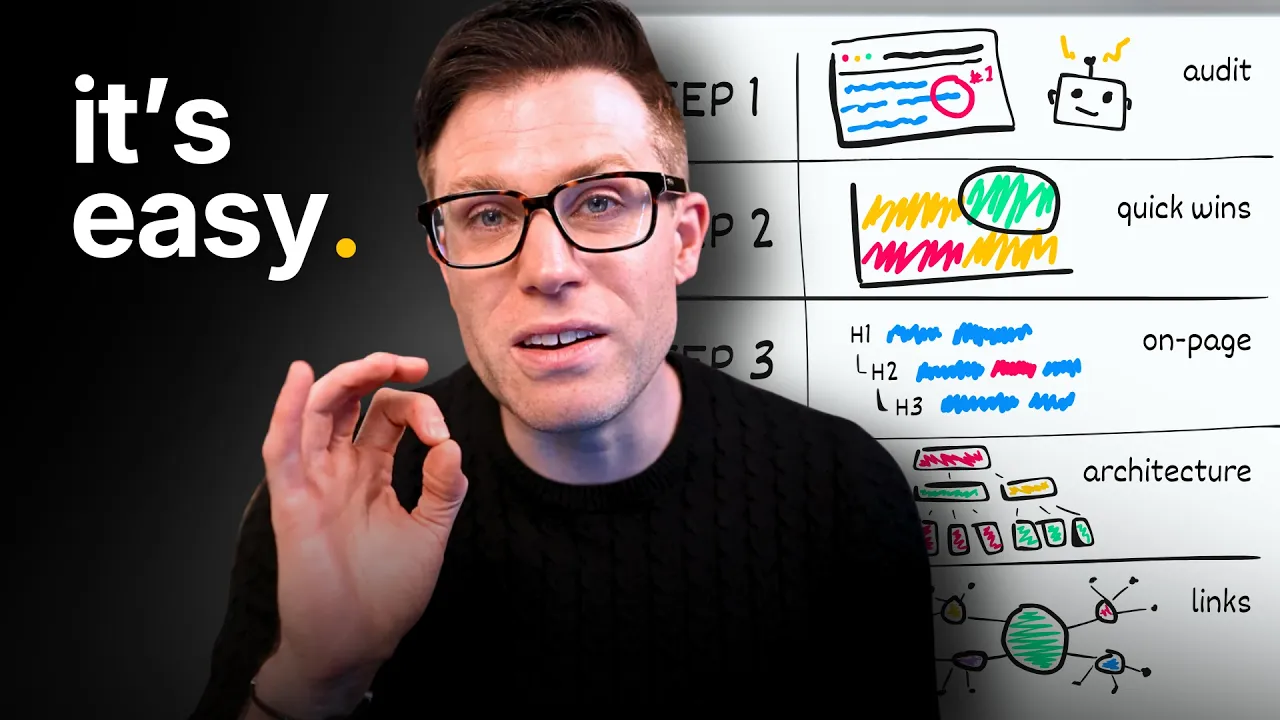
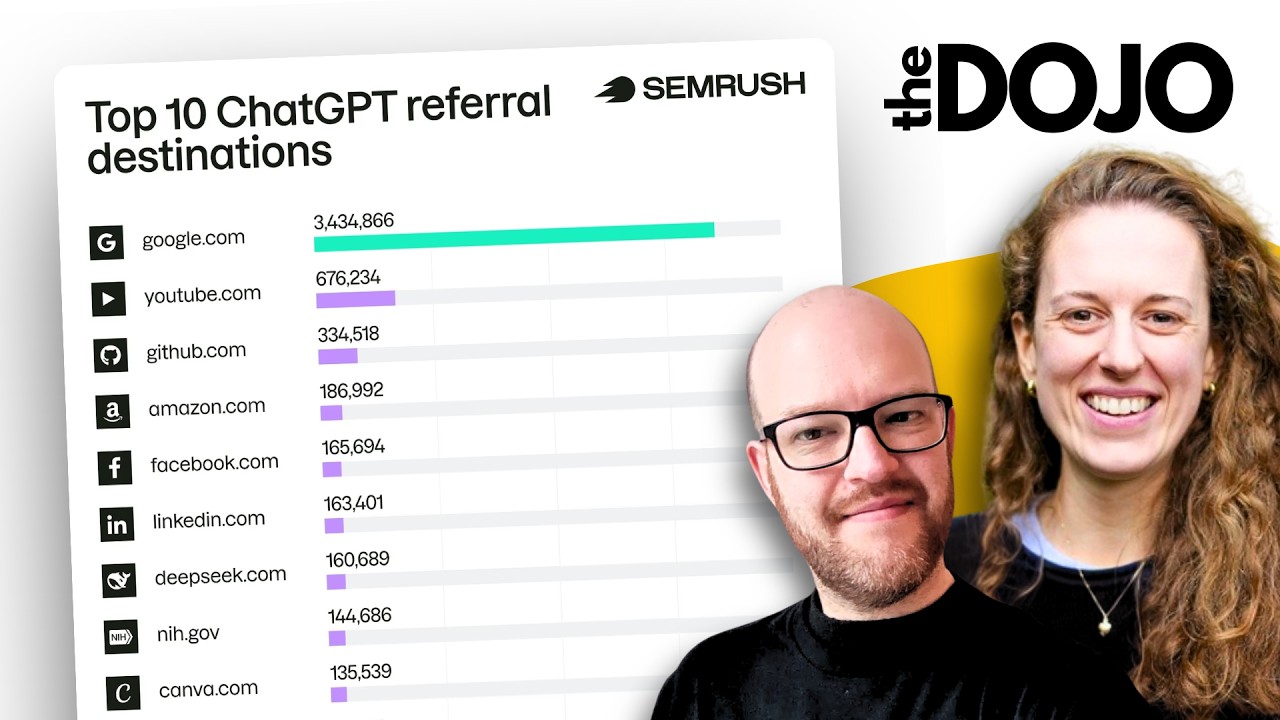
Get daily recaps from
Shane Hummus
AI-powered summaries delivered to your inbox. Save hours every week while staying fully informed.