SEO in 2026: How I'd Rank in Google in the AI Era

Chapters6
Introduces the idea that SEO has changed with AI and that uncertainty has given way to clearer shifts in how people discover information.
AI alters discovery, but brand signals and traditional SEO still win for action-oriented queries in 2026, with visibility hinging on branded mentions and targeted pages.
Summary
Ahrefs’ analysis shows that SEO changed dramatically last year as AI-driven results siphoned clicks from top pages. Darren, the presenter, cites a shocking 58% drop in clicks for the first result when an AI overview appears. He argues the shift isn’t random: discovery now happens through a multi-channel funnel—YouTube reviews, Reddit discussions, and Amazon-style ratings shape AI recommendations. Brand signals become crucial because AI assistants piece together answers from many subqueries and pages that mention your brand. The recommended tactic is to map where AI might pull data from using HS Brand Radar and target the exact pages AI already cites in your niche. Yet there remains a solid foundation for traditional SEO for action-oriented intents like backlink checks or calculators. In short, you should optimize across three buckets: broad brand presence, targeted pages that rank for subqueries, and core SEO fundamentals for transactional queries. Ahrefs emphasizes that while AI is changing discovery, the old game of content quality, links, and technical SEO isn’t dead—it’s just rebalanced toward brand mentions and assistive pages.
Key Takeaways
- Brand mentions on highly cited domains correlate strongest with AI overview visibility, surpassing backlinks or domain rating in some niches.
Who Is This For?
Essential viewing for SEO teams and content strategists who need to adapt to AI-powered search without abandoning traditional optimization fundamentals.
Notable Quotes
"Last year, SEO fundamentally changed. Traffic was down across the board. People were in full-on panic mode."
—Sets the opening stakes and frames the urgency of adaptation.
"86% of the top sited sources are unique to each AI assistant."
—Supports the claim that discovery is diversified across AI platforms.
"Branded mentions have the strongest correlation with visibility in Google's AI overviews more than backlinks, referring domains, and domain rating."
—Key insight that shifts focus to brand signals.
"If the answer is no and the query has value for your business, you really need to consider targeting the traditional way."
—Advice for action-oriented queries where AI can’t satisfy yet.
"The game hasn’t ended. You just need to split your attention into these three buckets and adapt to search with searchers as their behavior changes."
—Summarizes the three-bucket strategy for 2026.
Questions This Video Answers
- How should I adjust an SEO strategy for AI-driven search in 2026?
- What is HS Brand Radar and how can it help my brand appear in AI overviews?
- Which keywords remain valuable for traditional SEO amid AI overview emissions?
- How do I identify subqueries AI uses for my brand and get mentioned on those pages?
- What are the best tools for finding transactional or action-oriented queries in SEO?
AhrefsAI overviewsBrand RadarHS Brand Radarquery phantombranded mentionstransactional queriescontent marketingSEO 2026Google AI
Full Transcript
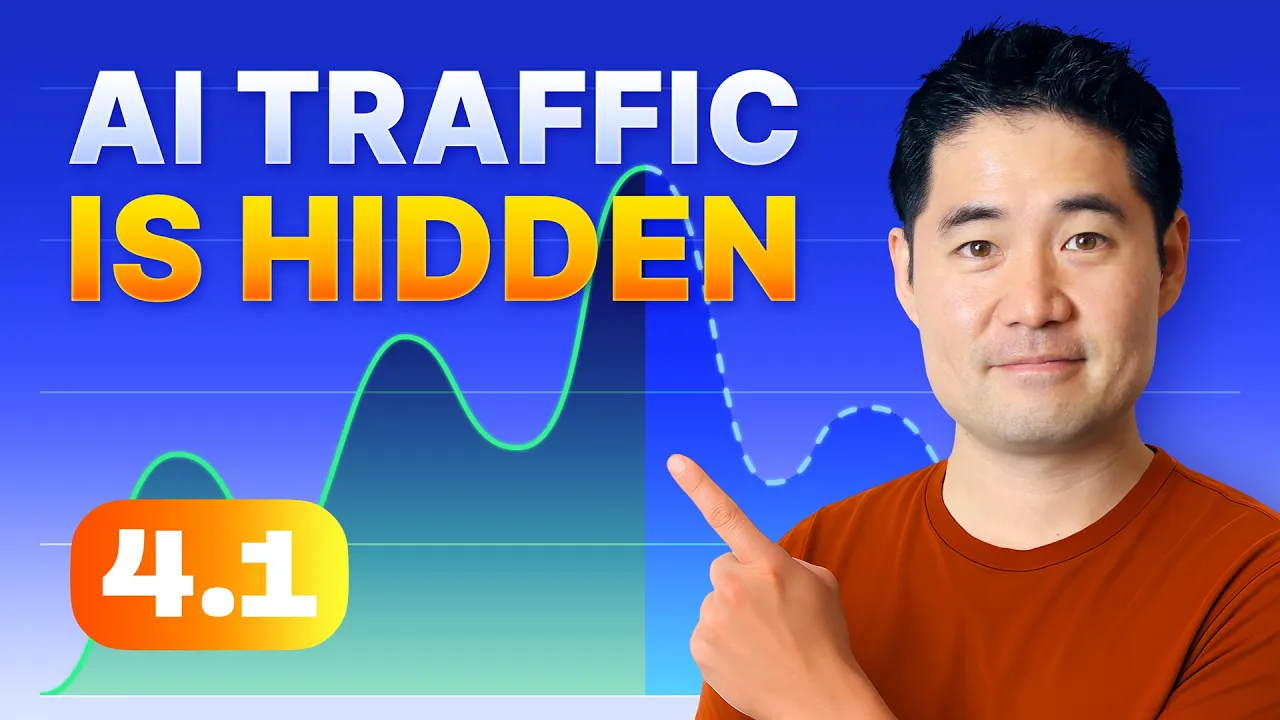
Last year, SEO fundamentally changed. Traffic was down across the board. People were in full-on panic mode. Some even pivoted to new professions. Sites that had ranked for years were bleeding out. But worse than the losses was the uncertainty. No one knew what was coming or if SEO even had a future. And the data is brutal. Our research from April showed that when an AI overview appears in search results, the number one ranking page loses about 35% of its clicks. And we just reran that study and it's now a 58% loss. But what's changed is that we finally have some answers because last year's turmoil revealed three key shifts in search behavior that give us hints into where SEO may be going.
And it all starts by understanding how discovery works today. So I bought these headphones about a month ago and I started on Google. I searched for best headphones, clicked on a few listicles, jotted down some common models and I didn't actually read a thing. But I went to Reddit to see what people were saying about those models. Then I hit YouTube to watch dedicated reviews and comparisons. And when I finally went to the store to pick one up, I was reading Amazon reviews on my phone just to make sure I was making the right purchase.
This buying journey might sound exhaustive, [music] but it's not unusual. Information has never been more accessible, and we've been researching like this for years. And while this might not seem like it has anything to do with SEO, it [music] has everything to do with it. Because AI assistants are learning the same way we do. They're researching YouTube, Reddit, forums, review sites, and using all of it to decide who to recommend. In fact, 86% of the top sited sources are unique to each AI assistant. Google AI overviews lean heavily on YouTube, Reddit, and Quora. ChatGpt prefers publishers and news outlets, and Perplexity tends to site niche and regional sites.
But that doesn't mean getting mentioned on these domains will automatically put you in AI overviews because every niche and topic is different. [music] So to see the websites being mentioned in your niche, you need to reverse engineer the competition. Just go to HS brand radar with your brand and your competitor's brand set. Then open the cited domains report. From here you can see the exact websites AI assistants are citing in the queries where you and your competitors are mentioned. But showing up on these domains isn't enough. AI pulls from specific pages and the pages it chooses the site is all based on the second shift.
Brand is everything. When you type something like best smartphone for photography into an AI assistant, it doesn't just spit out an answer from memory. [music] It fans that single query out into dozens of smaller subqueries. things like iPhone 17 Pro versus Samsung Galaxy S25 Ultra camera, best phone for lowlight photos, smartphone with best zoom lens in 2026. Then it pulls information from the pages that rank for each of these subqueries and stitches it all together into one answer. This is called query phantom and it's how most AI assistants work. So if your brand is mentioned across the pages that rank for those subqueries, you have a much better chance of being included in the final response.
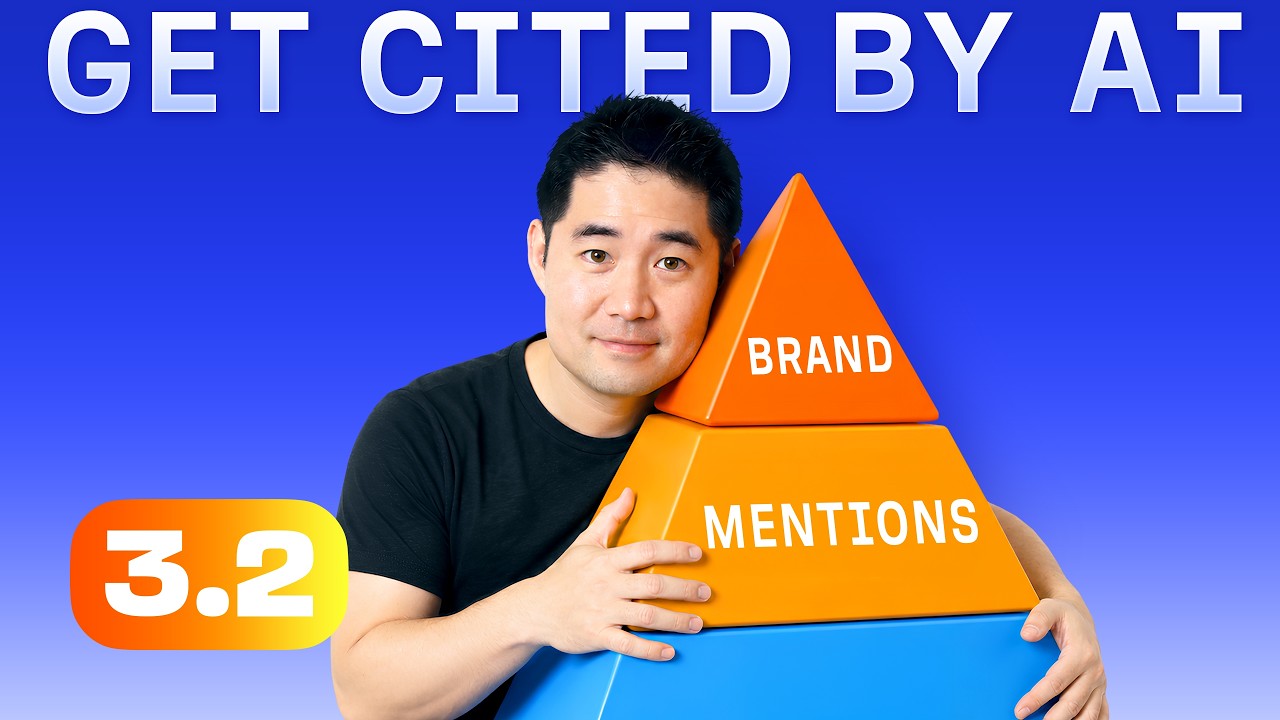
In fact, our research shows that branded mentions have the strongest correlation with visibility in Google's AI overviews more than backlinks, referring domains, and domain rating. To find the right pages to get mentioned on, go to HS brand radar. Enter your brand, your competitors, and your niche. Then open the cited pages report. Add a filter where the query contains words like best, top, versus, review, or alternative. And these are the predictable fanout queries AI tends to use. Now you have a list of the exact pages worth getting mentioned on, which will mostly be list roundups, comparison posts, and dedicated reviews.
Reach out to the authors and try to get your product review there. Send them free samples or do whatever you need to to get your mention there. But here's the thing. Even if you get mentioned on AI overviews and different chat bots, there's still a massive chunk of search where traditional SEO still wins. And that's the third shift. Organic clicks are flowing to action. Here's the deal. Google's AI search is still very much in its formative years. [music] It's great at answering questions, summarizing large amounts of content, and providing decent recommendations. But it can't really do anything meaningful for you.
Not yet, at least. Like when someone searches backlink checker, snow removal service, or mortgage calculator, Google or any chatbot isn't going to satisfy that query with information alone because that's not what people want. They're looking to complete an action. Now, compare that toformational queries like what is a mortgage? AI overview. How to calculate BMI? AI overview. What is compound interest? AI overview. That's why AI overviews don't really exist for these types of action-driven queries because Google knows the user needs to click somewhere or decide something to get what they want. And that's ultimately the goal of Google.
Deliver the best result for any given query. This is where traditional SEO, content, links, and technical still work like a charm. So, if there's one thing you must do before you target a query is answer this question. Can AI fully satisfy the user for this query? If the answer is no and the query has value for your business, you really need to consider targeting the traditional way. Now, if you already have a list of keywords, go through them and ask yourself that question. But if you want to find these opportunities in bulk, you can do that with a neat little trick in a keyword research tool.
Just enter broad seeds related to your niche. Then head to the matching terms report. Add an include filter with modifiers like calculator, checker, generator, and more. These will all be actionoriented queries because they're for free tools. So, the typical content and links game should still be valid here. Now, if tools aren't your thing, another quick way to find queries that will likely get organic clicks is to filter for transactional queries. All you have to do is choose transactional in the intense filter and you'll have a list of queries that people search when they want to transact or do something.
SEO has changed, no doubt. The main thing being that you need to be discoverable everywhere. Focus on building a brand that gets mentioned on important pages like lists, comparisons, review sites, and social media. All while remembering that the fundamentals of SEO, yes, the old version, isn't dead. The game hasn't ended. You just need to split your attention into these three buckets and adapt to search with searchers as their behavior changes.
More from Ahrefs





Get daily recaps from
Ahrefs
AI-powered summaries delivered to your inbox. Save hours every week while staying fully informed.