Apple Studio Display XDR Review: We're All Pros Now!

Chapters11
Set up the video and frame the Studio Display XDR as part of Apple's broader display strategy.
Marques Brownlee breaks down the Studio Display XDR’s jaw-dropping brightness, mini-LED tech, and tight MacBook Pro integration, arguing Apple is positioning “Studio” as the new top-tier pro line.
Summary
Marques Brownlee delivers a hands-on take on Apple’s Studio Display XDR, arguing that the new monitor represents a strategic shift for Apple’s pro lineup. He contrasts it with the updated regular Studio Display, noting the XDR’s 27-inch 5K mini-LED panel, 2000 nits peak HDR brightness, and 120 Hz adaptive refresh. Brownlee highlights the redesigned reality that Studio replaces Pro, and he connects this to Apple’s broader ecosystem play—particularly how a single Thunderbolt 5 connection can dock two Studio Display XDRs to a MacBook Pro with 140 W charging. He praises the panel’s local dimming (2000 zones) and contrast gains versus the older Pro Display XDR, and notes the built-in webcam and speakers as useful but not game-changing features. The review also touches on practicalities: pricing at $3299 with stand included, nano-texture as an optional upgrade, and the 3-foot Thunderbolt 5 cable length. He thoughtfully weighs whether professionals should switch from the legacy Pro setup to a Mac Studio plus Studio Display XDR, concluding that for many creators, this is “as pro as it gets” for a mixed-use workflow. In closing, Brownlee teases more coverage, hinting at ongoing Apple ecosystem moves and a playful nod to the ongoing “TAR” season in tech.
Key Takeaways
- Studio Display XDR uses a 27-inch 5K mini-LED panel with up to 2000 nits peak HDR brightness and 120 Hz adaptive sync.
- Local dimming expands to 2000 zones, delivering far less blooming and far higher contrast than the Pro Display XDR.
- Studio Display XDR includes a built-in webcam and speakers, and adds a Thunderbolt 5 port, improving Mac compatibility and single-cable setup.
- Pricing starts at $3299 with the stand included; nano-texture coating adds $300 and has improved cleaning compatibility over earlier models.
- Apple’s branding shift from Pro to Studio signals a strategic move away from true pro markets toward a high-end consumer/pro fusion within the ecosystem.
- The single Thunderbolt 5 cable enables daisy-chaining up to four Studio Displays or two Studio Display XDRs on a MacBook Pro, with up to 140 W charging.
- For many creators, this setup represents the best “pro” monitor pairing with a MacBook Pro, especially when video editing and thumbnails are part of the workflow.
Who Is This For?
Creators and professionals who use MacBook Pro for video editing, photo work, and design and want a single-cable, top-tier 27-inch 5K monitor that integrates tightly with macOS. Essential viewing for anyone weighing the Studio Display XDR against older Pro setups.
Notable Quotes
"Maybe, maybe we're all pros. Maybe that's what this means."
—Intro line signaling the video’s framing around the “we are all pros” idea and the new Studio Display XDR.
"This panel. Oh, the panel. This time it's finally a miniLED display with 2,000 nits of peak HDR brightness and 120 Hz max refresh rate with adaptive sync support."
—Highlighting the core tech upgrade of the XDR model.
"The Studio Display replaces the Pro Display. Studio replaces Pro. Okay, write that down."
—Key branding shift that frames the entire discussion.
"If you want the best possible display to complement the MacBook Pro for that one cable plugin and come to life desk setup, it's this one."
—Brownlee’s bottom-line verdict for MacBook Pro users.
"There’s a 3 ft Thunderbolt 5 cable that comes with it, and the power supply is built in but the power cord isn’t removable."
—Practical note on included hardware and design choices.
Questions This Video Answers
- How does the Studio Display XDR compare to the Pro Display XDR in brightness and contrast?
- Can I daisy-chain multiple Studio Displays with a MacBook Pro using Thunderbolt 5?
- Is the Studio Display XDR worth the upgrade if I already own a Pro Display XDR?
- What’s new with Apple’s Studio branding versus Pro branding in 2024?
- What are the pros and cons of NanoTexture on the Studio Display XDR?
Apple Studio Display XDRMini-LED 27-inch 5K displayThunderbolt 5MacBook Pro integrationLocal dimming 2000 zonesNanotexture coatingPro Display XDR comparisonApple ecosystem strategyVideo editing monitor setupStudio vs Pro branding
Full Transcript
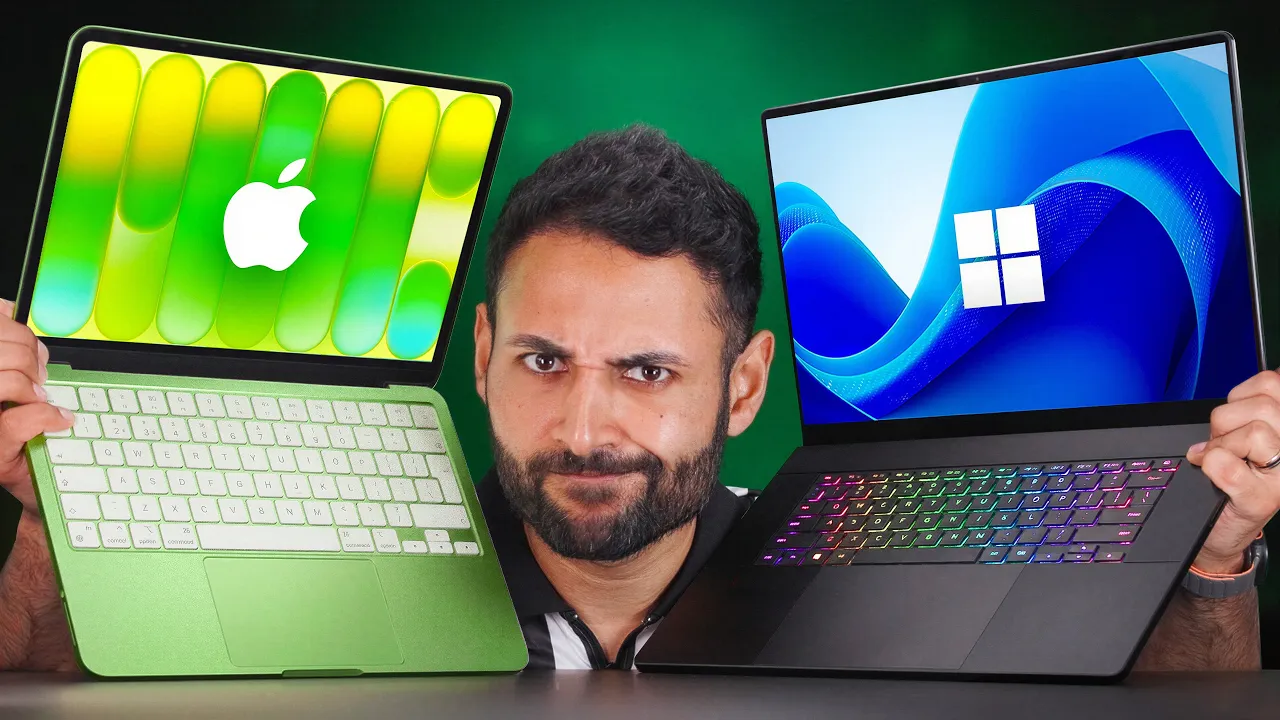
Maybe, maybe we're all pros. Maybe that's what this means. Yo, what's up? MKBHD here, and this is Apple's new Studio Display XDR. Probably can't tell just by looking at on camera, but this is the new one. I've been testing it, staring at it for a few days now. This is not the most important product that's come out in the past couple weeks, let's be real. But I've been watching Apple and covering them for a while and the decisions that they make and the decisions that they don't make. And I think the existence of this monitor as it sits actually tells us a lot more about what Apple's doing right now.
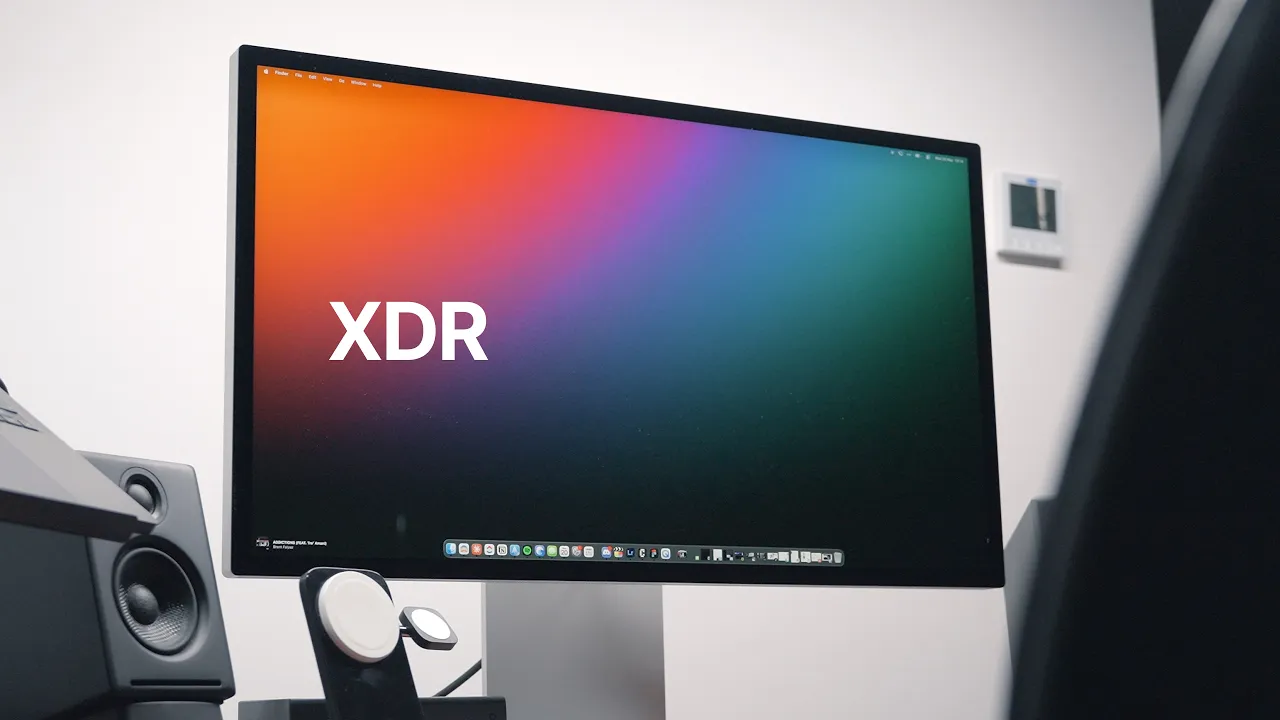
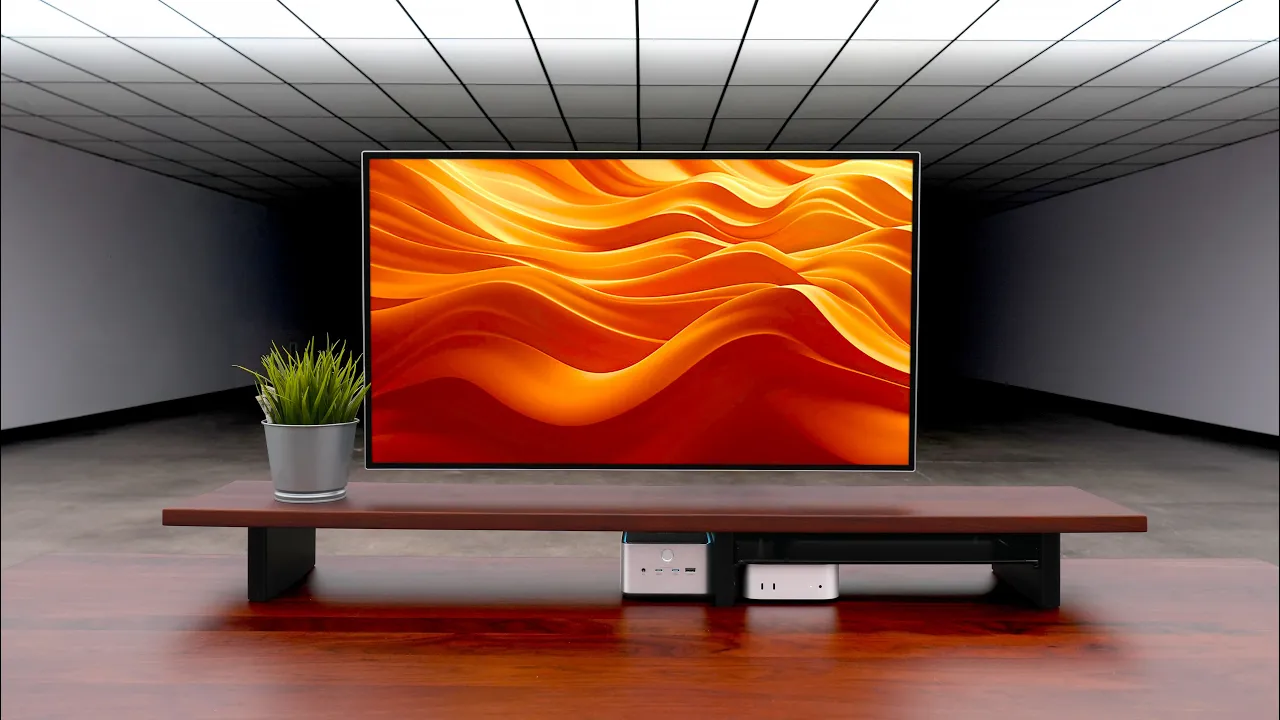
See, this past week was actually a tale of two brand new displays from Apple. They dropped a barely updated regular studio display, which is the same design, same stand, same chassis, same 11-year-old panel, 27in 5K IPS LCD panel, but now with the new processor inside and new Thunderbolt 5 ports on the back. and it's for the same $1600 price. It's a weird good-looking but weird monitor. And then this one, this is brand new. This is the Studio Display XDR. And so it's an upgraded, higher performing version of that. So it's still a 27in 5K monitor with the same great stand, but the panel.
Oh, the panel. This time it's finally a miniLEDD display with 2,000 nits of peak HDR brightness and 120 Hz max refresh rate with adaptive sync support. And this display replaces the Pro Display XDR H. So the Studio Display replaces the Pro display. Studio replaces Pro. Okay, write that down. Write that down. So it turns out there's not really that much else to say about the panel itself. It is an awesome display and at a technical level, it's actually better in every single way than the Pro Display XDR. It gets much brighter. It'll do a,000 nits full screen in regular SDR mode.
The Pro Display could only do 500. And it'll do up to 2,000 nits peak brightness in HDR versus the Pro Display 1600. And the Miniledd backlight is giving us way more contrast control. 2,000 local dimming zones versus the Pro Displays 576. You can see it in a dark room with a black background video. The difference is insane. There's way less blooming, higher contrast ratios. It's actually not even really close. And then it also gains the extra Thunderbolt 5 port on the back, which is sneakily extremely useful. And it also adds a webcam and speakers that the Pro Display didn't have.
And it's cheaper, which isn't saying much cuz you remember the Pro Display was $5,000. And then the stand was an extra $1,000. And then the Nanoexture was another $1,000. But this better display starts at $32.99 and includes that stand. And nanoexture is only $300 more. Side note, the nanoexture thing they've been doing for some years now. I think it's just progressively getting better and better. It started on the Pro Display XDR a decade ago and it it was effective but extremely difficult to clean. Like I can't touch my Proisplay XDR without fear of leaving permanent marks on it.
It's kind of insane. That also birthed the infamous Apple polishing cloth and its constantly updated compatibility list. But then they started bringing nanoexture to other displays. The MacBook Pro, for example, got nanoexture and that's a little better. You could use different cloths on it and effectively clean it pretty well. And then they brought it to the iPad. So there's an iPad Pro with nanoexture and that's obviously a touchcreen. So anyway, this is the nanoexture version on the desktop 10 years later. It did actually come with a note and a separate cleaning cloth. And the note says to only use this including polishing cloth to clean this.
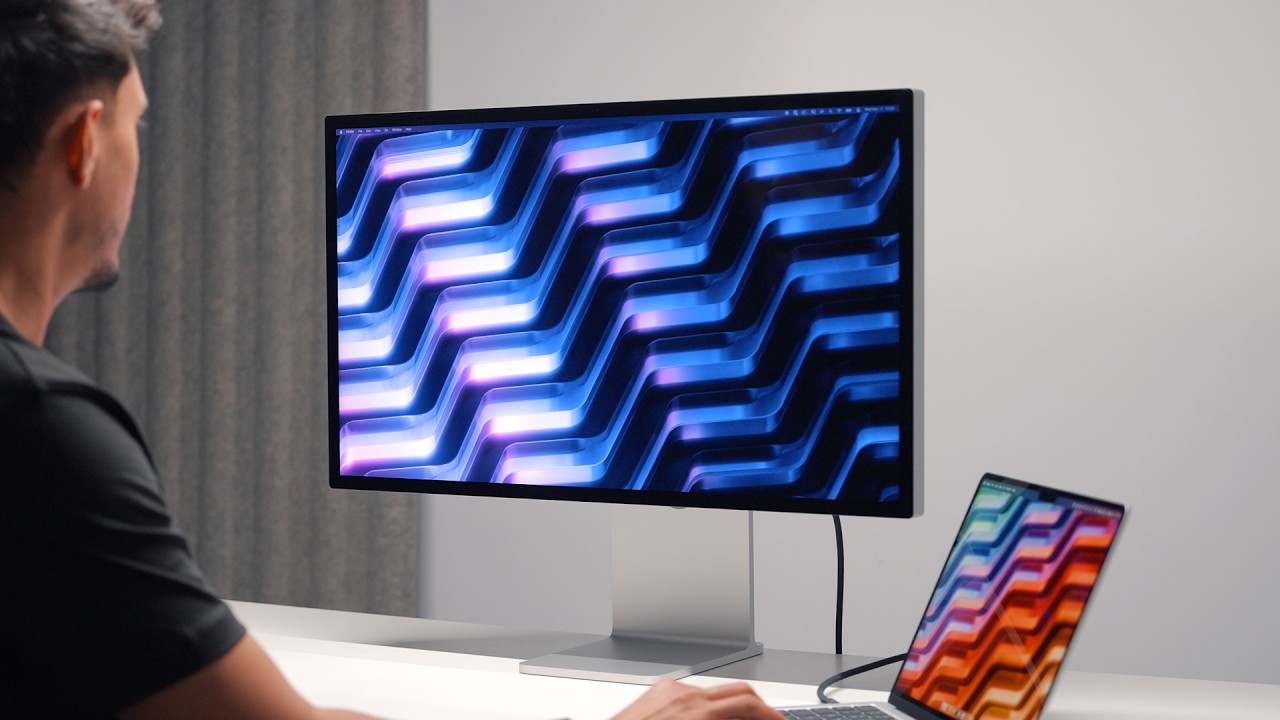
And it is a different polishing cloth than the previous Pro Display. So I I think I can probably use other microfers and not have any issue. And don't worry if you're wondering, Apple did update the compatibility list for the old polishing cloth to include the new studio display. I know you were all holding your breath for that one. But last time I reviewed the Studio Display, I remember specifically pairing it again with my MacBook Pro and saying that even though this monitor is made for the Mac, it doesn't actually feel like it makes a great pair with the MacBook Pro because they don't match that well.
The MacBook Pro is this nice high refresh rate miniledd display and then your Studio Display is a 60 Hz LCD. But now the Studio Display XDR specifically is a much better pair with the MacBook Pro. Now, now there are, as always, lots of other options for monitors that you could get to pair with your Apple computer, but the reason that a lot of people end up choosing the Studio Display, the Apple display, is because of how well it pairs with and works with the Mac. And that's not just aesthetics, though obviously being silver and metal is going to be a factor, but it's also the one cable life, like plugging in a single Thunderbolt 5 cable into the display at your desk and getting all your accessories to light up, everything else connected to all the other ports on the back of the display, including, if you want, another full-speed Thunderbolt 5 port to dock some really fast storage to the thing.
You can even connect through that port to another studio display. So, you can daisy chain up to four studio displays or two studio display XDRs together to the same MacBook Pro all through one single cable and then they'd all be matching as high refresh rate, high brightness, miniLEDDs across the board, and it would be charging the MacBook Pro at 140 W. So, what do I mean when I say we're all pros now? What does that mean? Well, I did earlier say that Studio replaced Pro. You wrote that down, right? So, this is the new studio display, but if you go to Apple's blog post announcing this thing, they literally still call it the world's best pro display in big text.
So, they couldn't be more clear about Studio replacing Pro. Uh, but more importantly, this great display now is packaged like this, which is clearly an upgrade to the base version. There's the studio display and then the upgraded studio display. And that is easier to sell and easier to explain. and it's easier to understand and you know how much Apple loves their price ladders. Anyway, my main theory is that I don't think Apple really is interested in targeting the real pro the professional market anymore. And this is probably a debate they've had many times internally, but that professional market is super small.
It's super picky and it is the least likely to be interested in their ecosystem stuff. So, they'll dabble in really pro stuff once in a while. Mac Pro. Sure, it exists. The Pro Display, obviously, but that's not really their bread and butter. Like, they they use the word Pro, but most of the stuff that has the word Pro in it, like the iPhone Pro or the MacBook Pro, is really high-end consumer devices that have like prolevel capabilities. And so, the natural extension of this theory is that Mac Pro is doomed. Of course, it's doomed. Like I said, like you wrote down, studio replaces Pro.
And we already have a Mac Studio now getting more regular updates than the Mac Pro. Mac Pro hasn't been updated since M2 Ultra back in 2023. And I'd be willing to bet that it doesn't get any more updates, but that's a tangent for another day. The point is, the word studio replaces the word pro at the very top of Apple's lineup. That is the most pro of any of the stuff you'll get from Apple is when you see the word studio on it. So, as someone who's been using a Mac Pro and a Pro Display XDR since they came out, the immediate first thought when I saw these announced was, should I be switching to the Mac Studio and the Studio Display XDRs?
You know, I've gotten really used to these huge Pro displays with more real estate, but you know, 27in 5K with slightly thicker bezels, it's not a disaster. It's still a lot of screen. So, since everything else about it is better, I probably should be switching. But for everyone else out there who doesn't already have a Pro display and is looking for the best display to pair with say their MacBook Pro, this is about as good as it gets. Like as a video creator in this little studio we have here, this is more than pro enough for me.
Like I know there are Hollywood movie studios that don't even need a webcam built in and they don't even need speakers built into their monitor cuz it just lives in an editing den all day. Never does any FaceTime calls or any gaming or YouTube watching. But this is more of a mixeduse product that is sometimes used to edit videos like the one you're watching and edit photos like the thumbnail of this video, but then other times is used to make a video call or get on a virtual meeting. And then the perfectly average 1080p centerstage webcam is nice to have in that case.
And sometimes it might actually be used to just watch videos, listen to music, do other random stuff. And the speakers in here are still surprisingly good at that. They're like 16inch MacBook Pro level like impressive speakers for in this tiny chassis. You should probably still get dedicated speakers though. They're not even going to be in the same planet. But then the 120 Hz max refresh rate is great for animations and scrolling around, even gaming if you wanted to. Something an actual professional reference monitor would almost never be used for. There really isn't much for me to compare this to.
Like I would love to look at other options for a 27 in 5K 2000nit HDR miniLEDD display with high refresh rate, but there aren't any. So when I also point out that the Thunderbolt 5 cable that it comes with is kind of on the short side. It's like 3 ft long. NH doesn't really seem to matter. Like I'm sure the other reviews will also point out that the top gets just a little bit warm once it's been on for a little while. Partially because it's a really big bright display. also partially because there's literally an A19 Pro chip in here with 12 gigs of RAM just to run the webcam and speakers.
There's no question other people will bring up that even though the power supply is built in, the power cable is still non removable, which is still super strange and will make it a pain to get replaced. But at the end of the day, I do feel like if you want the best possible display to complement the MacBook Pro for that one cable plugin and come to life desk setup, it's this one. Now, Apple, if you could just update the Mac Studio with like a M4, M5 Ultra soon as well, that would be very much appreciated.
But either way, we've got a lot more coming up in Teember. I mean March. Somehow this became Techtember or Tech March. TAR. It's TAR. Well, stay tuned for many more videos coming soon because it's TAR season. Catch you guys in the next one. Get subscribed. Peace.
More from Marques Brownlee







Get daily recaps from
Marques Brownlee
AI-powered summaries delivered to your inbox. Save hours every week while staying fully informed.