Chris Do: "AI Will Make You Dumber"

Chapters9
Discusses the common myth that being talented is enough to get work and that self promotion is unnecessary.
Chris Do argues that chasing AI for quick wins can erode critical thinking; true success comes from being uniquely you and building thought leadership.
Summary
Will Paterson sits down with Chris Do in Los Angeles to unpack the tension between AI tools and genuine design craft. Do warns that overreliance on AI can dull our thinking and reduce output to homogenized, middle-ground results. The conversation pivots from a myth that being “good enough” will automatically win work to a strategy for standing out: develop a personal narrative, publish regularly, and cultivate thought leadership so clients remember you for your unique approach. Do emphasizes that in a global marketplace, talent is abundant, so differentiation comes from storytelling, a distinctive voice, and a clear process—exemplified by Allan Peters’ hands-on, analog-to-digital method. They also critique shallow portfolio signals (low-res images, watermarks, mismatched brands) and highlight practical tips for new designers—start with a strong origin, fork-in-the-road, and defining moment stories. The chat touches Framer’s no-code capabilities for impressive visuals, while Do cautions that AI should assist thinking, not replace it. Finally, Do shares concrete steps for growing a personal brand, including transparent storytelling and leveraging platforms like Instagram and LinkedIn. The overall message: combine solid craft with a memorable, authentic narrative to win work in a crowded market.
Key Takeaways
- Being technically skilled is a bare minimum; to win work you must also become known through thought leadership and personal storytelling.
- A global marketplace means you compete with designers from around the world, so differentiation comes from your unique story, voice, and beliefs rather than mere polish.
- Three core stories—origin, fork-in-the-road, and defining moment—should shape how you present your design career and aspirations.
- Portfolio signals matter: avoid low-res images, watermarking, or showing brand work that doesn’t fit your style; authenticity and alignment are crucial.
- AI should augment thinking, not replace it; overreliance dulls judgment, while tools like Framer enable impressive visuals without coding, expanding what you can showcase.
- Concrete action for newbies: announce your intent, document your journey, and build audience by sharing process, not just results.
- Pattern interrupts and dwell time on social feeds help you stand out; experiments like analog-digital hybrids can boost engagement and memorability.
Who Is This For?
Aspiring and early-career designers seeking to build a personal brand and land work in a competitive, global market. Also valuable for designers curious about balancing AI tools with authentic craft and storytelling.
Notable Quotes
"AI for a lot of people is a tool that they use and they stop thinking."
—Do cautions that AI can make people rely on machine output instead of exercising critical thinking.
"Being good is a requirement to get work. It's not the answer."
—Good craft is expected; differentiation comes from visibility and narrative.
"If you’re young and you’re just starting out... getting good is not going to get you work."
—Emphasizes the need to pair skill with self-promotion and identity building.
"Pattern interrupts... dwell time... the algorithm measures how long people stick around."
—Discusses how to craft posts that grab attention and keep viewers engaged.
"You have to master three stories: origin, fork in the road, and the defining moment."
—Framework for communicating personalbrand and career trajectory.
Questions This Video Answers
- How can I build a personal brand as a designer without losing focus on craft?
- What is thought leadership in graphic design and how do I start creating it?
- How can I use Framer to create standout portfolio pages without coding?
- Why is being 'good' not enough to land design work in a global market?
- How do I tell my origin, fork-in-the-road, and defining moment stories effectively in interviews?
ChrisDoWillPatersonAI in designPersonal brandingThought leadershipLogo identityFramerAllanPetersPortfolio tipsAnalog vs digital design
Full Transcript
So, we talk about social media making people dumb. AI will make people even dumber. And I'm not saying that in a facetious, exaggerated, hyperbolic way. I'm like, you're going to lose the ability to think. Hey guys, I'm in Los Angeles, California, a long way from the UK, and I'm here and I'm going to meet Chris Do. I've got some questions to ask [music] him. So, if that's something that you're up for, then stick around. Chris? Well, how are you? I'm doing great. It's good to see you again. It's only I've been a few short days, I guess since we last saw each other Creative South.
[music] Yeah, dude. It was nice to see a friendly face. Okay, I've got one question that will help my audience and and it helps me as well. So, this is like purely selfish as well. What is the biggest lie that young designers believe that they think will advance their career, but doesn't? There's a couple of expressions that you hear from school or just as you're coming up in a space that if if your work is good enough, you won't have to sell. Right. And so, then it leads us to just keeping keep on working on a craft and thinking some miracle thing will happen.
As we know, people hire who they know. Mhm. So, if people don't know who you are because you haven't made any effort to put your name out into the world, and you could do that a number of different ways, then no one's going to call you. Right. And you may get some referrals from from friends like classmates of yours, maybe from instructors or just friends and family. But once you exhaust that pool, you're kind of screwed. Mhm. And that pool may or may not be great. If you live in an affluent area and there's a lot of opportunities, that could just work for a while.
Yeah. But if you work in a more rural areas where there aren't a lot of businesses, you may be getting less than market rate, you may be getting few and far between uh in terms of opportunities. And I find that when you do something repeatedly, uh not not once every 6 months, but every 2 weeks, you get better and better at it because you don't fall out of practice. So, that's the myth. The number one myth is you just need to be good and you'll get work. And that's not the case, right? It's not the case cuz I don't think my work's that great and I get work.
[laughter] It is is the way that I think about it. It's interesting though because we do live in an Instagram world, don't we? And you've built like a huge following on Instagram and on YouTube and you've and it and it's incredible. Is there any advice to young designers out there or anyone who looks at folk like you and kind of like me as well in the same of, you know, graphic design. Is there any advice that you'd have for them who think, "Yeah, I just need to build a following and, you know, things will be handy-dandy, you know, down the road." You don't have to do anything.
If you if things are working for you, keep doing what you're doing. But if you're young and you're just starting out and you're thinking, "What is the best path for me to take?" And I said this before, getting good is not going to get you work. It's a requirement to get work. It's not the answer. Yeah. Meaning good is expected, especially because we live in such a global marketplace. People used to only work with people close to them or somebody they would know. Yeah. But now the market's opened up. There are amazing designers from South America, from from Asia, and from parts of like India and and Eastern Europe.
There's so much talent that's out there. All you have to do is go on Behance Yeah. and just cry cuz you're just like, "Oh my god, how they're so good. There's so many of them out there." Yeah. And so being good is a requirement to get work and so that's not a differentiator. Now we have to get into like how do we get known? And there's lots of different ways. You can you can write, you can publish, you can post, you can appear on podcasts, you can do tutorials, you can do kits and things like that.
A lot of different ways. Find something that works for you so that you start to build up what what we refer to as thought leadership. Mhm. So that people think of you when they think of logo design or identity design or web design or something like that. Yeah. During your talk Creative South, the Unblind Yourself, I found it really interesting cuz you were saying it's not just about being good, it's about being you know, good and different. Yes. Right. And that's like the big thing, right? Anyone Lots of people can be good, but you have to be different, right?
And yeah, that's interesting to me cuz I feel like I'm just inherently different in many different ways, accidentally. Um and it's that zig to zag thing, right? Of a lot of designers think there's a formulaic way of getting to success. And I guess there is in some ways what you would deem success to be. Um but it's nice to hear. It's like refreshing that being different is like kind of a priority as well as being good, right? Or have I just misread that? No, you you read it correctly. I I think going back to what we just talked about is every buyer has an seemingly unlimited options of people to work with.
And that goes from contract work in terms like a roofer, someone to clean your carpets, and to design your identity. Because I like I said before, we live in a global marketplace. Yeah. And it it feels like an unlimited infinite amount. It's not really, but it feels like that. So, now they have a question, who are they going to work with? And so, if if being good is the minimum that you have to do, now being different and having a belief system or or a culture that they can buy into, like telling your story and representing the the version of you that is different than every other version of you that exists, helps them to make that decision.
Have you ever looked at a designer's portfolio I'm going back to the more designery thing now. Mhm. Have you ever looked at their portfolio and gone or thought to yourself, yeah, they're not going to make it? No. I try not to think like that. Okay. If I'm looking at portfolio, it's because I have a job. Yeah. An opportunity. I'm just looking for a fit. And so, I have just make a quick decision of the tens or hundreds of submissions I get for an opportunity, I to figure out the top three candidates and then make a decision based on that.
The reason I ask is I think especially now with like you know students in design they put a lot of emphasis on you know designing the portfolio for the job, you know, which is probably a good thing. I I'm not I'm not the font of all knowledge at all when it comes to this, but we get questions about whether my portfolio is good enough for this job or whether you know there's something extremely amateurish that's happening that I'm showing that I didn't know that I was doing. Especially people coming out of universities or you know graduate you know positions, right?
So that's the reason why I ask is people think or designers might think that um they're doing something wrong that's an instant giveaway to the amateur side. There's a lot of things that they do that are telltale signs or red flags of you may not know what you're doing. Yeah. One of them would be uh low-res JPEG images. Yeah. Watermarked images. And believe it or not I still see this and I don't know why. Why would you submit that? The other thing is you can tell it's student work or unprofessional work when they're showing some really boring brand like say from Procter & Gamble and they're doing something so radical and punk rock.
It's like no, that doesn't feel like it's on brand. And and and that's a problem. It's one of these standard questions I've got to ask you Chris cuz you've done the super well. It's really inspiring. Not just like in design and everything, but just like in personal brand stuff. Um I've just seen you like just go crazy with it in in a good sense isn't it? It's gone wild. But if you were that to start today Yeah. I don't know how often you get this question, but if you were to start today and you had no followers no history in what you were doing in design, what would you do in your first, like let's say 90 days?
Okay, so if I want to grow my Instagram account to how many followers you think? Let's say a million. Oh my gosh. Okay, that's not going to be easy, but we'll start here. Okay? The first thing I would do is I would probably announce to people like, "Hey, you don't know me yet, but here's who I am. I've done these things and or this is the the what I endeavor to do." Okay, like so I would say I'm a I'm a brand design consultant or something or an identity designer and please stick around cuz over the course of the next weeks, months, and years, I'm going to I'm going to document my journey into the space.
And so if you're interested, tune in. Got you. Yeah, Allan Peters does an amazing job of this. You know Allan Peters? I love Allan. Yeah, he's very good. He is probably the person I point to most. If you're an identity designer, this is what you do. Yeah. And what he does, there's two things he does in case you're not familiar with Allan Peters. Is number one, you don't ever see him, you just see his hands talking. Yes. And it's pretty interesting. He has a pretty strong Midwestern Minnesotan accent, I believe. And then he does number two is he does analog things.
In a digital world, he's taking the time to craft paper analog things to show you what he's working through. Yeah. He has a very clear process. He talks about using nouns, coming up with symbols, and then observations, showing the research and the thinking, which I think turn a lot of people on. And then he finds his form, he calls it his aha moment, the mic drop moment, where everything coalesces and gels. And then when he does it right, it's pretty dope. And he has a very signature move, instead of dropping the mic, he drops the pencil and it goes boom and it cuts into a montage, same piece of music, so repetition is very strong, where he shows you not just the logo, but the logo applied to patterns, uniforms, trucks, packaging, shopping bags, signage, all that kind of stuff.
So, it shows the complete system and he's very good at building out systems. I think that's his strength. And then he does one last shot where he goes to camera and he's like peace or something like that in front of his giant logo and he walks off and I think that's the perfect way to establish yourself in the marketplace, especially if you do something that's highly demonstrable. I noticed that about Alan's. What I decided to do just as a little side note is what about the grid system and like you know, the modular grid? grading?
No, just like in a Well, I've seen your series on that. Yeah, it was just an accident. I thought, "Do you know what? Let's see what happens if we get it to the time, print it off." And it feels like yeah, if you take something digital and make it like analog, physical, there's a real, you know, engagement to that on Instagram, which I found really interesting. So, I did it once and I thought it was a fluke. So, I did it again and same thing basically just wrapped in a different way, different words and it works and a lot of people wanted posters after that.
So, didn't didn't carry on posting that sort of content, right? So, that's interesting. That's a pattern interrupt, by the way. Yeah? Yeah. Can you explain that? Well, and we can do a test and you should do a test next time and do the exact same thing you're doing with the typographic layouts, but do digitally. Okay. And just talk basically the same lesson, don't change anything, but do digitally and see if there's a difference. If there's no difference, then I'm wrong. But a pattern interrupt is we're used to seeing things in our feed in a certain way and so Seth Godin talks about this called purple cow.
So, if you're driving along the field and you see a bunch of black and white cows and there's a purple cow, now you can't even get it out of your mind. It's super sticky. And so, anything that is a pattern interrupt will get people to stick around and the algorithms measure something called dwell time. So, even if you don't click, like or comment, the fact that you slowed down it says, "Maybe we'll try this again." There's something about it because there's lots of posts. I don't do anything. I just look at them, but they serve me more and more of that person's post or posts similar to that.
It's very smart. Yeah, that's it. Yeah. So, that makes sense because sorry, I'm cutting you off, but people make posts with really small text. As a dyslexic man, that frustrates me. So, I'm there for ages. I mean, you can see it it pops up again and again. These different kind of posts. get more of what you what frustrates you. Yeah, exactly. If it was a brand new designer or someone in the creative industry who wants to make a personal brand for themselves, what's the first step they should take? When I talk about personal branding, I'm talking about who are you?
What is your essence? What are your beliefs? What is your voice? Who Like where did you come from? And there's there's a story there. So, when we talk and try and teach this, there's the city in which you were born in, which is part of your story, and the city in which you choose to live in. Mhm. There's something called cultural currency. Mhm. So, when you hear somebody's from the south, there's things that we think about them. Yeah. Southern charm, polite, maybe a little bit slower, maybe a little country, that kind of thing, right? And there's some negative stereotypes, too.
And when we think about people from big cities like New York, San Francisco, or LA, we think there's certain identities around them. New York is like fast-paced, street smart, always hustling, and and kind of very aware of things of trends and and shifts in culture. Yeah. Right? Things happen in New York minute. There's a The Big Apple. There's a lot of expressions that we hear. So, I was born in Saigon, but I grew up in Northern California, and now I live in Southern California. Mhm. So, mostly I'm a Californian boy, but maybe it's like and I'm an Angelino cuz I lived here longer than anywhere else.
So, when people see me, they assume a lot lots of things if they know where I'm from, and they make guesses. Quick story here. I'm at South by Southwest, not this year, but last year. And there's a group of like three really attractive, powerful-looking black women, and we moved onto a table and then they're like, "Hey." I'm like, "Oh, I'm I'm sorry. I didn't know this is your table. We we thought it No, they're like, "No, no, it's all good." I'm like, "Whoo." Cuz, you know, you don't want to snake somebody's table. And then they're like, "Actually, we were just talking about you and we're wondering where you're from." No way.
"And we're having this debate if you're New York, if you're LA, or from Tokyo, or some other place." And I said, "Well, what did you guys conclude?" And they all looked at each other and they said, "Definitely not LA." And I smiled and they kept talking. And they're like, "You're you're too international looking." And I said, "Well, in fact, I am from LA." And they just kind of laughed and just We had this whole conversation. So, people make assumptions about you Yeah. if they know where you're from or if they look at you and they're like, "You must be mhm from this place." Yeah.
You know? And And Los Angeles has a lot of stereotypes. Some good, some bad. Um What What are the stereotypes that you think of when you think about LA? In terms of the people. They're very polite, but it's not real. Oh, okay. Yeah. Keep going. So, you get So, there's a fakery to it. Fakery, yeah. Yeah, I get it. Not with you. Fair. No, no. Obviously. The plastic surgery. Oh, yeah, stuff like that. fit. Yeah. And they're into like certain vegan things and they kind of can be fussy. Those things, yeah. Yeah, you see them at the restaurants like, "Oh, I want to have this vegan diet and make that no almond." And it's like, "Are you kidding me?
Just order the food the way it was meant to be made, right?" Exactly, yeah, yeah. And we we're used to that here. So, when other people come in and out of town, they're like, "You're making such a fuss." They're programmed for this. Yeah. Yeah. Or or people are are are very superficial. There's a lot of wealth here. Uh there's a lot of talent, but also a lot of people struggling to make it. Yeah. about homelessness. You think about maybe like South Central. Yeah. Some of the the the gangs. Um but also places like culture. Yeah.
Not like New York culture, but like fashion and food seems to be pretty hot here. Yeah. Yeah. So, those are just stereotypes and that's the cultural currency. And so, if you if you figure out your identity based just purely on that, that's a pretty good place to start. The next thing I tell people is you you have to master three stories. Yeah. There's your origin story, there's like the fork in the road kind of story, this big the big decision you have to make, and the the defining moment. Got you. The defining moment is when you know who you're supposed to be in this life.
Now, I'm 34, so I have lived quite a bit, so I I've had all three stories figured out. And the origin story is basically who are your parents, where did you come from, tell us a little bit about your childhood kind of thing. Mhm. So, for for me, the way I tell that story is from Saigon to Santa Monica. And without telling you any part of that story, you kind of have some ideas now. Yeah, yeah. So, that that would be like the title for the explanation. So, once we figured out our story, we give it a title, so we never can forget.
We just pull up the title and now we can talk about it. Mhm. The the define not define moment, this kind of big decision moment, the the the hint as to who you're going to become in this life, for me are three people, Rudy, Brad, and Dean. Now, that means nothing to anybody, No. but I can unpack it really quickly. So, Rudy is my brother's wrestling coach, my younger brother, and for whatever reason, he figured out that I like to do design and art in high school. So, he recommends his friend Brad um in terms of like a job for me.
Yeah. And Brad runs a silk screening shop. He's the first professional graphic designer I've ever met, and I'm and at that point it's like, "Wow, there's a whole career in this is amazing." But, I don't figure it out until he sends me on an errand to go pick up typesetting. Right. Back on the old 512K beige all-in-one Mac. So, I go to this guy's house, his name is Dean. Now, he's like legit packaging logo designer, and I saw my future. Yeah. From that point forward, I I kind of knew I wanted to be a designer.
So, those three guys. So, this is like this big moment. So, you Yeah, that's the And that's the story behind the story. And I can tell that story. Really quickly based on Yeah, the title that you created before. Yeah, I get you. Yeah. So, some stories I can tell in 30 seconds. Some stories I can tell in 3 hours. And I can expand and contract depending on the length of time in which I want to talk about it. Sure, that's really interesting. Yeah. Yeah, the last one is the defining moment story, like how you know you're supposed to be who who you're supposed to be in this lifetime.
And then there's two names there, the two J's. Jessie, my wife, and Jose, my my classmate from Art Center. So, Jessie tells me I need to teach more people and make a bigger impact in the world. Yeah. And Jose gives me the clue, which is we should go to YouTube. Yeah. So, when I do that and I do it in earnest for a couple of years, I now know who I'm supposed to be in this lifetime. That doesn't happen till I'm 40. Okay, so I'm like 42 when I started YouTube. So, I would say about 43, 44, I'm like, this is what I was meant to do in this life.
Right. So, if you're 27, you're like, I'm figuring out my stories, Chris. Don't sweat it, man. It will reveal itself. Just be open and, you know, here's the thing, if you're looking for something, the likelihood of you finding is much higher. So, that's why I tell people now so that when that moment happens, they're like, yes, now I know. That's really nice to know, actually, cuz like I'm 31 and I feel like I feel like I've got an old body in me. Like I feel like an old soul sometimes. Yeah, like an old soul. But the problem with that is that you feel like you have to have things figured out and sorted out.
And then, obviously, going to conferences, some people come up to you and they look at you like "Oh, if only I could get to your level." And I'm thinking, "No." Like but like there's so I don't know where I am either, really. or I feel like less confident in that um for myself. So, it's really nice to know that, you know, it can reveal itself as you get um older and progress in your life as well. By the way, you do not look your age. It's insane. You look amazing of like It's the LA thing.
I'm just kidding. I'll tell you what, the Yorkshire thing. Too many games. Since All right, what about this? So, my community online, they wouldn't let me leave or not talk about this. What do you think about AI in general? Let's start with that. Okay. I think most people have overconfidence in what AI can do. Yeah. And then and then most people also have a great fear of AI that they won't even explore it. Mhm. I think somewhere in the middle is pretty good. Let's Let's address this, okay? AI for a lot of people is a tool that they use and they stop thinking.
Yeah. And they just assume what it makes is good. Good copywriting, good websites, good logo, good design, good good good everything. And so, they just give it the minimum amount of effort, then they get something, a social media post, a design, a layout, and they're like, "Wow, my life is so much better." Or they do this thing where they ask the machine to do the thinking for them. Yeah. And say like, "Oh, help me build a business around X." And then it does all this stuff and then what they do is they execute the plan.
This is the wrong approach. Yeah. So, you're using the machine to do the thinking. So, you're losing the ability to discern and make decisions and to think critically. And then now you are the hands. So, we've we've totally transposed this thing. The machine is the human and the human is the machine. That sounds really messed up to me. There's nothing wrong with using it to help jump-start some ideas, but when we've lost that muscle and it's atrophied, I don't know if we can get it back. Mhm. ability to think. If you're wondering how designers have created these certain websites where they look really flowing, you've got the custom cursor.
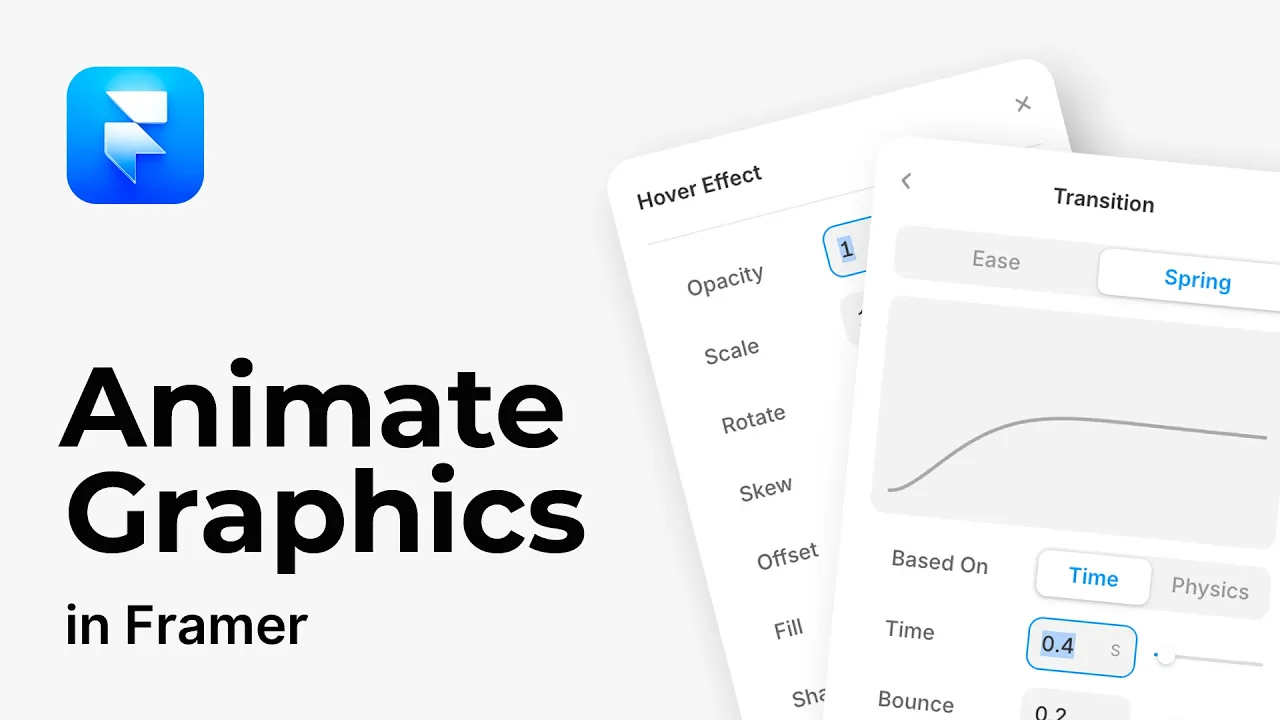
You would think there's a lot of code going on, but it's not the case. This is actually a Framer website, and I use Framer for our own website at home. Framer, we've got a custom cursor. You can see we've got all these effects, including this one. Now, Framer is insane, not because it's just another website builder, but it's actually insane because this is done without coding on a design level. There's no development or coding at all, which is insane. You can do crazy stuff like this where you can show the work, click it, go in, and you get all these different animations, no coding whatsoever.
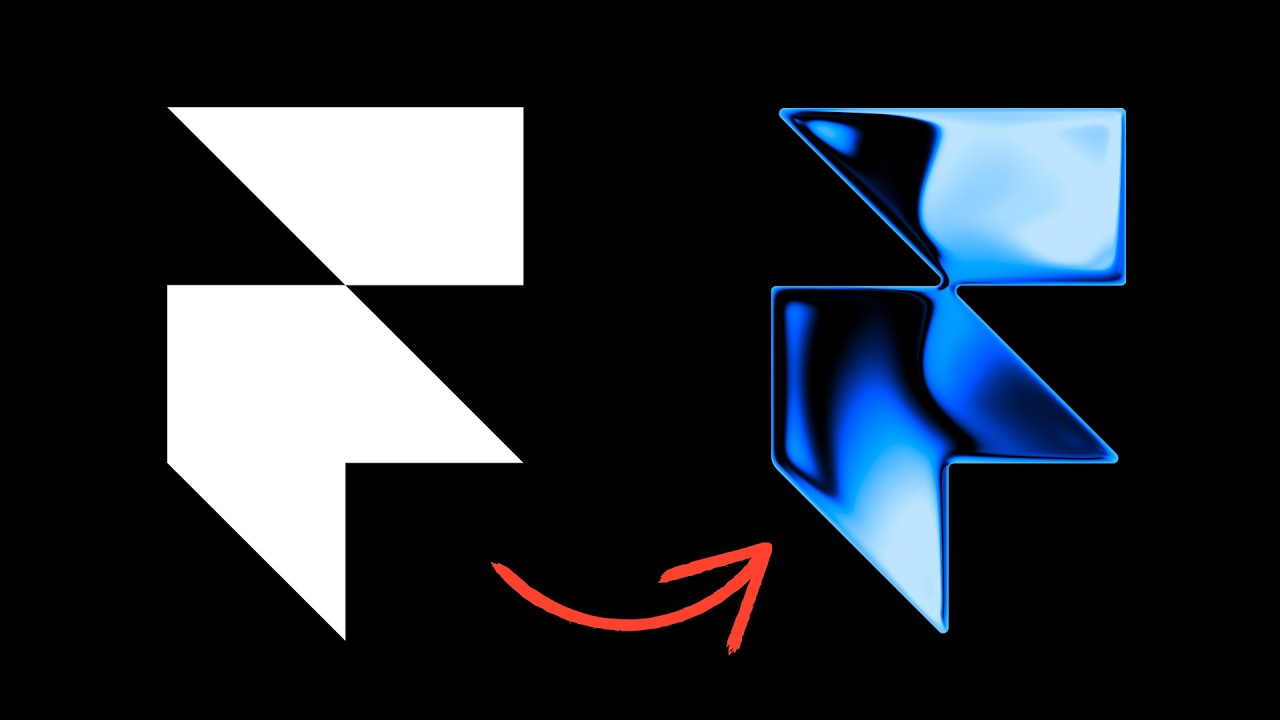
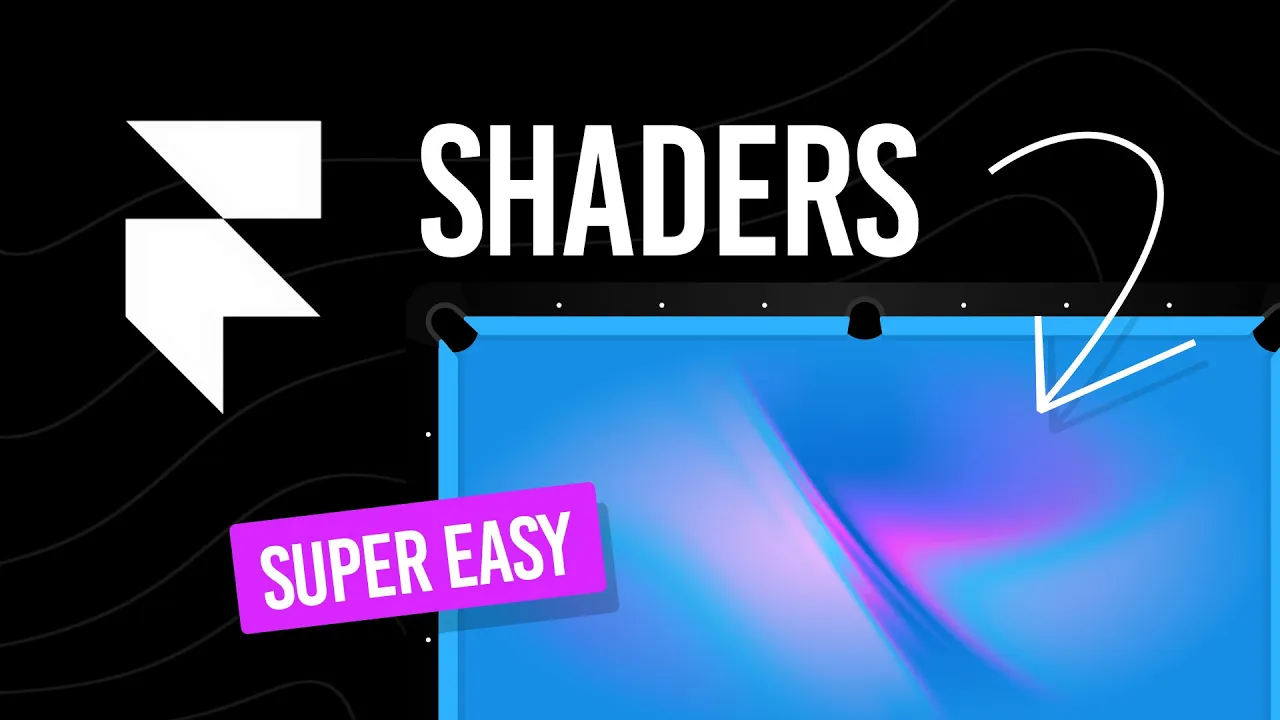
In fact, I can show you on my design, on my actual Framer page here what it looks like with the different breakpoints. Framer is great because all this is done without coding. I love it, but also there's a new feature, and they keep adding new features every month or so, probably more than that. This new one's called shaders, and it's insane. Look, if I click on this, boom. We've got a shader, and this is really easy to change and add and do all the sorts of crazy things with it. If I just go to insert, go down to shaders, I'm going to bring in this liquid gradient and drop it in here.
I'm just going to go up to here and make it fit everywhere by just making it pin it to the different corners of my stack. Now, look at that. That's insane. This is directly inside of Framer, and you can change this. You can go wild if you want. You can just do all these crazy things. Look at that. Wild. They've got a bunch of different shaders as well. We've got this one, which is chromatic aberration, where we can change it and do some crazy [music] things. Like you see the swirl one and how it animates throughout.
Look at that. That's insane. Now, the main thing is that Framer is completely free to download, and they're sponsoring this video. And if you'd like 1 month of Framer Pro for completely free, then use the code linked here or in the description. I'm not against it, personally, um using it, but it feels like everything is looking similar, you know? but you say you're not particularly worried about AI. Well, there's a There's two components to it. Yeah, yeah. So, one is an over-reliance and an overconfidence in the quality of output. Yeah. AI in general is designed to meet you in the middle, so you get middle answers, middle design.
And I didn't know this, but you know we buy milk, it's homogenized. And we're like, why is milk homogenized? I don't even know what that means. But when they we say homogenized, what is that? It's because, if I understand this correctly, farms who dairy farms, they have milk and they put in these things these giant vats, right? Yeah. And then they go from farm to farm and they collect all the milk and it's all mixed together. That's what homogenized means. So, when all these things are mixed together, then there's no uniqueness to it. So, if you go to a farm and you get milk from the cow, it's going to have a very specific taste and an aroma because that cow's been eating things and living a certain life and it has a unique quality to it.
Homogenized means it's all mixed together and it's all average, basically. And so, AI's output from design to writing to everything else you can think of is designed to be homogeneous. Dude, that's insane. Um Thank you so much, by the way. Where can people find you, Chris? Cuz not that everyone knows who you are on my channel, but is there anything you would like to push them towards, such as Instagram? I'll link it all below, but Yeah, sure. Well, I appreciate the opportunity. If you found any part of this conversation helpful or intriguing and you want to dive a little deeper, I'm on almost all social platforms, so I would recommend you either check me out on LinkedIn or on Instagram.
I'm @theChrisDo. Do is spelled d o. And uh the way I can help you remember this, I don't know people know this, but the word do in Japanese means the way. Does it? It does. It means the way. I'm not Japanese, but I'm going to use that. Yeah, but that's cool. I like that. Oh, thank you so much. Honestly, it's been I've learned so much. This has been a very selfish uh video opportunity for me. Just we've been chatting before [music] and I really do appreciate it, dude. So, thank you. Yeah, right. Thanks, guys. Thank you.
Really hope you enjoyed that. Make sure to check out the links in the description to go follow Chris and see what he's up to. Thanks for watching. Subscribe and see you in the next video.
More from Will Paterson





Get daily recaps from
Will Paterson
AI-powered summaries delivered to your inbox. Save hours every week while staying fully informed.